The path from Putney Bridge leads us down through Bishop’s Park, where the Thames runs quietly alongside. Rowers cut through the water, joggers pass by, and the smell of wet grass lingers in the late afternoon air. It’s along here that Craven Cottage reveals itself, Fulham’s riverside ground, tucked neatly into its surroundings.
We are walking with Italian photographer and writer Matteo Occhiuto, who has come to see the stadium not on a matchday, but in its quieter state, when the atmosphere is less about the crowd and more about the ground itself. “The Craven Cottage experience is definitely a must for anyone who loves English football, pure and authentic,” he says as the stadium comes into view.
The gates are quiet, the turnstiles still, and the only sound is the steady drift of the Thames beside the ground. With no game on, we are here to walk, to look, and to let the history of Fulham’s home settle in.
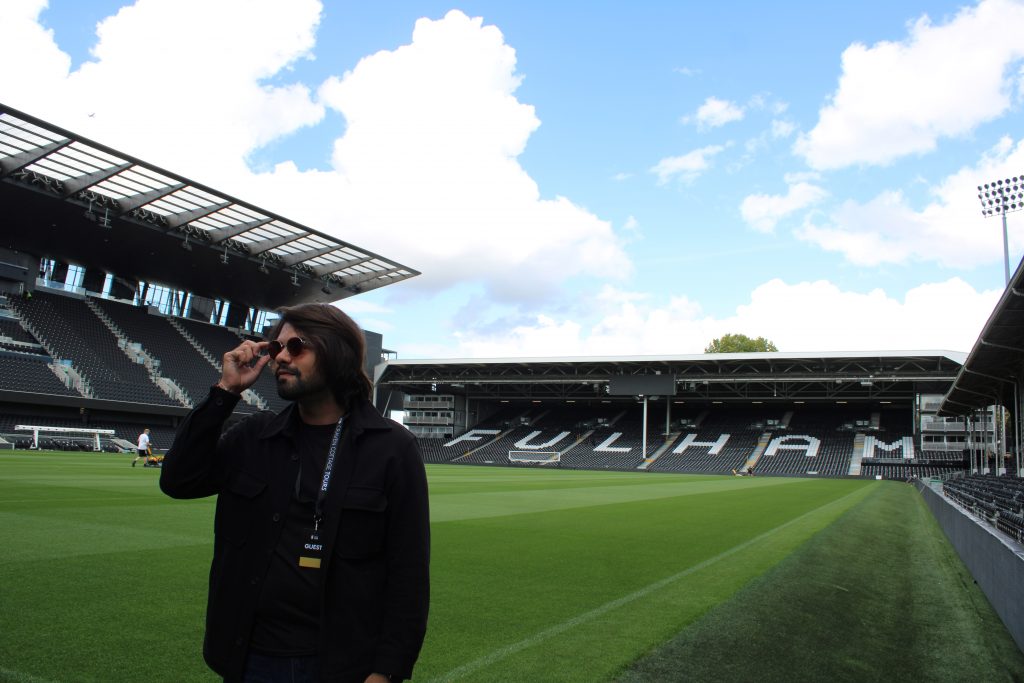
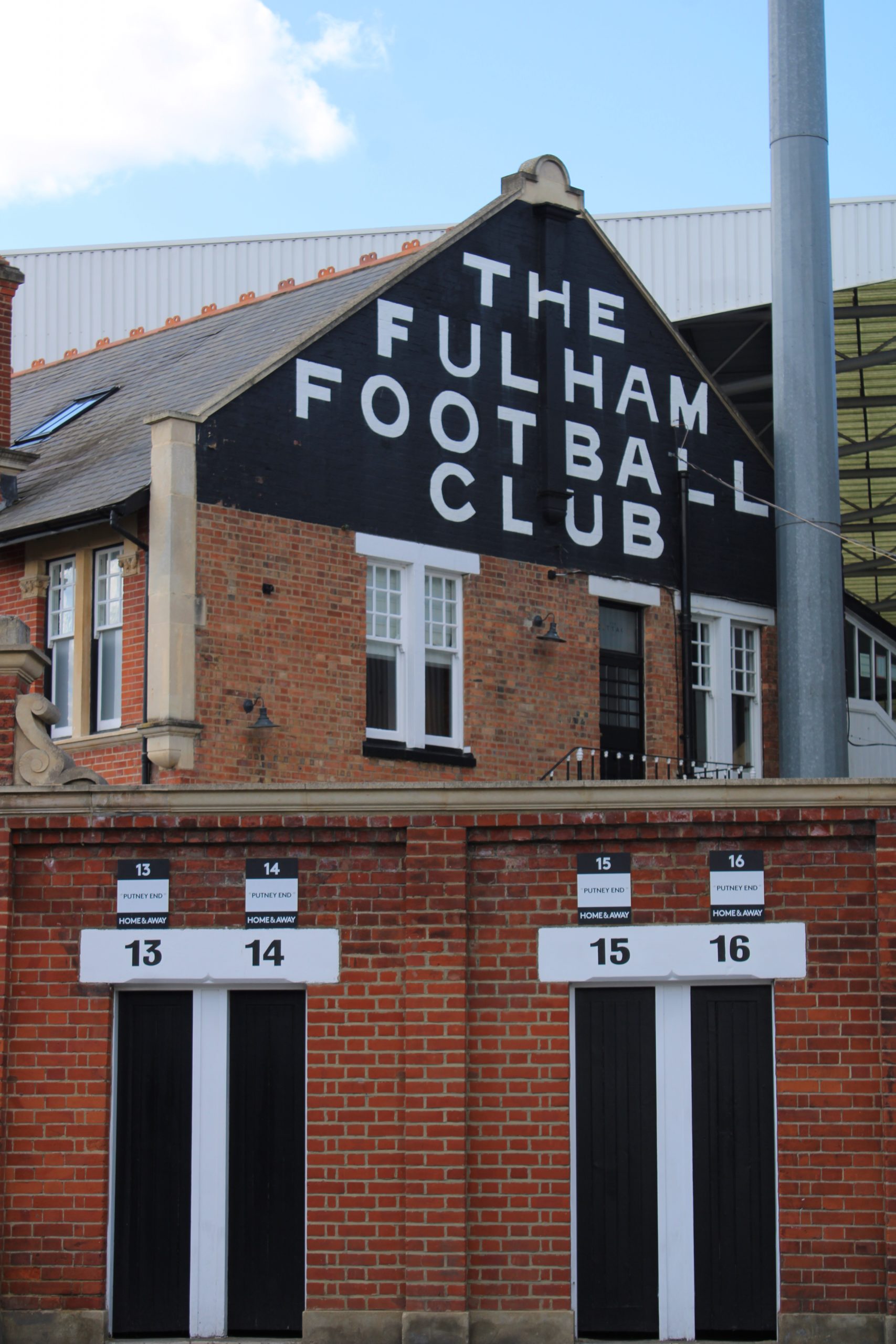
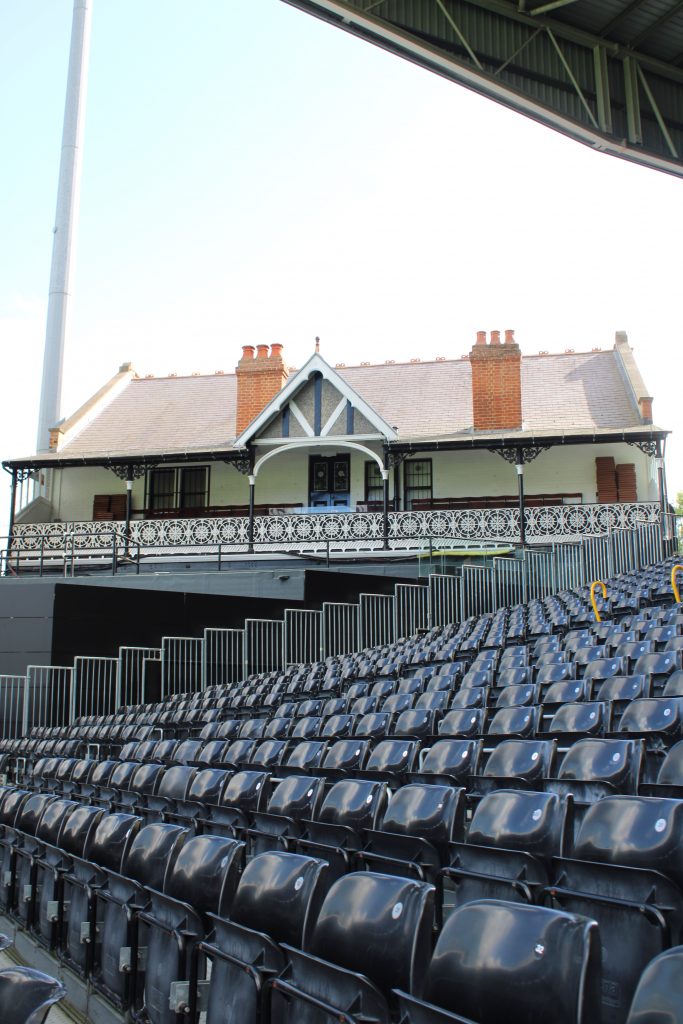
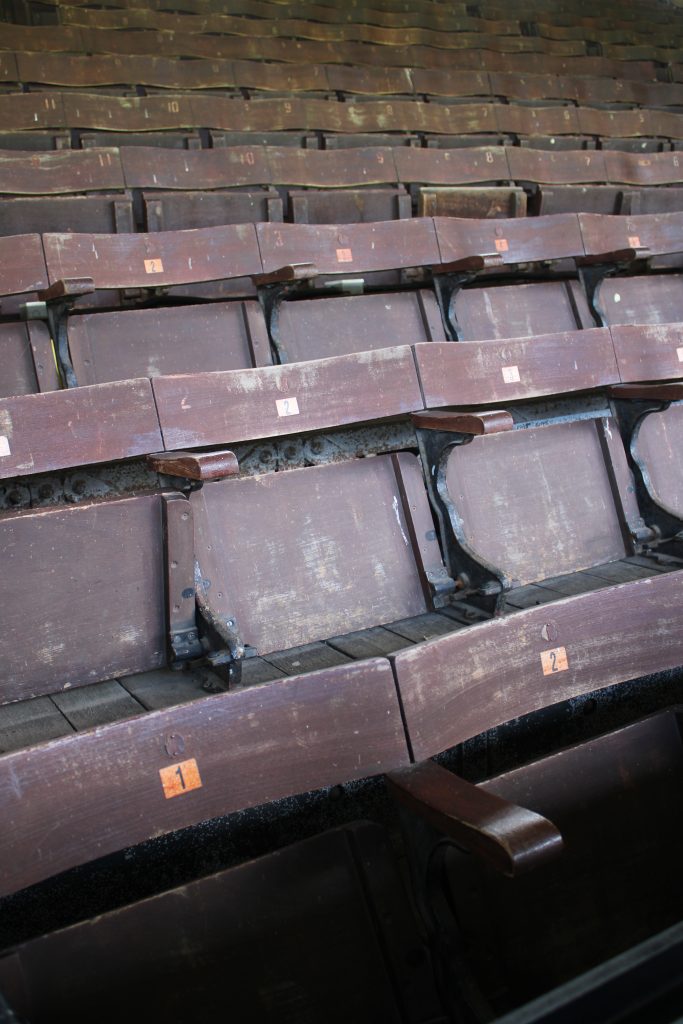
The façade gives little away, its red brick frontage softened by years rather than sharpened by renovation. Inside, the character of the place is clear. “The stadium exudes history, with wooden seats that are proof that the past can also be preserved in modern facilities,” Matteo explains. “It is precisely these old seats, perfectly integrated into a stadium that knows how to be modern, that give it that touch of magic it needs, together with the beautiful Cottage, which houses the changing rooms and VIP hospitality area.”
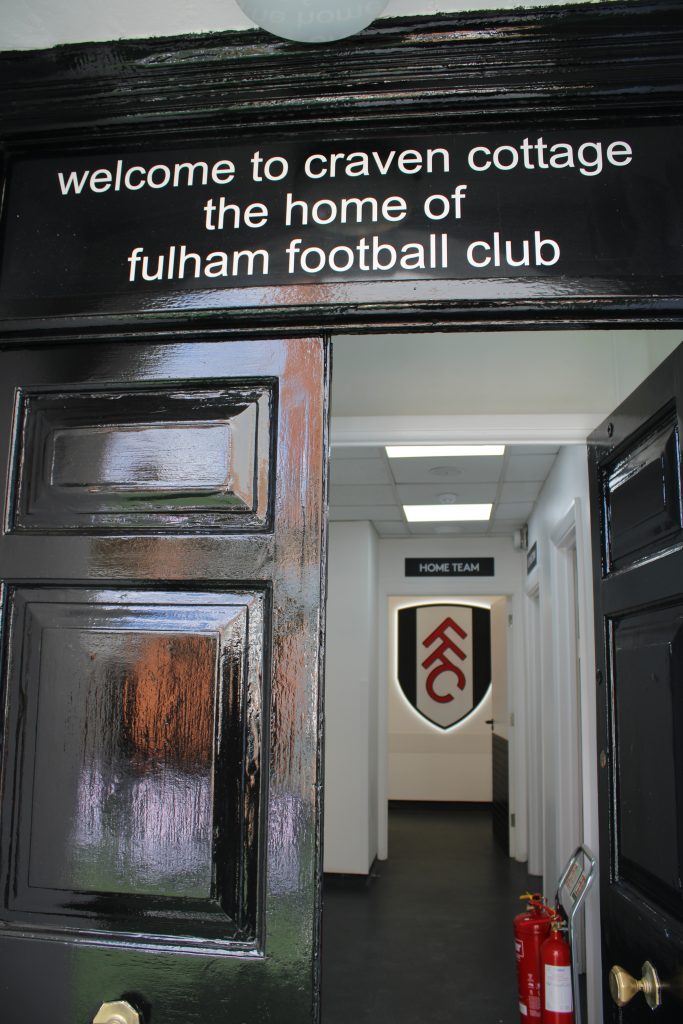
The Cottage itself, Fulham’s Grade II-listed pavilion, feels almost like a secret within the stadium — something you notice only once you’re told to look for it. Matteo is firm in his advice to anyone visiting. “Don’t miss the Cottage! The most exclusive part of the stadium is the small, exclusive area overlooking the pitch, where, in addition to the changing rooms, there is a beautiful bar.”
As we circle the stadium, it is impossible not to notice how it fits into its surroundings. The residential streets seem to fold naturally around the ground, as though both have grown together over time. Matteo agrees. “The Fulham neighbourhood is in perfect harmony with the club, both architecturally and environmentally. There is harmony, with the stadium perfectly nestled into the urban fabric. The club and the neighbourhood are perfectly united, and some of the stadium’s gems, visible even from the outside, give it a strong football flavour.”
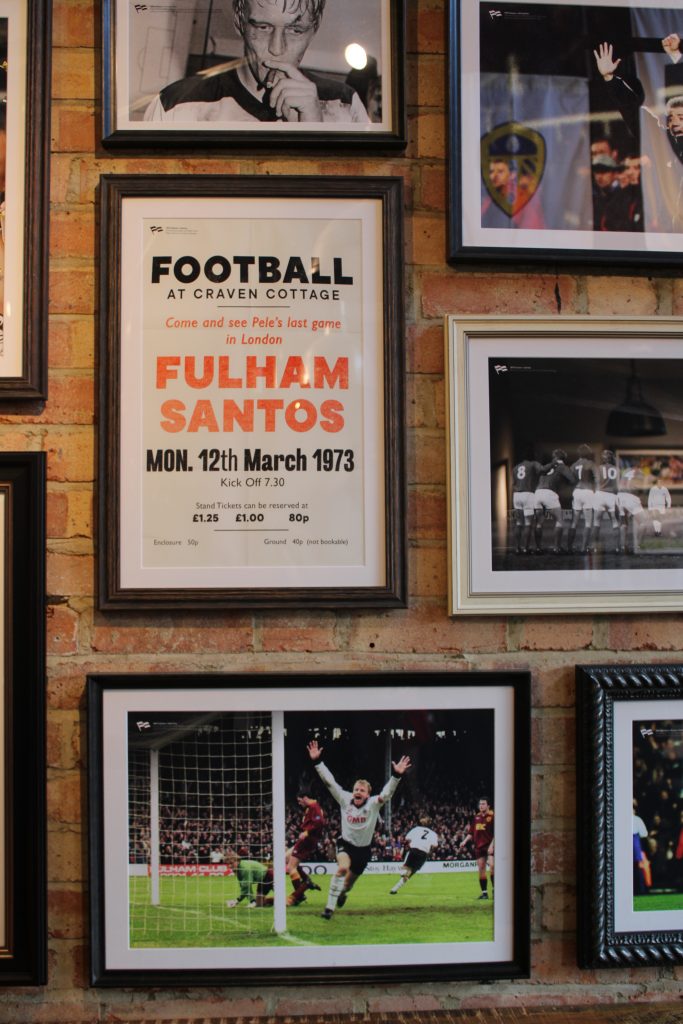
Craven Cottage is a rare ground where modernisation has not erased the character that binds stadium and city. Even on a day without football, it remains quietly alive, its presence as much in the details of wood and brick as in the roar of a crowd.
All photography from Matteo Occhiuto
Visit Matteteo on Instagram here