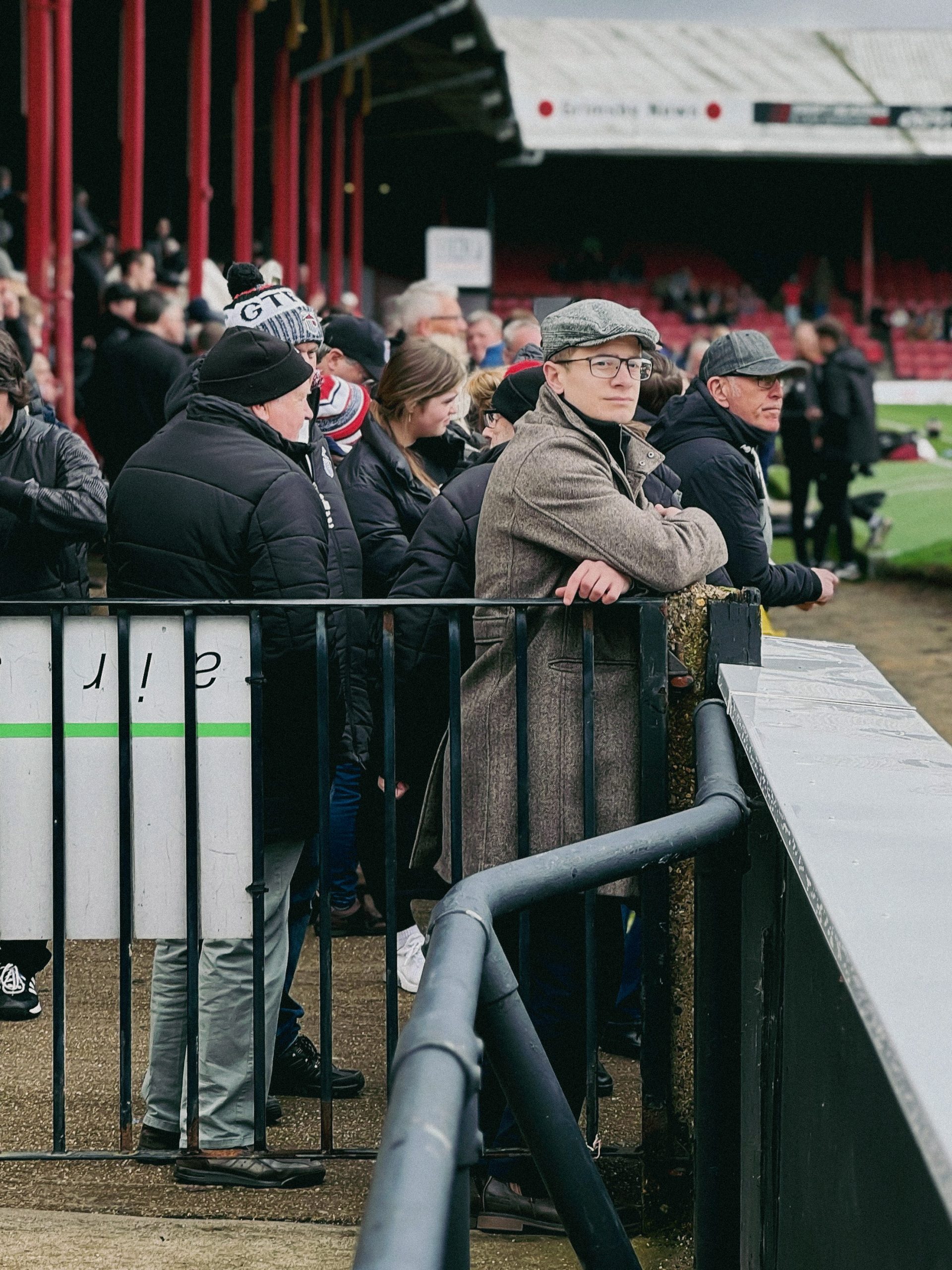
All words and images by Guirec Munier
First Sight
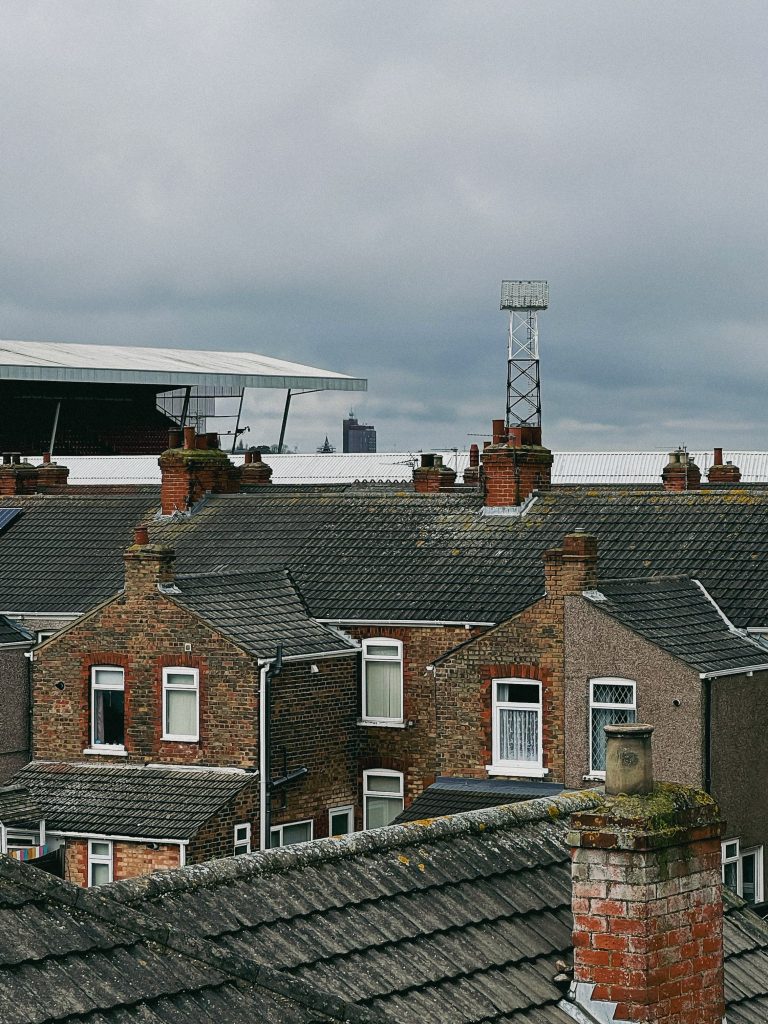
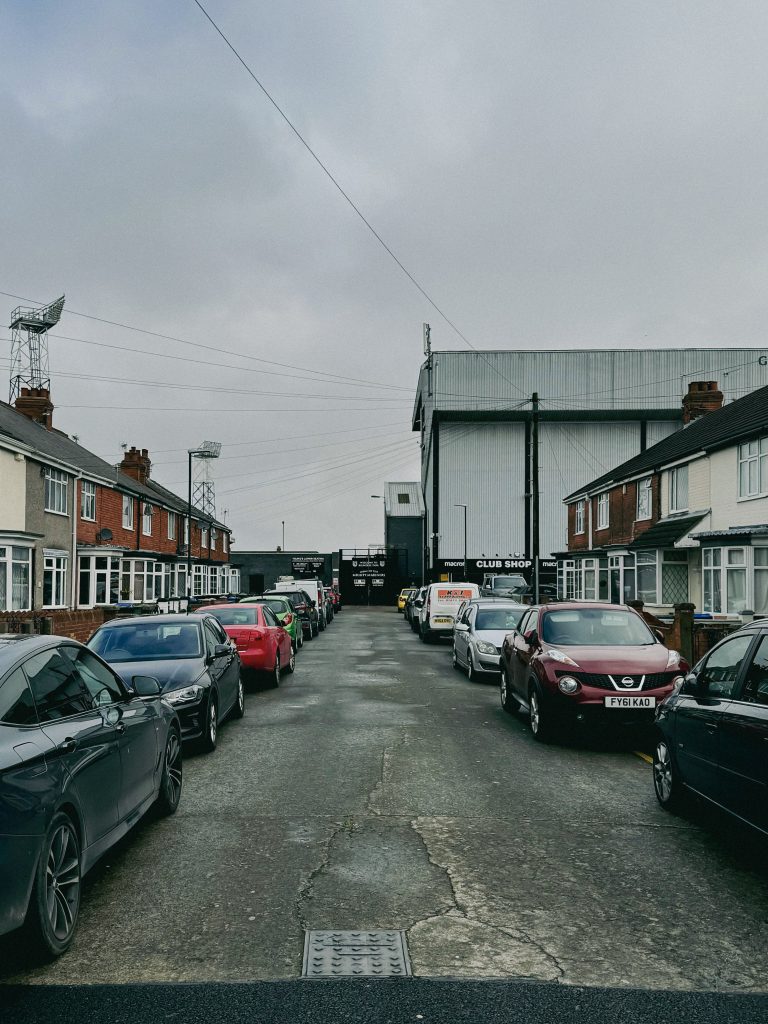
Standing on the footbridge spanning the railway line that separates Harrington Street from Cleethorpes Beach, my gaze falls upon a stadium nestled in a sea of terraced houses.
Love at first sight.
The exact representation of what a stadium is — or should be. A ground deeply rooted in its community, one that hasn’t sacrificed its soul on the altar of prosperity.
Blundell Park.
Grey Skies, Haddock and Anticipation
In the windswept streets of Cleethorpes, the colour of the sky seems to have rubbed off on everyday life. Grey. On this day, only Grimsby Town appear capable of brightening reality.
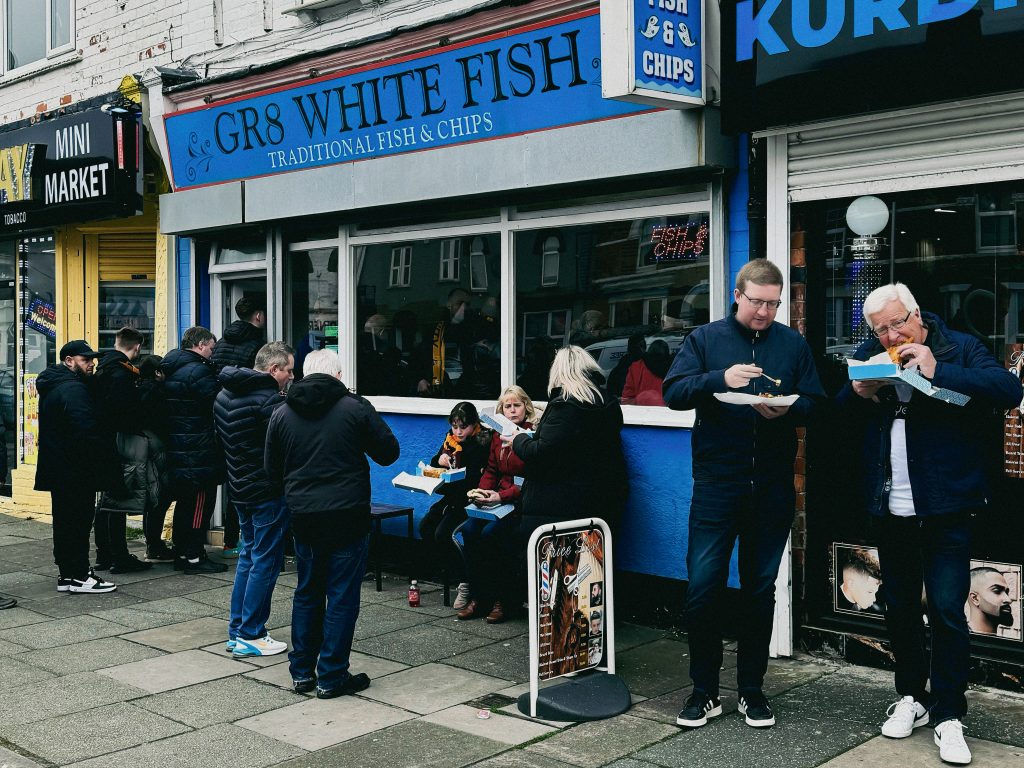
As the minutes tick by, Mariners supporters converge on McDonald’s on Grimsby Road and the local chippy, The Gr8 White Fish. Cleethorpes obliges: haddock and chips are on the menu.
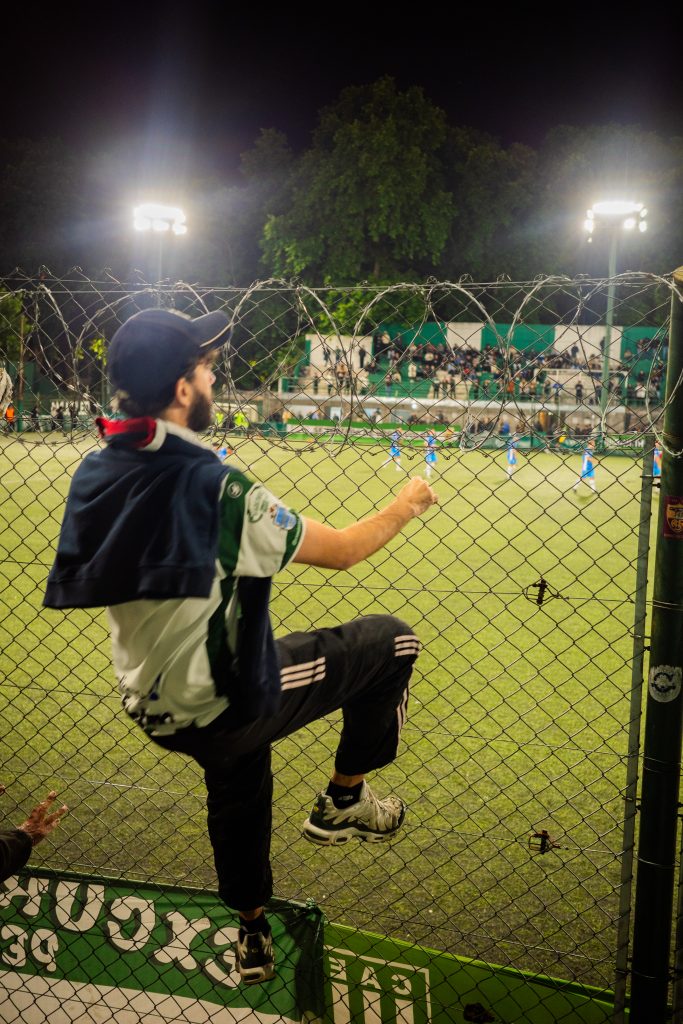
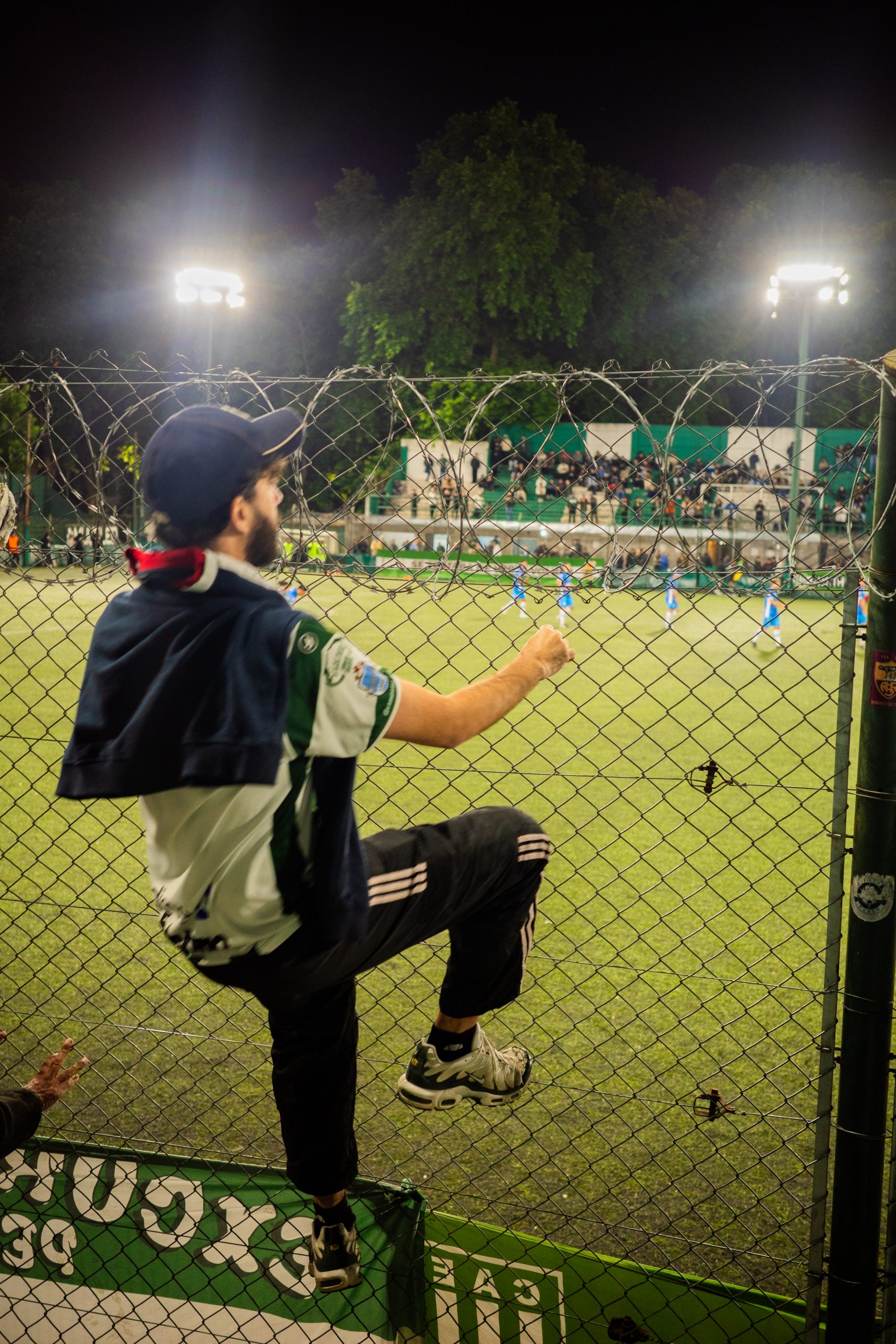
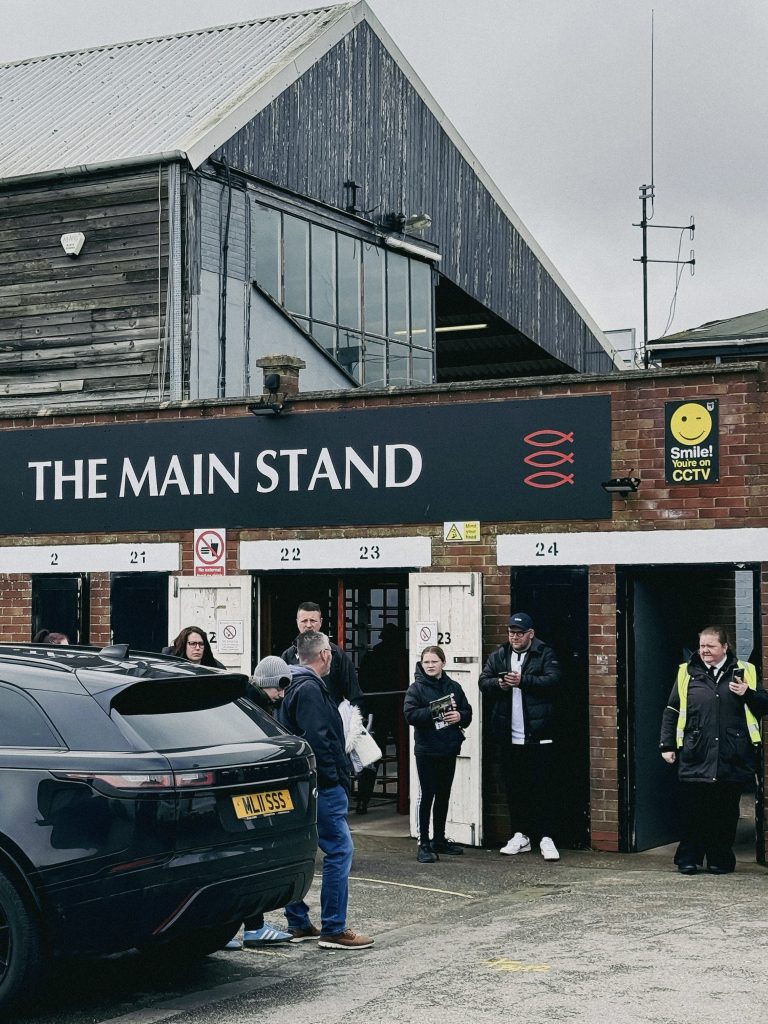
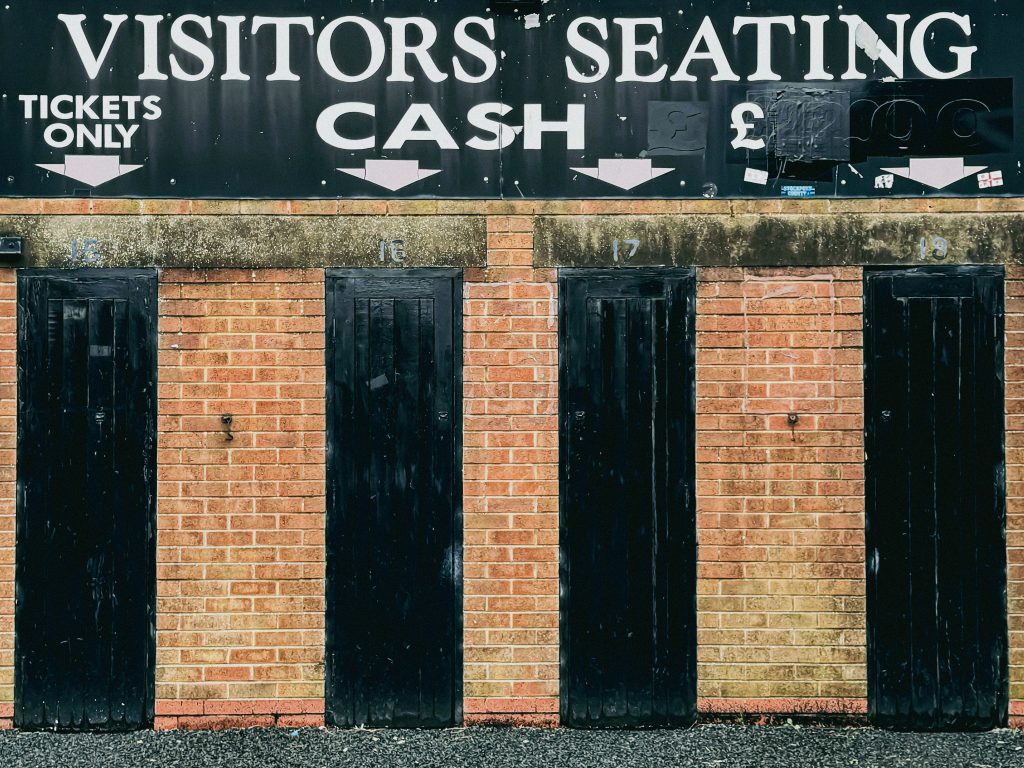
Sated — my thumb and forefinger still greasy — I take Blundell Avenue back towards Harrington Street. There, Bradford City fans disembark from coaches specially chartered for the match and head towards the second impasse leading to the away section. In front of the wooden façade of the Main Stand, sandwiched between back gardens, four turnstiles reserved for Bantams supporters sit beneath coils of barbed wire.
From the outside, Blundell Park seems frozen in the pre-Hillsborough 1980s. From the inside as well.
An architectural gem to be preserved for some; the ugliest stadium in Britain for others. Blundell Park divides opinion.
“The Ugliest Stadium in the World”?
How can a stadium arouse such contrasting feelings?
In 2016, talkSPORT put the cat among the pigeons when it published a ranking of the worst and ugliest football stadiums in the world. Blundell Park placed a dismal second.
According to GiveMeSport, with stands of completely different sizes and lengths, the ground looks skewed and poorly conceived. In desperate need of refurbishment, with parts appearing to crumble, it is deemed unattractive and unfit for modern football. Considering it opened in 1899, they argue, it is remarkable that it is still standing.
In short, talkSPORT and GiveMeSport advocate standardisation and endorse the quiet sterility of modern football.
Character Over Comfort
Standardisation and sterility? Nothing of the sort.
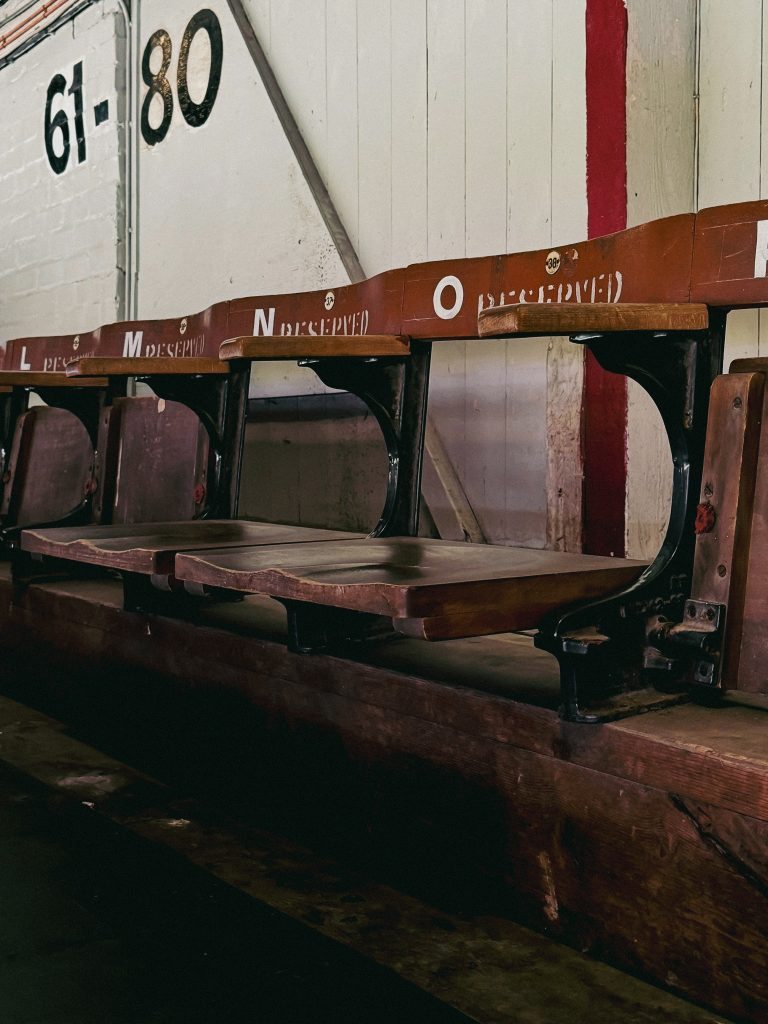
Mighty Mariner, Grimsby Town’s mascot, greets me with open arms. The Main Stand — a vestige of football’s early days and the oldest stand in the English Football League — brims with character. Admittedly, the view is restricted by timber framing and wooden pillars, but what pleasure there is in sitting on a folding wooden seat on a cool spring afternoon.
To the left stands the Osmond Stand, financed by proceeds from the 1939 FA Cup semi-final at Old Trafford — an attendance record that still stands. Its L-shape, formed at the junction with the Main Stand, reflects periods of sporting success: promotions to the First Division in 1902 and 1929, and that famous 1939 cup run.
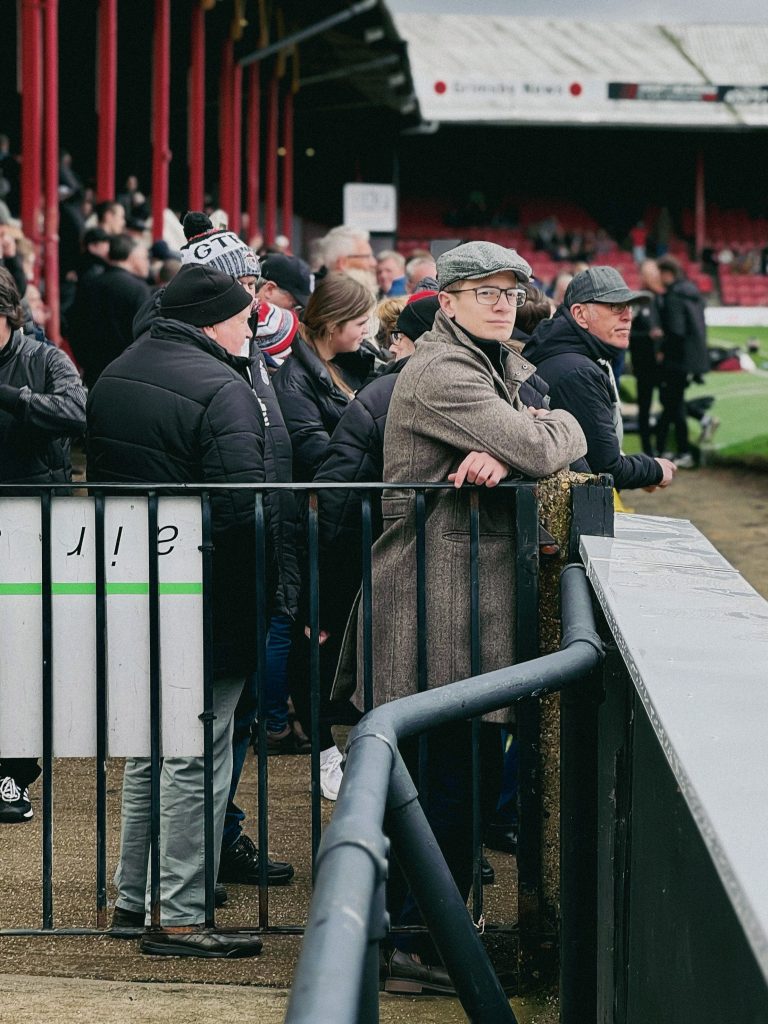
To the right, the Pontoon Stand was also built with funds raised by Grimsby Town supporters. The Findus Stand, financed by the frozen food brand that sponsored the club between 1979 and 1984 and served as a major local employer, offers a panoramic view of the Humber Estuary, where trawlers once returned laden with cod, pollock and haddock.
Even the floodlights tell a story. Standing 128 feet tall, these second-hand pylons illuminated Wolves’ first floodlit match at Molineux in 1953.
“It was the floodlights that made football magical for me — it turned football into theatre,” recalled a seven-year-old boy who attended that evening. His name was George Best.
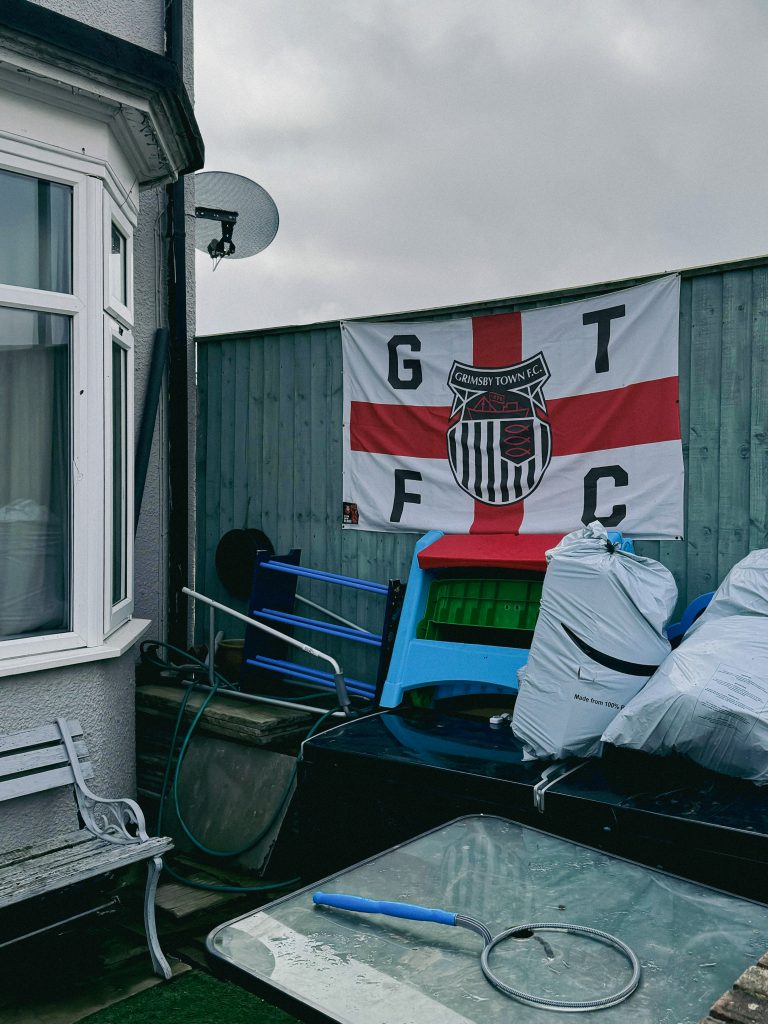
Every element of Blundell Park carries its own narrative. Together, they crystallise the essence of the town.
A Town and Its Image
The town of Grimsby — and the bleak image that clings to it — mirrors the trajectory of its storied stadium.
The former largest fishing port in the world has indeed endured economic decline. But should we draw a line through its past to improve its present and future?
Like talkSPORT, one could imagine a tabloid peremptorily declaring that Grimsby is unfit for the modern world, that its horizons would be clearer after the arrival of bulldozers, or that Parliament should consider re-enacting the New Poor Law of 1834 for this corner of Lincolnshire.
But progress without memory is amnesia.
What Is Profit Worth?
If Grimsby Town ever decide to turn its back on more than 125 years of history by building a stadium resembling a shopping centre, the soul of the local community will have been traded for a vast car park, an unobstructed view, and shorter queues for overpriced pints.
It is not all profit, for fuck’s sake.
Blundell Park opened in the same week in September 1899 as White Hart Lane, Highfield Road, Hillsborough and Fratton Park.
Will it share the fate of the first two?
All words and images by Guirec Munier