The Buenos Aires Dispatch: Belgrano Under the Floodlights: An Unexpected Night with Excursionistas
Words and Images: Joey Corlett A Club Hidden in Plain

Heart of Midlothian: The Fairytale of Tynecastle
All words and images by Guirec Munier Guirec Munier made

Brazil and the Unspoken Language of Football
Words and images: Markus Blumenfeld For Markus Blumenfeld, football is
Something Truly UNIQUE: The Identity of U Cluj
All images by Dana Maria Pop-Oprisan “Football culture in Romania
Salernitana represents that ‘old-school football’ that is slowly disappearing,
All images by Alessandra Francesca Coppola “Fighting and believing in
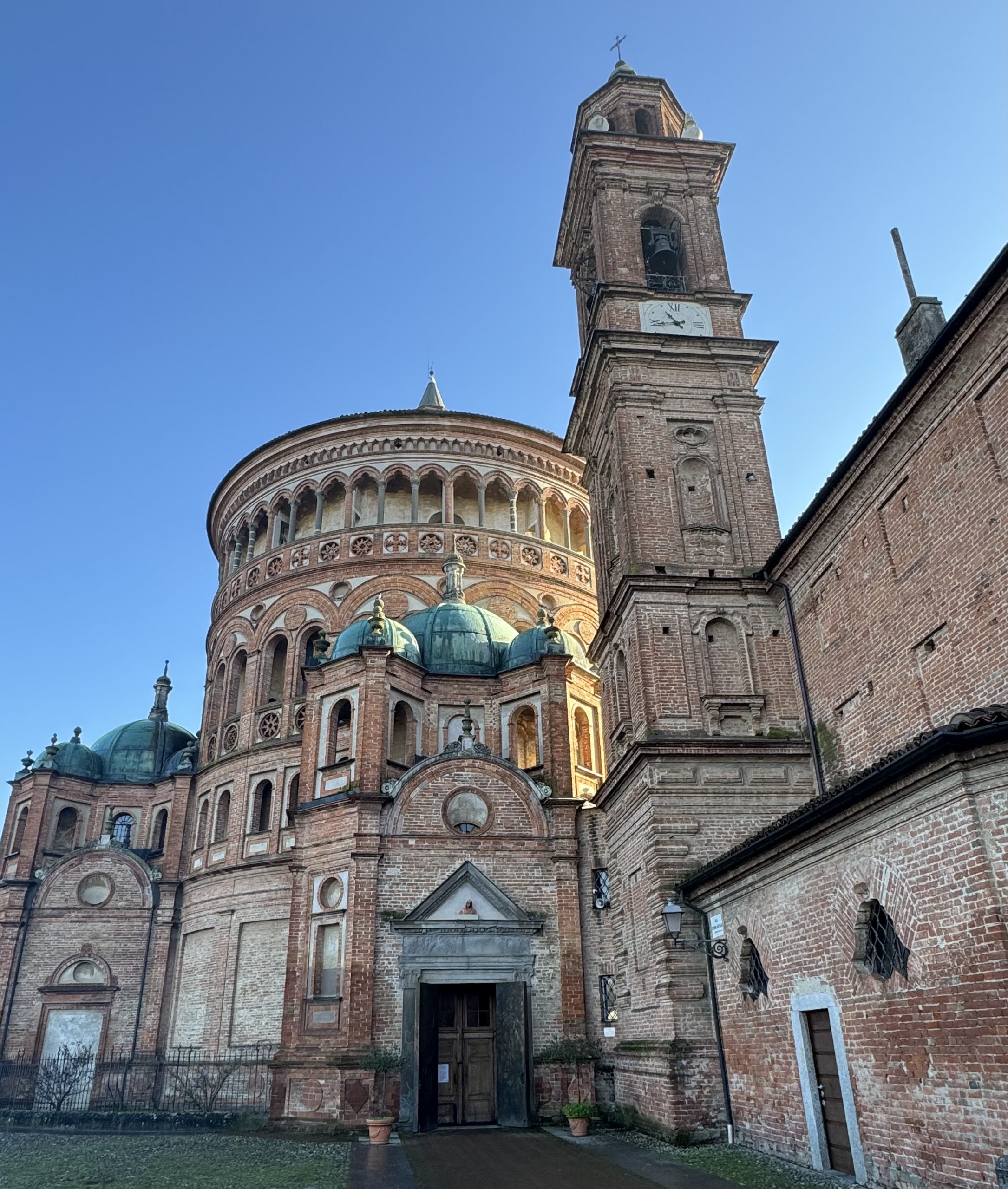
US Pergolettese: Football, Grit and Life on the Edge of Crema
All images by Luca Gaiera There are clubs you follow
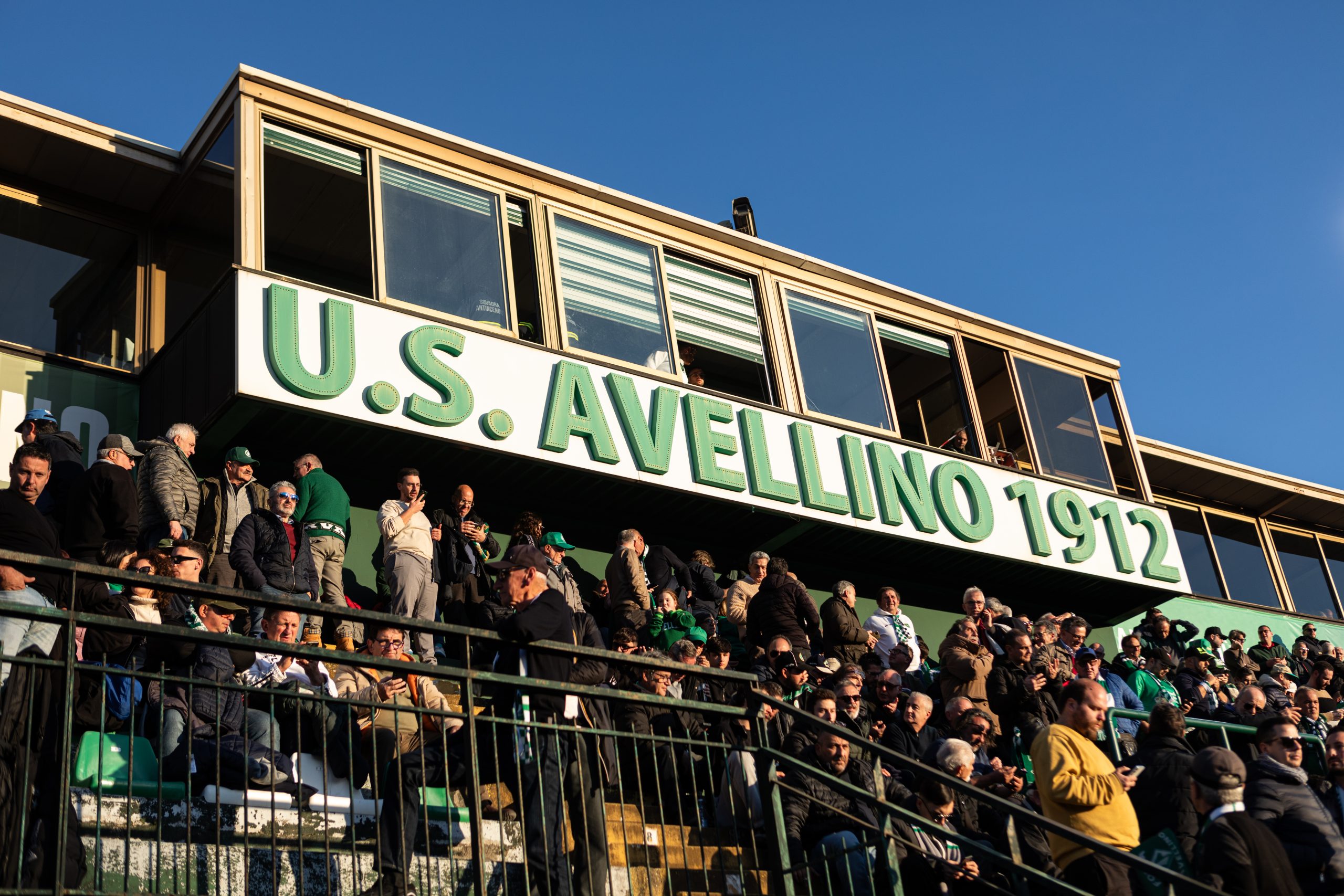
Avellino: An Afternoon Among the Green Wolves
All words and images: Imma Rhamely Borrelli They are quieter than
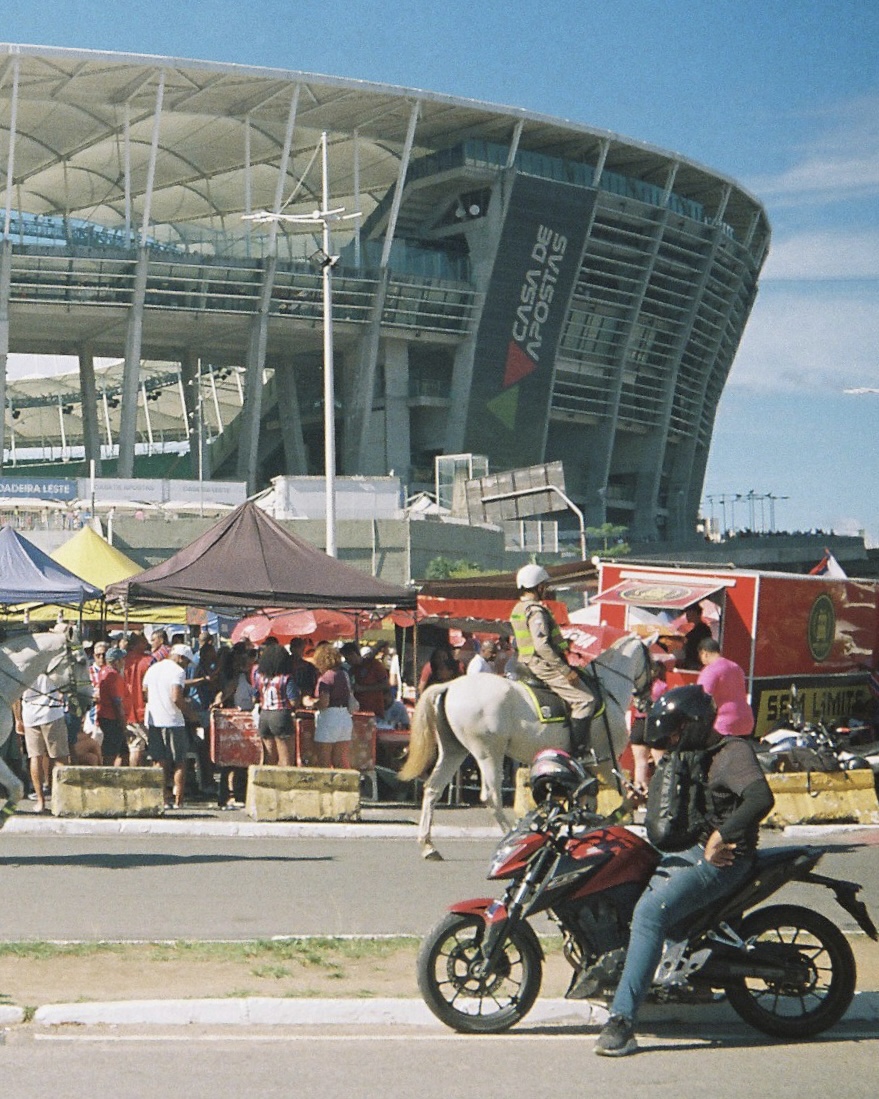
The South American Diaries: Part 12. Inside the Heart of Bahian Football
All words and images by Jonas Zöller “This whole scene,

The South American Diaries: Part 11. Joga Bonito in the Air
All words and images by Jonas Zöller “The thick concrete
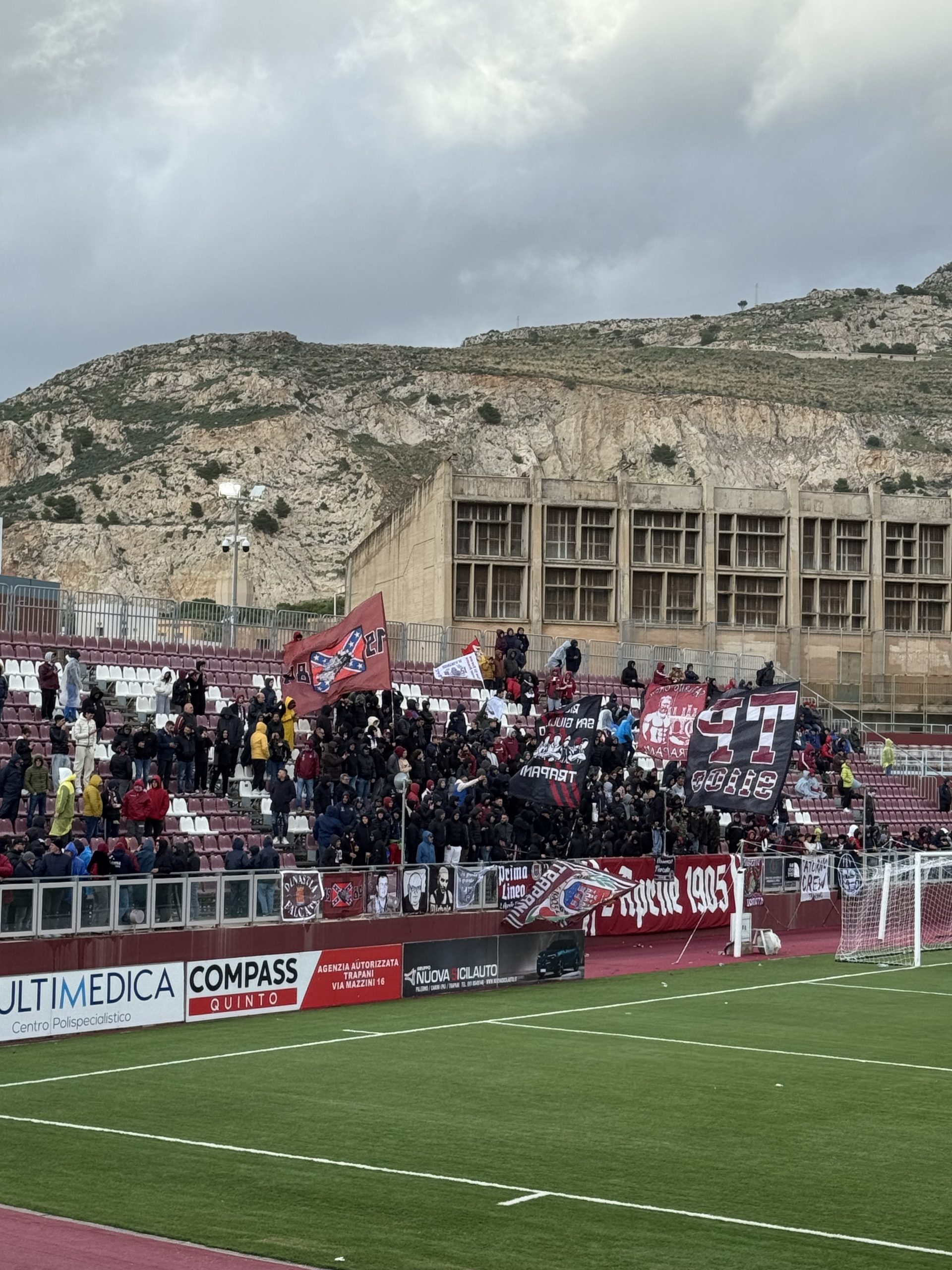
Trapani: Matchday and a City That Quietly Surprises You
All words and images by Luca Gaiera Trapani is one
Words and Images: tonpotdemoutarde
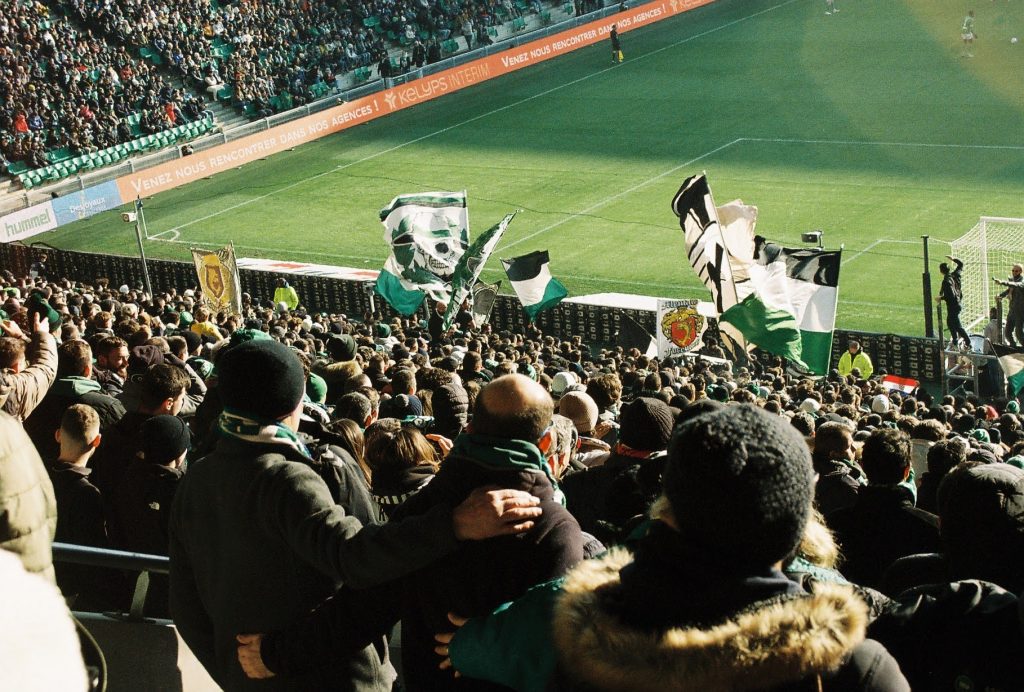
In Saint-Étienne, football is rarely a solitary love. It is handed down.
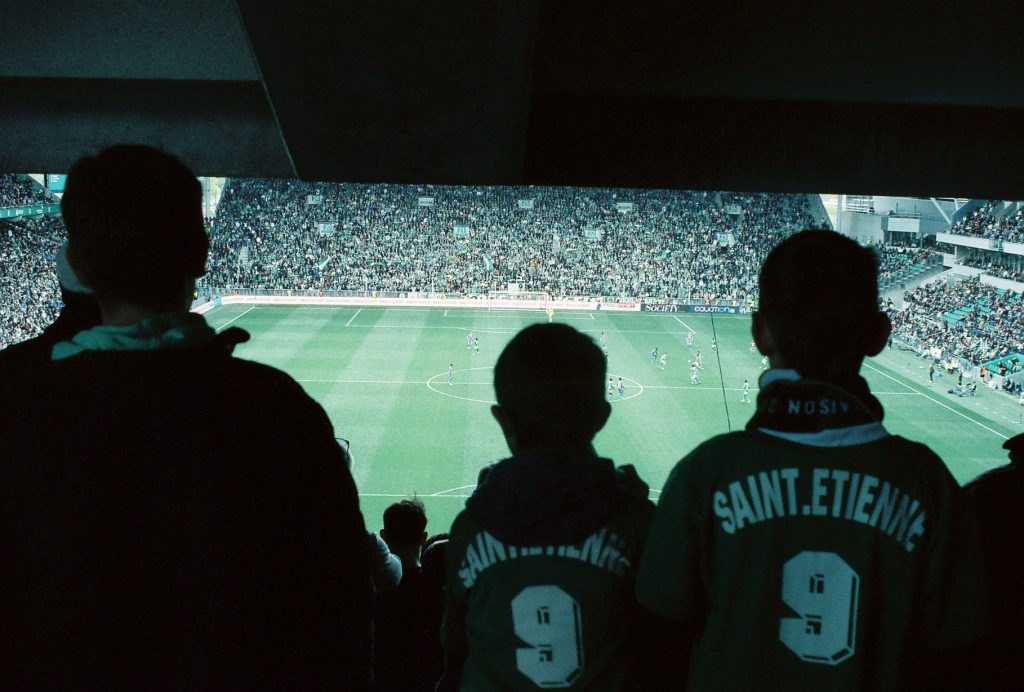
For photographer tonpotdemoutarde, supporting AS Saint-Étienne was never a decision to be made — it was part of the fabric of family life. His grandfather stood on the terraces. His father followed. At six years old, he was taken to the stadium for the first time, walking into what locals don’t simply call a ground, but Le Chaudron, the cauldron.
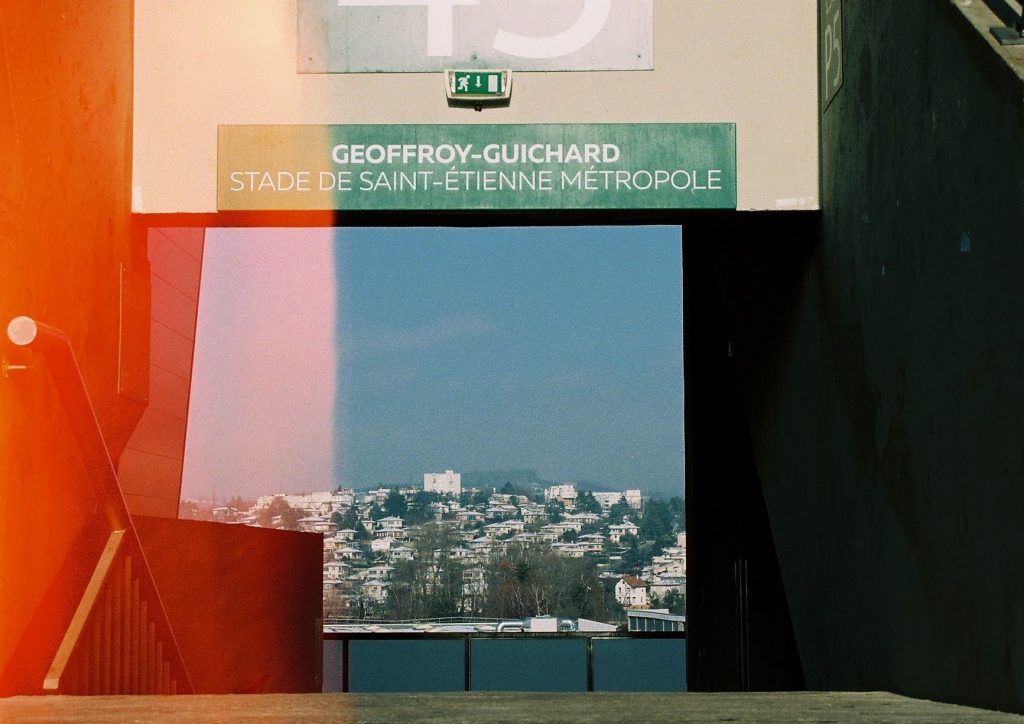
My grandfather was a fan, my father was a fan, and he took me to the stadium when I was six years old. It was only natural for me to support Saint-Étienne. I lived in an apartment where you could hear the chants on matchdays. Every time, it amazed me. I didn’t care about the results — I just wanted to see Les Verts.
More than just a stadium, it’s Le Chaudron. You have to come and hear the two ends singing, to feel the fervour, to feel a city in unison — to truly feel a wave pushing the players from start to finish.
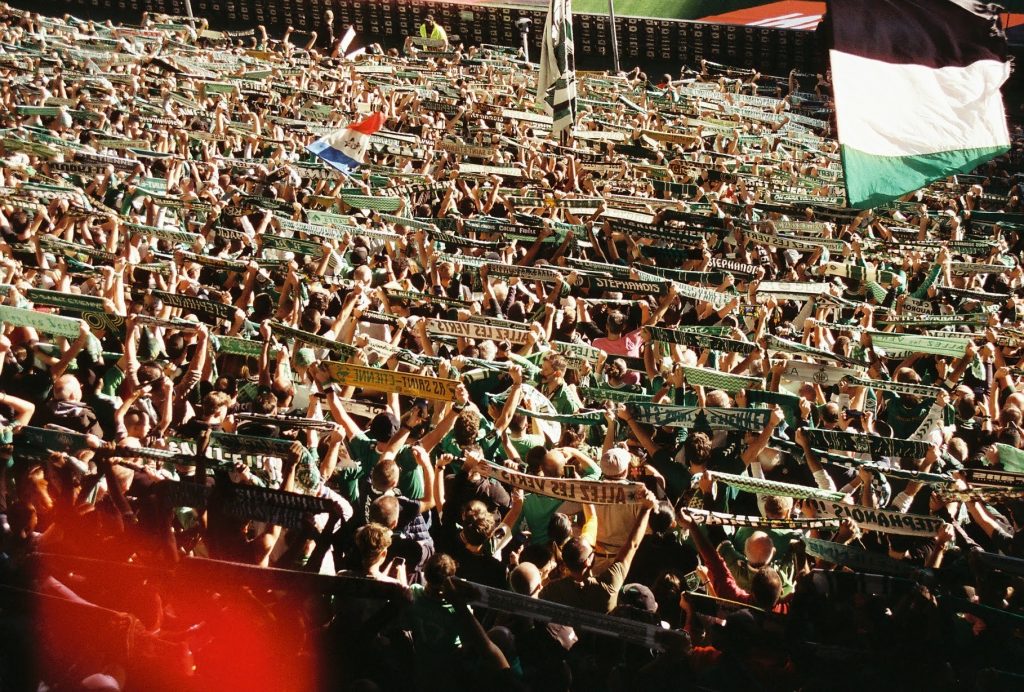
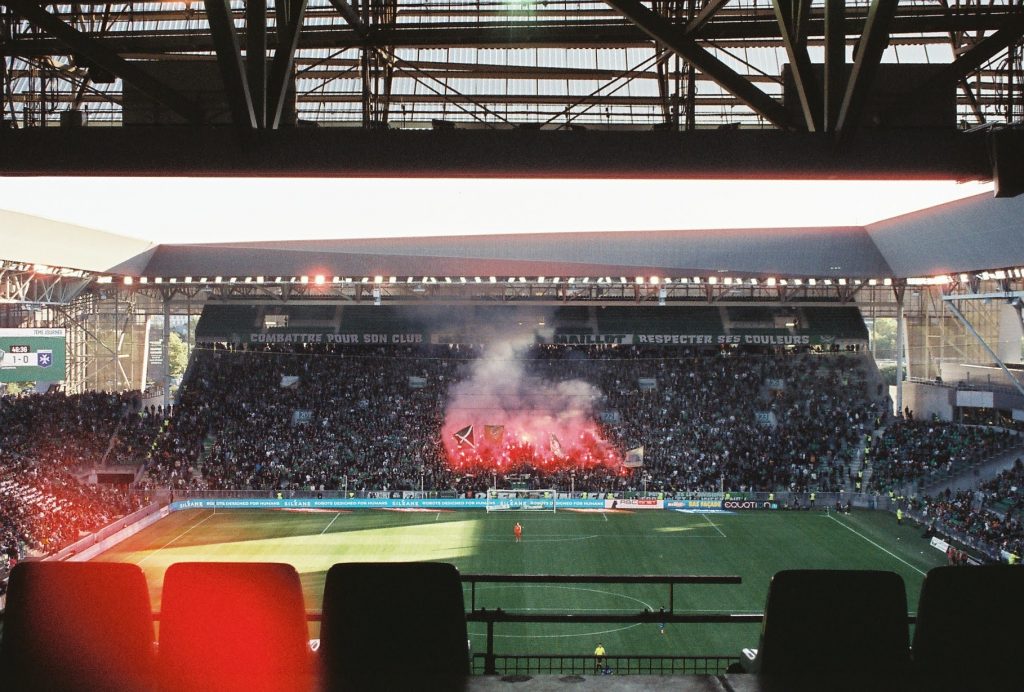
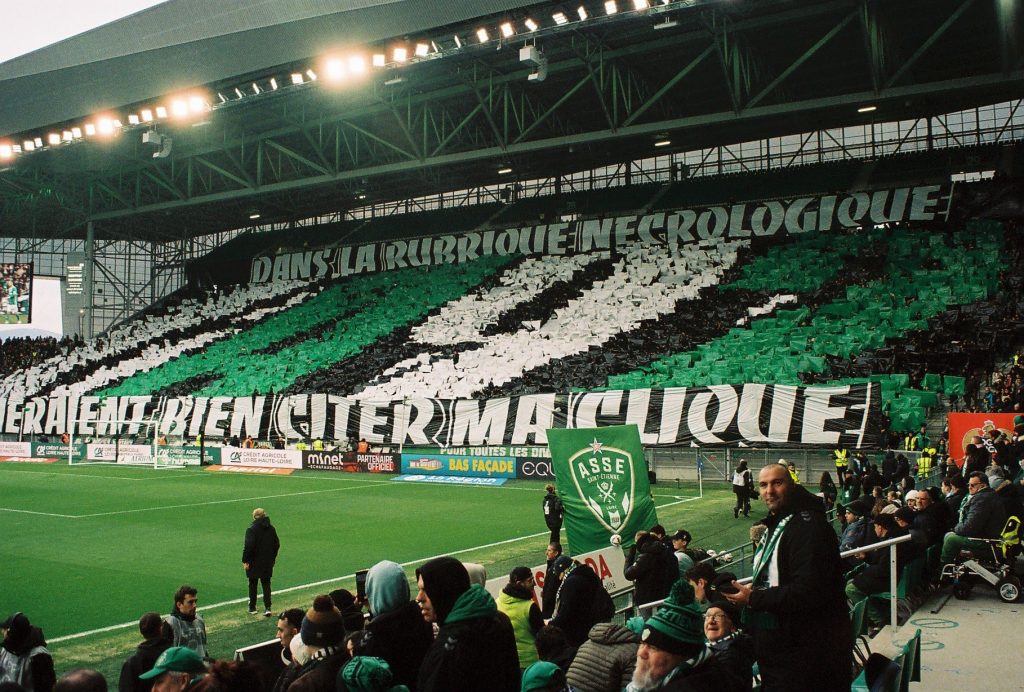
One of my favourite memories is ASSE vs Châteauroux in 2004. If we won, we would be Division 2 champions. The stadium was full, with a tifo stretching across the entire ground. We won thanks to a goal from Bridonneau, a defender, who scored with a scissor kick right at the end of the match. I have never heard such a deafening noise in a stadium.
I would also mention the first European matches I attended, the 100th derby victory in Lyon, and the last promotion back to Ligue 1. But more than anything, the matches spent with friends remain my greatest memories.
What makes the club special is that, despite the passing years and the results, the passion has never changed. The loyalty remains. Personally, I haven’t seen many trophies or European nights, and yet the passion is still intact.
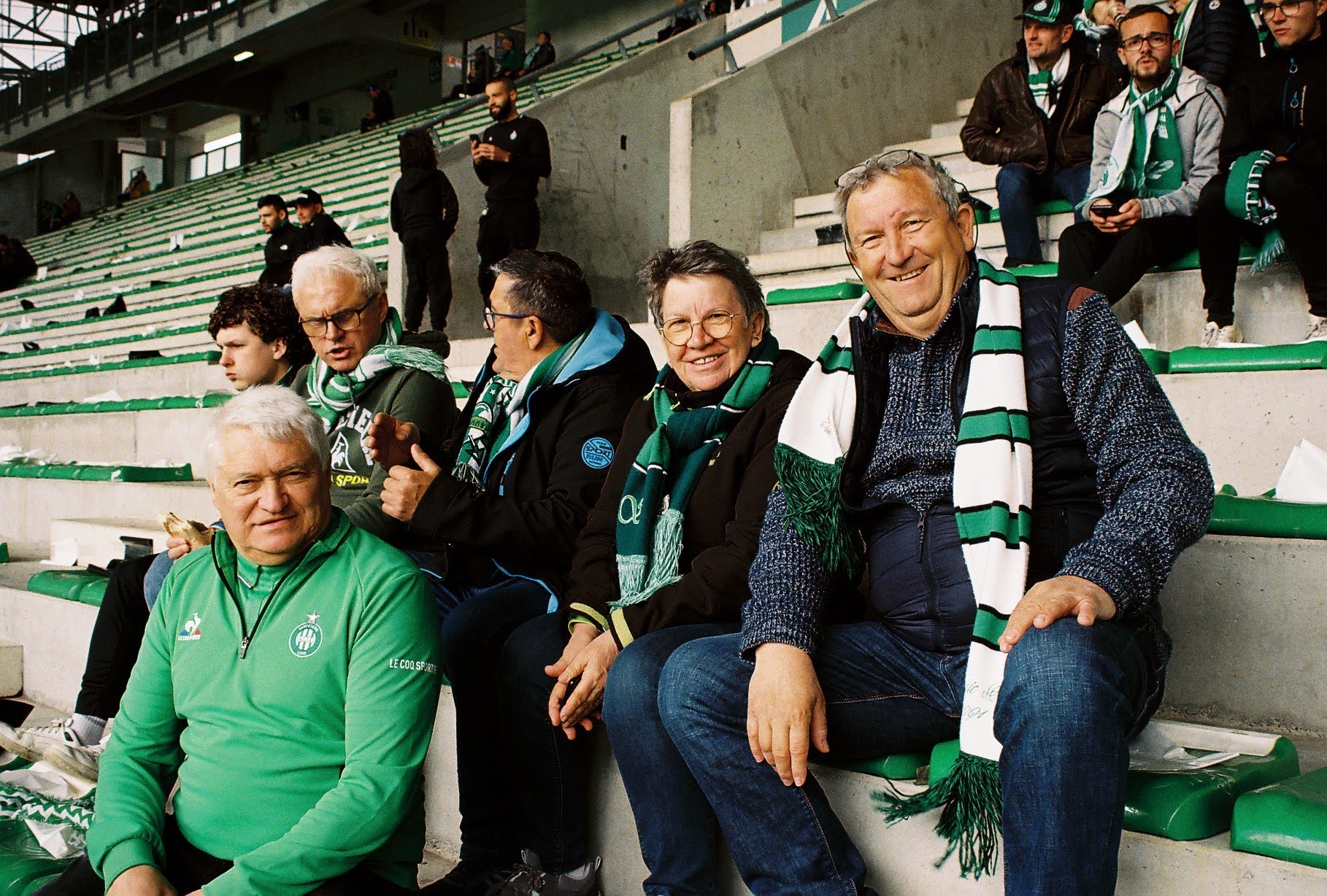
It is also a club people can identify with — a club that has remained popular and proud of its city’s past.
And in Sainté, no one cares where you come from, how much you earn, or who you are. If you’re a fan, you’re family.

Words and Images: tonpotdemoutarde
All words and images by Guirec Munier
Guirec Munier made his way to Tynecastle Stadium, home of Heart of Midlothian, to witness a club who are in the midst of a dreamlike campaign, which could see them break the Old Firm monopoloy which has existed in Scotland for over 40 years.
Usually, we don’t choose our family — but we do choose our friends. In the case of Hearts, the two are one: inseparable, intertwined, beating with the same pulse beneath maroon scarves and winter skies.
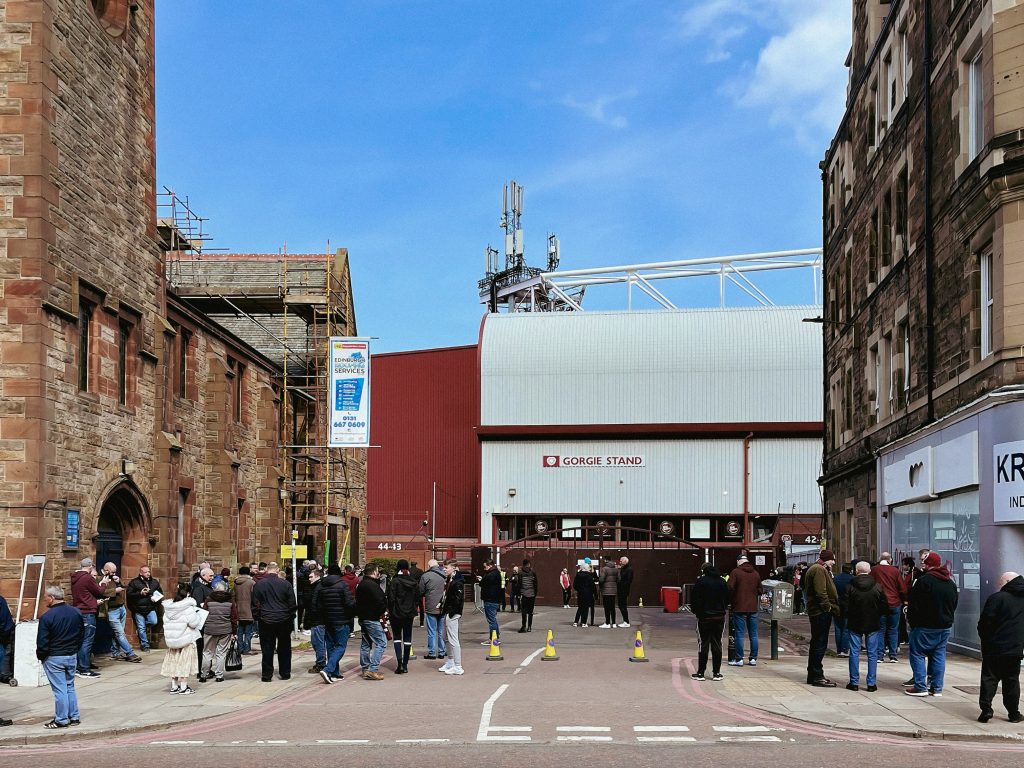
As I stepped off Lothian Bus number 25 and walked up Gorgie Road towards Tynecastle Park, something unspeakable — almost unfathomable — hung in the air, as though the bricks themselves carried memory. A quiet sense of fraternity was palpable — not loud or ostentatious, but steady and enveloping, like a familiar embrace. The warmth of the Scottish people isn’t an empty phrase or a tired cliché for visitors; it reveals itself in passing words and knowing smiles — and goes beyond politeness to become something closer to communion.
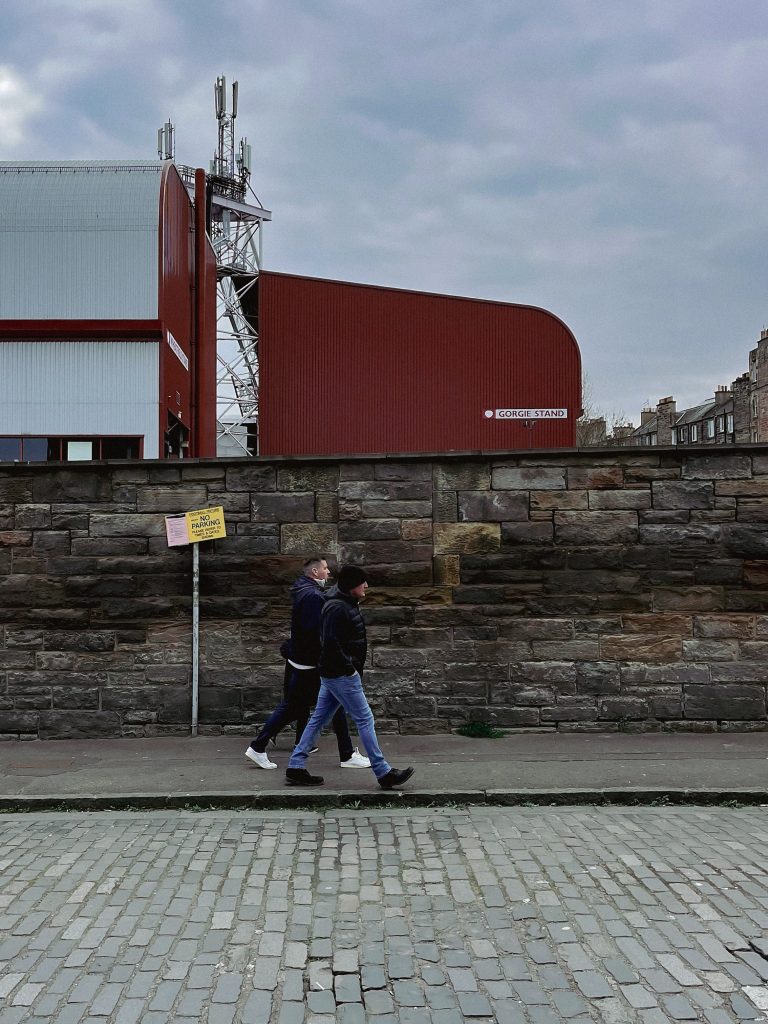
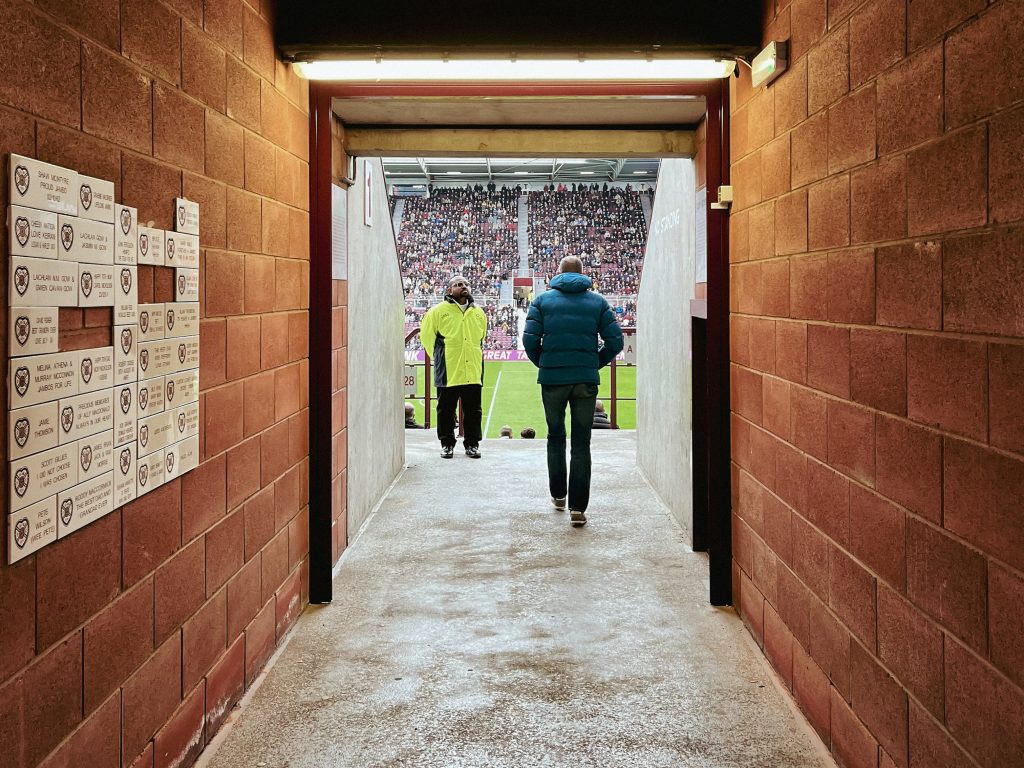
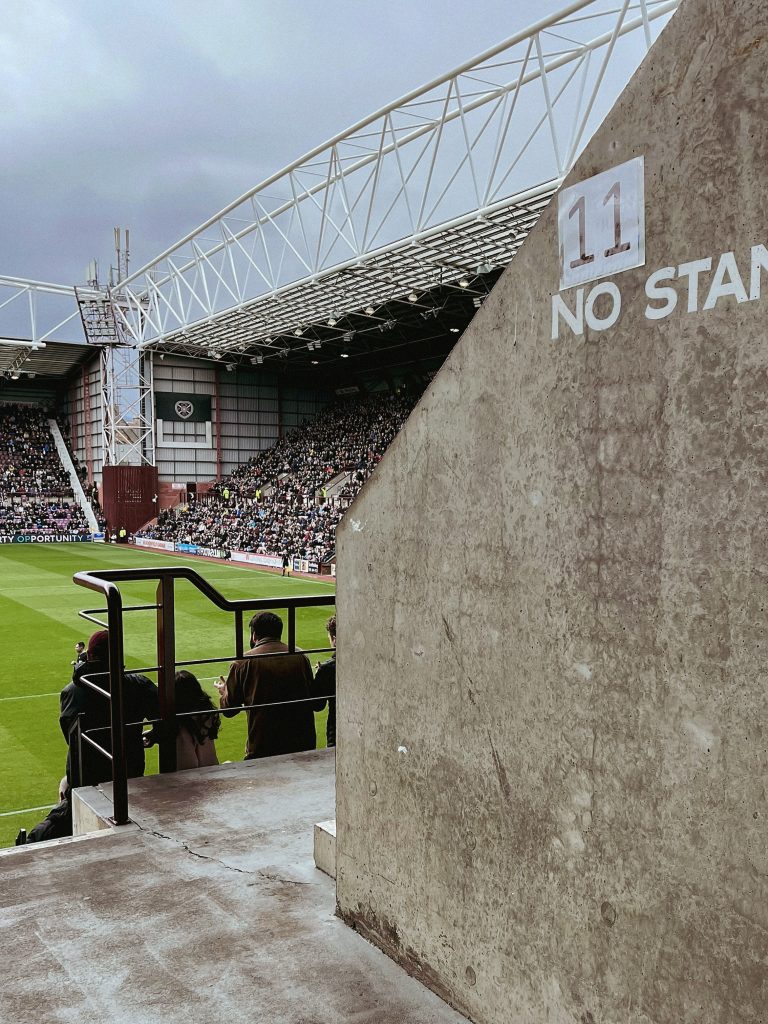

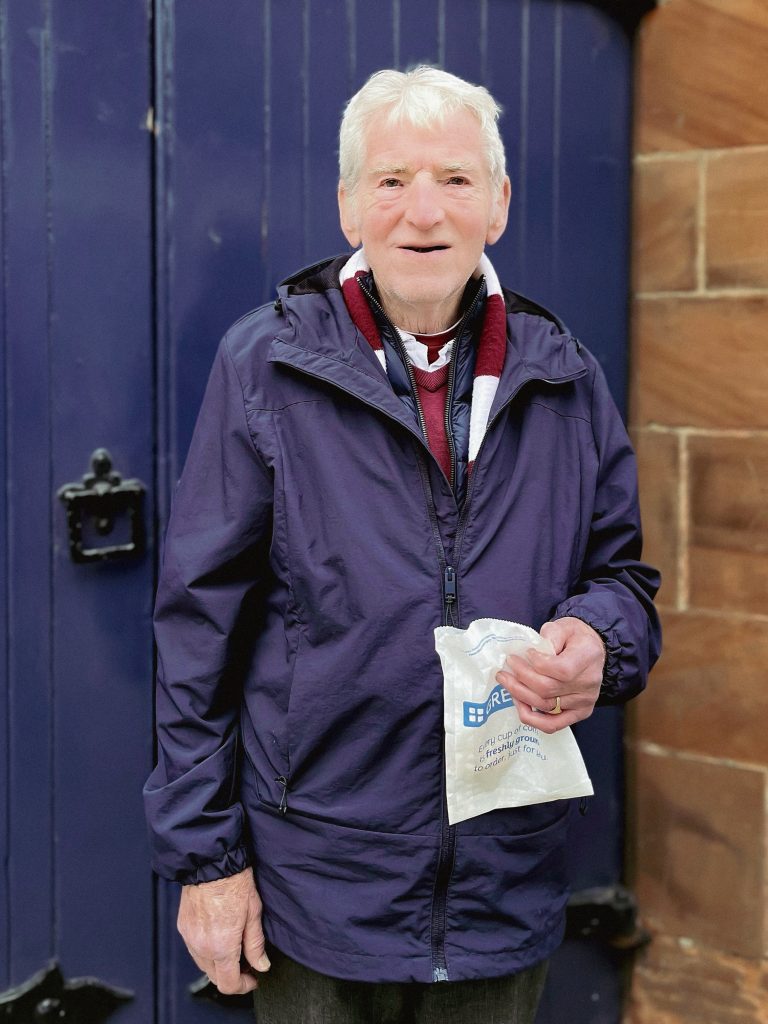

To be honest, I hadn’t done my homework before heading to Hearts v Livingston. I had no idea that Heart of Midlothian is the largest fan-owned club in the UK. The atmosphere around the stadium suddenly made perfect sense, as if the stands themselves were breathing with collective ownership and pride. Hearts is a family affair — not metaphorically, but structurally, spiritually, almost genetically. And family is sacred.
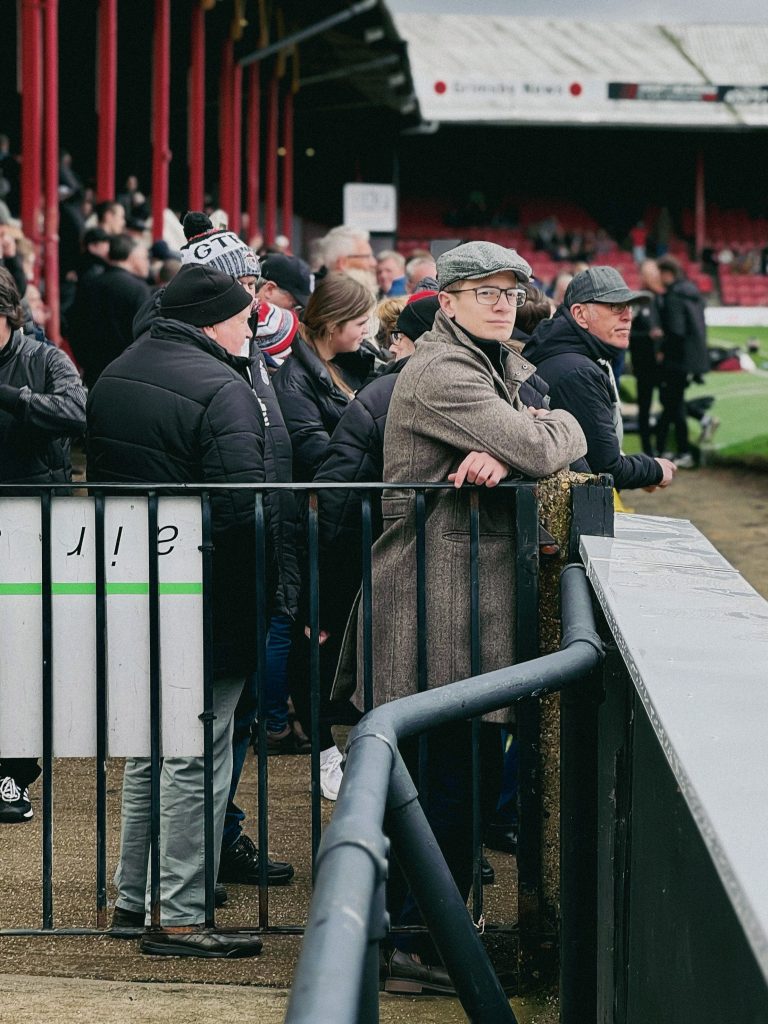
Transgenerational, and with a strong feminine presence, the crowd of the Gorgie Boys resembles a photograph taken at a family reunion — slightly chaotic, deeply affectionate, wonderfully ordinary. Men, women, and children gather not merely to watch a match, but to share a slice of life, to pass down traditions, to stitch memory into the fabric of a Saturday afternoon.



All words and images by Guirec Munier
All words and images by Guirec Munier
First Sight
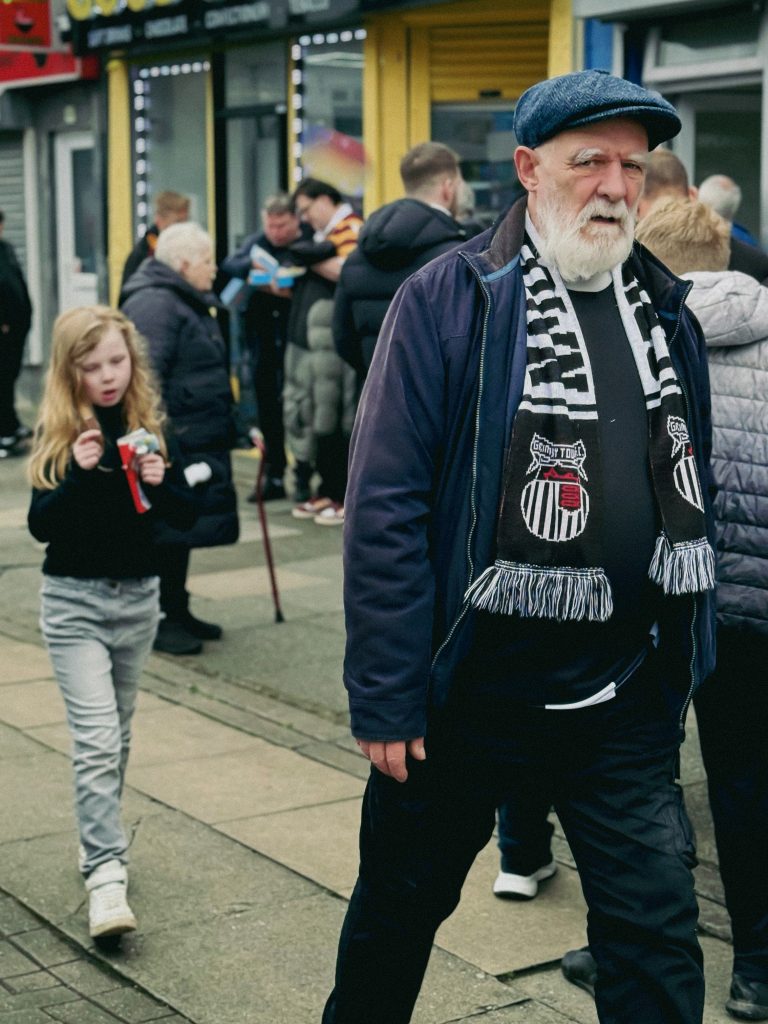
Standing on the footbridge spanning the railway line that separates Harrington Street from Cleethorpes Beach, my gaze falls upon a stadium nestled in a sea of terraced houses.
Love at first sight.
The exact representation of what a stadium is — or should be. A ground deeply rooted in its community, one that hasn’t sacrificed its soul on the altar of prosperity.
Blundell Park.
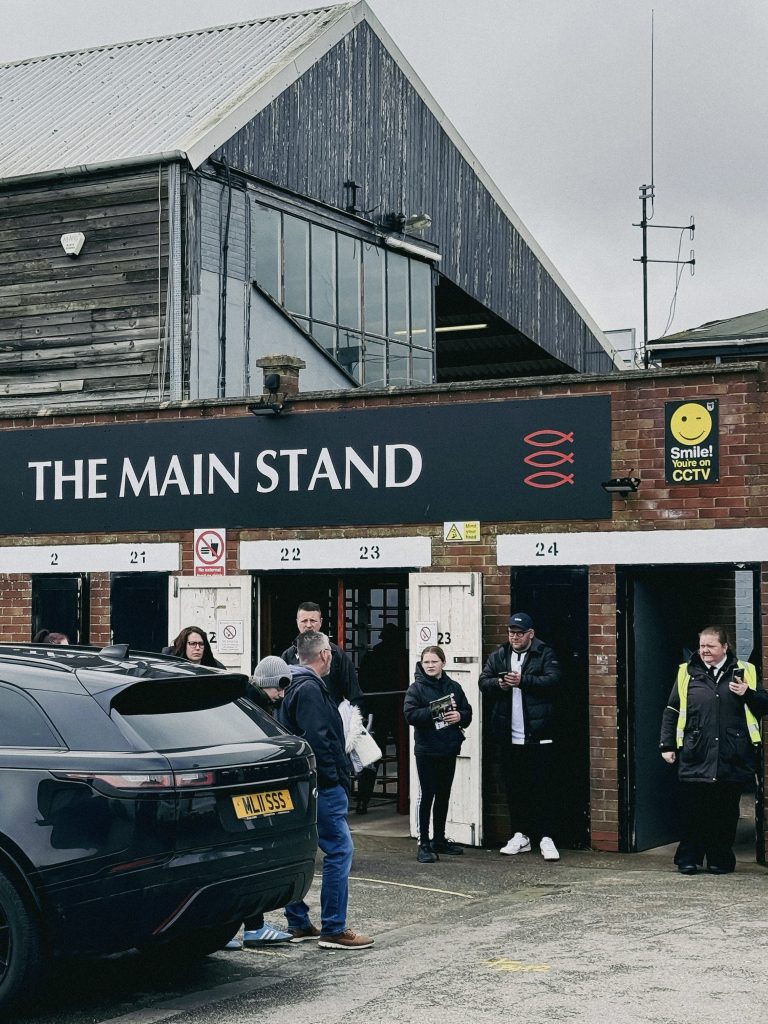
Grey Skies, Haddock and Anticipation
In the windswept streets of Cleethorpes, the colour of the sky seems to have rubbed off on everyday life. Grey. On this day, only Grimsby Town appear capable of brightening reality.
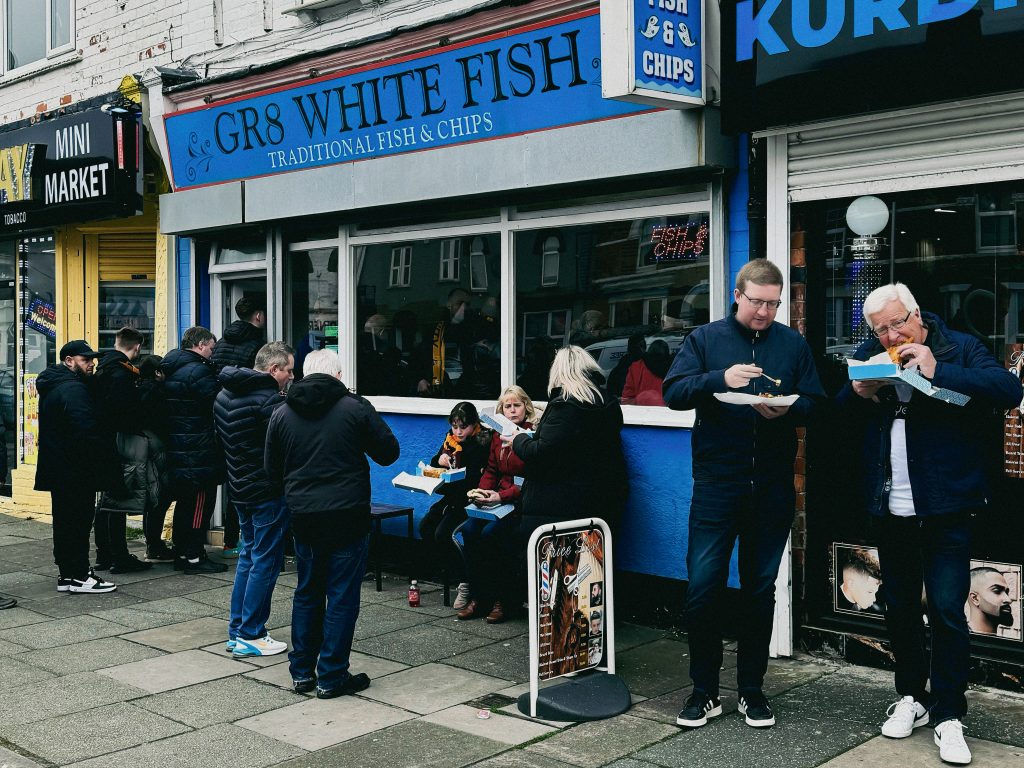
As the minutes tick by, Mariners supporters converge on McDonald’s on Grimsby Road and the local chippy, The Gr8 White Fish. Cleethorpes obliges: haddock and chips are on the menu.
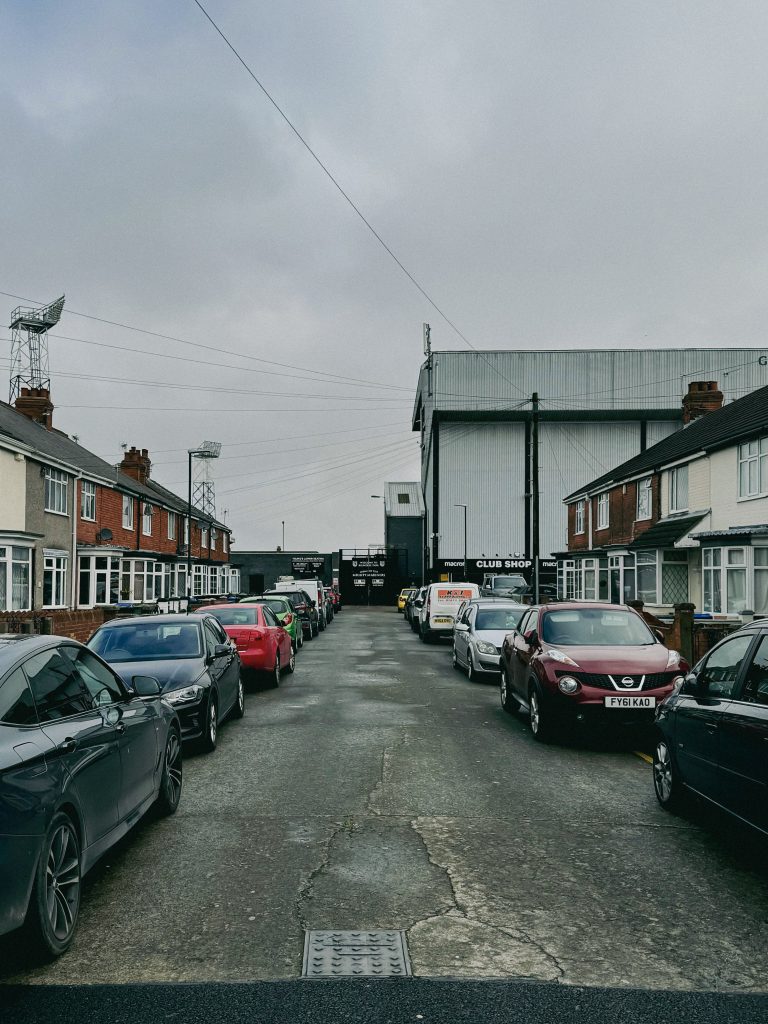
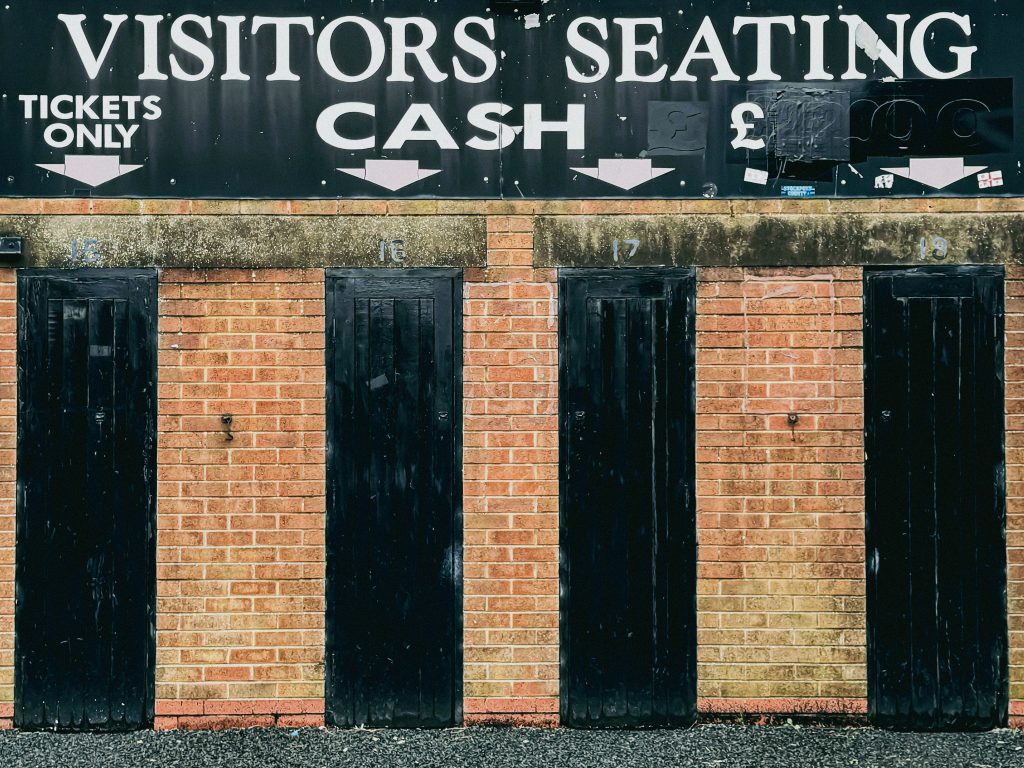
Sated — my thumb and forefinger still greasy — I take Blundell Avenue back towards Harrington Street. There, Bradford City fans disembark from coaches specially chartered for the match and head towards the second impasse leading to the away section. In front of the wooden façade of the Main Stand, sandwiched between back gardens, four turnstiles reserved for Bantams supporters sit beneath coils of barbed wire.
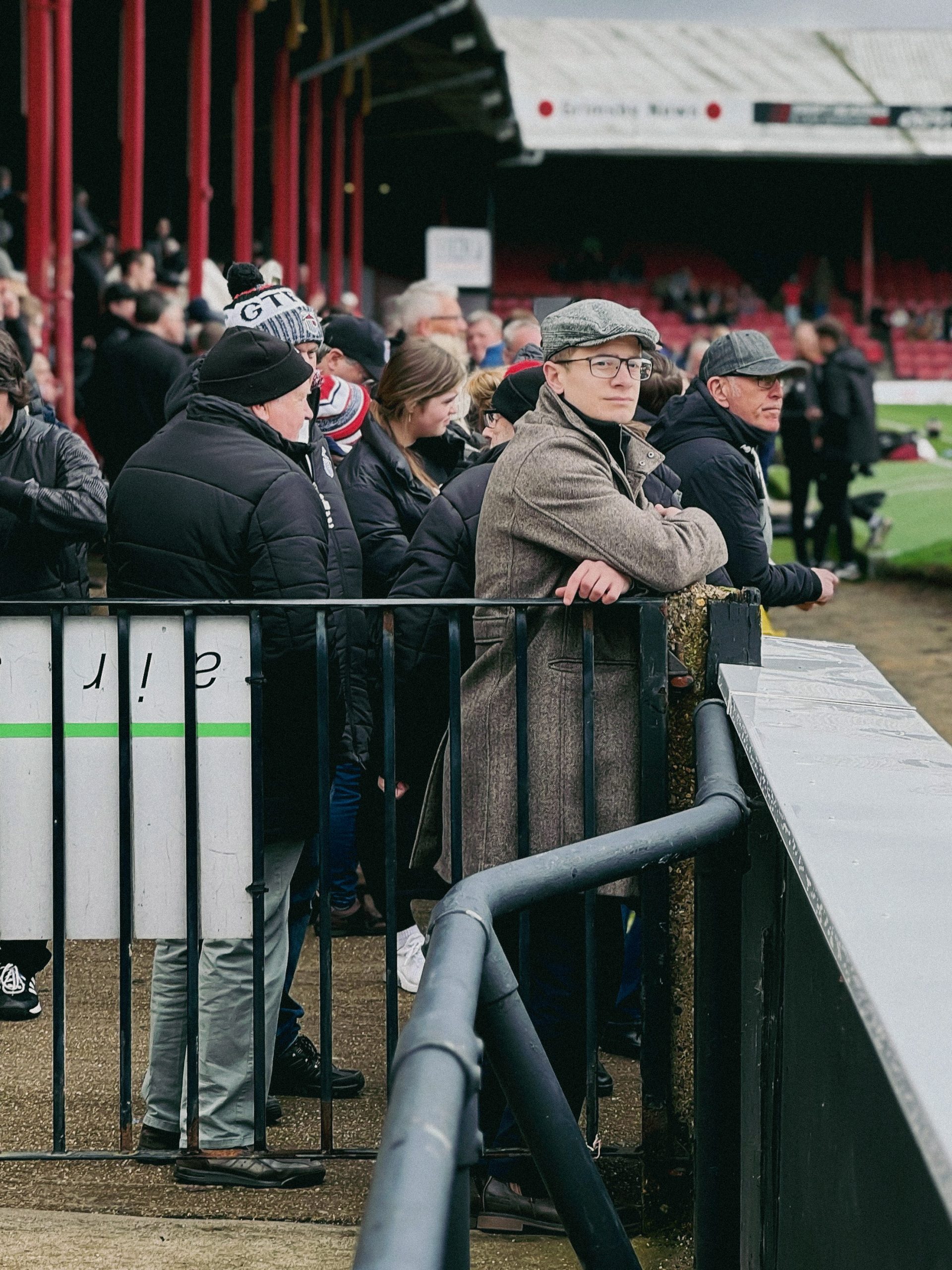
From the outside, Blundell Park seems frozen in the pre-Hillsborough 1980s. From the inside as well.
An architectural gem to be preserved for some; the ugliest stadium in Britain for others. Blundell Park divides opinion.
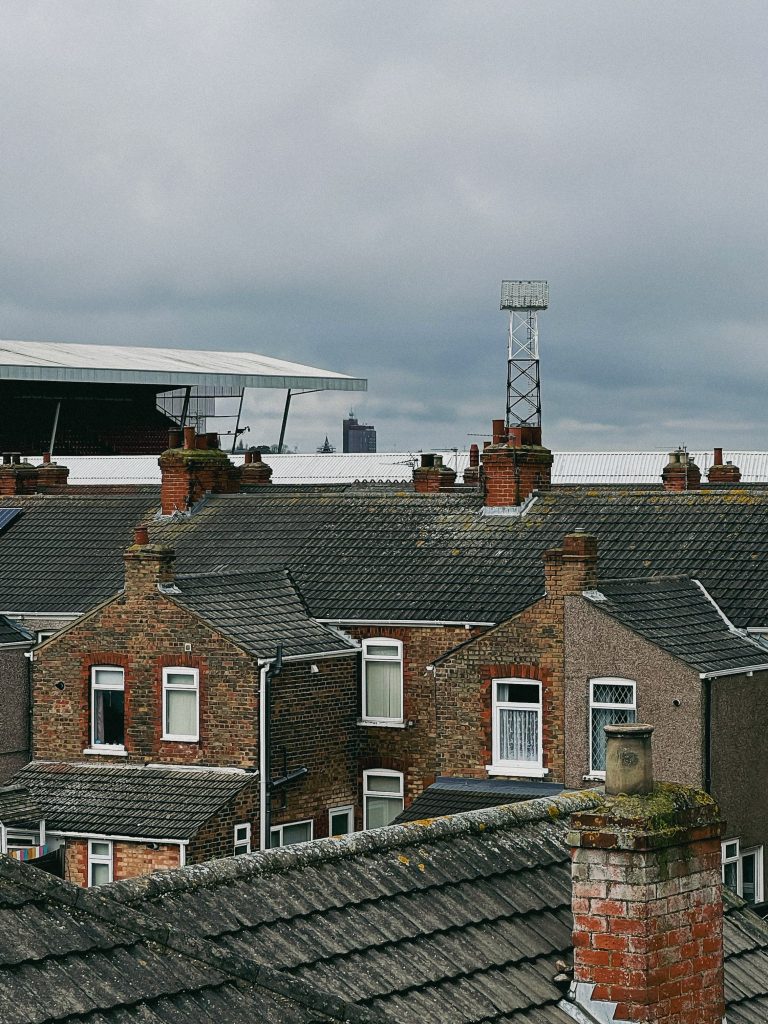
“The Ugliest Stadium in the World”?
How can a stadium arouse such contrasting feelings?
In 2016, talkSPORT put the cat among the pigeons when it published a ranking of the worst and ugliest football stadiums in the world. Blundell Park placed a dismal second.
According to GiveMeSport, with stands of completely different sizes and lengths, the ground looks skewed and poorly conceived. In desperate need of refurbishment, with parts appearing to crumble, it is deemed unattractive and unfit for modern football. Considering it opened in 1899, they argue, it is remarkable that it is still standing.
In short, talkSPORT and GiveMeSport advocate standardisation and endorse the quiet sterility of modern football.
Character Over Comfort
Standardisation and sterility? Nothing of the sort.
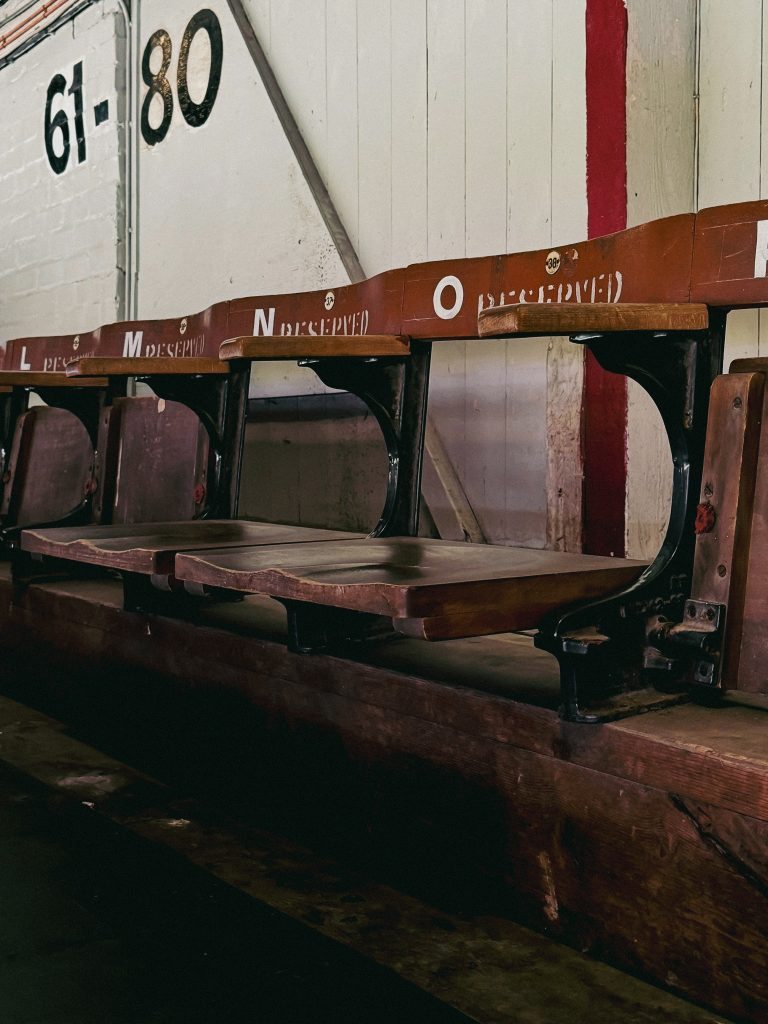
Mighty Mariner, Grimsby Town’s mascot, greets me with open arms. The Main Stand — a vestige of football’s early days and the oldest stand in the English Football League — brims with character. Admittedly, the view is restricted by timber framing and wooden pillars, but what pleasure there is in sitting on a folding wooden seat on a cool spring afternoon.
To the left stands the Osmond Stand, financed by proceeds from the 1939 FA Cup semi-final at Old Trafford — an attendance record that still stands. Its L-shape, formed at the junction with the Main Stand, reflects periods of sporting success: promotions to the First Division in 1902 and 1929, and that famous 1939 cup run.
To the right, the Pontoon Stand was also built with funds raised by Grimsby Town supporters. The Findus Stand, financed by the frozen food brand that sponsored the club between 1979 and 1984 and served as a major local employer, offers a panoramic view of the Humber Estuary, where trawlers once returned laden with cod, pollock and haddock.
Even the floodlights tell a story. Standing 128 feet tall, these second-hand pylons illuminated Wolves’ first floodlit match at Molineux in 1953.
“It was the floodlights that made football magical for me — it turned football into theatre,” recalled a seven-year-old boy who attended that evening. His name was George Best.
Every element of Blundell Park carries its own narrative. Together, they crystallise the essence of the town.
A Town and Its Image
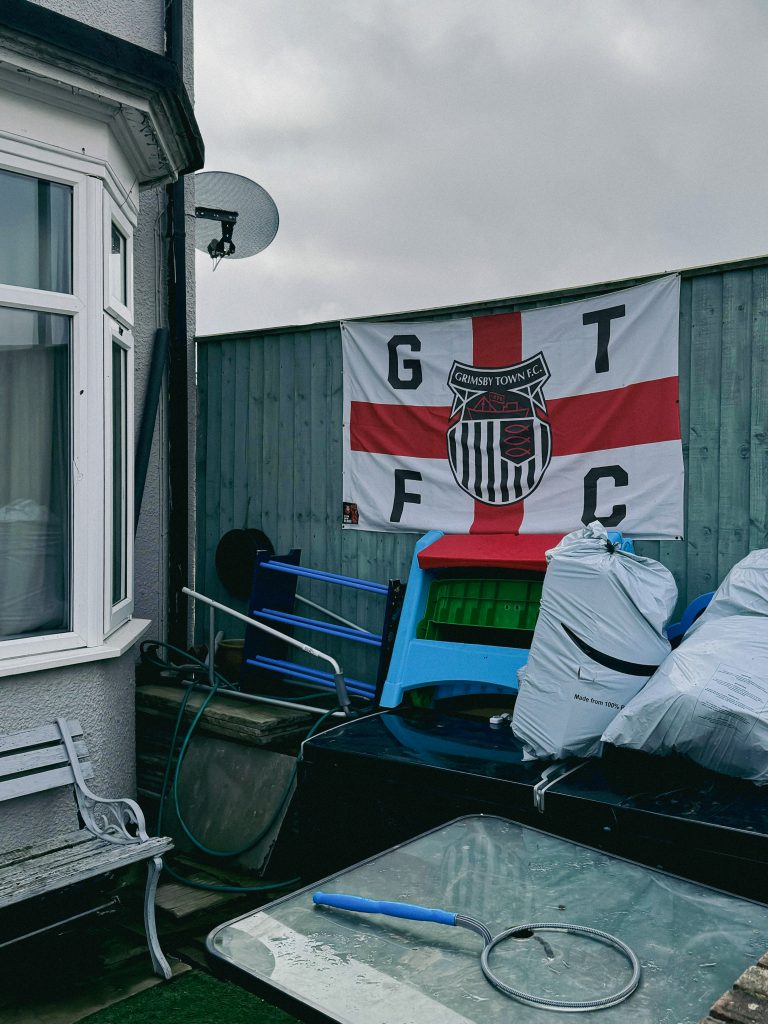
The town of Grimsby — and the bleak image that clings to it — mirrors the trajectory of its storied stadium.
The former largest fishing port in the world has indeed endured economic decline. But should we draw a line through its past to improve its present and future?
Like talkSPORT, one could imagine a tabloid peremptorily declaring that Grimsby is unfit for the modern world, that its horizons would be clearer after the arrival of bulldozers, or that Parliament should consider re-enacting the New Poor Law of 1834 for this corner of Lincolnshire.
But progress without memory is amnesia.
What Is Profit Worth?
If Grimsby Town ever decide to turn its back on more than 125 years of history by building a stadium resembling a shopping centre, the soul of the local community will have been traded for a vast car park, an unobstructed view, and shorter queues for overpriced pints.
It is not all profit, for fuck’s sake.
Blundell Park opened in the same week in September 1899 as White Hart Lane, Highfield Road, Hillsborough and Fratton Park.
Will it share the fate of the first two?
All words and images by Guirec Munier
Most Trusted Australian Online Casino
This article breaks down what makes the most trusted australian online casino. We highlight how to spot reliable sites, which features to look for, and who should consider online casinos in Australia. Useful for anyone interested in safe gaming. Skip if online casinos are not for you. By the end, you’ll know how to choose the right platform and what real trust means in this industry.

Top Casino Choices for Australian Players
Overview of Games at Trusted AU Casinos
Licensed online casinos in Australia provide pokies, blackjack, roulette, poker, live dealer games, and more. The most trusted australian online casino features modern sportsbook options, secure baccarat, and fair keno, all independently certified for reliability. This means safe, high-quality entertainment from genuine operators.
Best slots collection on most trusted australian online casino
Online pokies and slots are digital machines featuring various themes and jackpots, available anytime. These games use random number generators for fair outcomes and instant play. Below, pick a favourite slot or pokie and test your luck, either with free demos or by betting real money for real rewards.
Who Needs a Trusted Casino in Australia
Anyone looking for a secure gambling environment in Australia needs the most trusted australian online casino. It is suitable for both new and experienced players who value fair play, data protection, and on-time payouts. Understanding this helps avoid scams and enhances your online gaming journey.
Top Casino Choices for Australian Players
- CasinoAussie
- GoldStar Play
- TrueBlue Casino
- Kangaroo Bets
- AU Slots Paradise
- Southern Cross Wins
How To Choose Most Trusted Australian Online Casino
Importance of Licensing & Regulation
Licences from AU-recognised authorities are key. Always check for active certificates displayed in site footers.
Random Number Generators & Software Audits
Provably fair games rely on independent RNG audits and software checks conducted by third parties like eCOGRA.
Player Protection Measures
Look for clear policies on self-exclusion, deposit limits, and support for problem gambling.
Bonuses & Player Perks: What’s Legit?
- Welcome bonuses for first deposits
- No-deposit offers for new sign-ups
- Loyalty rewards for regular play
- Free spins on slots and pokies
- Cashback on losses
- Tournament prizes
- Special VIP programs
Overview of Games at Trusted AU Casinos
Australian online players can enjoy pokies, table games, roulette, blackjack, baccarat, and video poker. The most trusted australian online casino offers live dealer rooms, progressive jackpots, and real sportsbook options. All services run on certified software for fair outcomes and entertainment value.
Table and Card Games Explained
Classic blackjack, baccarat, and roulette are crowd favourites. Advanced tables host multiple variations for all skill levels, ensuring a spot for every play style.
Sportsbook and Live Bets Overview
Many trusted sites also include local and global sports betting with real-time odds and cash out choices.
Popular Pokies and Slots Favourites
Online pokies and slots make up the majority of games offered. You’ll find everything from traditional fruit machines through to progressive jackpots and modern video slots below. Pick a title and play for free or real money with fast results.
| Slot Name | Type | Volatility |
|---|---|---|
| Big Red | Pokie Classic | Low |
| Buffalo Blitz | Video | Medium |
| Mega Moolah | Progressive | High |
| Starburst | Video | Low |
| Lightning Link | Pokie Jackpot | Medium |
Minimum Requirements for AU Players
- Players must be 18+ with valid Australian ID
- Have a reliable internet connection
- Accept local payment solutions
- Register with accurate details
- Understand casino T&Cs before betting
- Comply with AU laws regarding online gambling
Payment Methods for Australians
Popular Deposit & Withdrawal Options
Most sites accept Visa, MasterCard, bank transfer, POLi, Neteller, and Skrill. Some allow cryptocurrency.
Withdrawal Times and Potential Delays
Withdrawals are usually processed within 24-72 hours. Verification paperwork can cause delays.
Legal Insight and Security at AU Casinos
How Data & Funds Are Safeguarded
Reputable casinos use SSL encryption and privacy policies to prevent identity theft and financial fraud.
Game Fairness Standards
Only bet on casinos with regular audits and transparent RTP rates.
Mobile Casino Experience
Top AU casinos deliver their full library on iOS and Android. Mobile-optimised sites do not sacrifice game quality or payout speed. Apps may offer exclusive bonuses and notifications.
Stories From Real Aussie Players
Locals often pick casinos by reading reviews and checking payout histories. Reliable customer support and fast problem resolution are deal breakers. Community forums give extra insight into what the most trusted australian online casino looks like in practice.
FAQ – Most Trusted Australian Online Casino
How do I verify a casino’s trustworthiness?
Check for recognised AU or international licensing, reviews, and transparent T&Cs. Look for SSL encryption and independent game audits.
Are all Australian online casinos legal?
Only those with valid licences serve AU players lawfully. Many overseas casinos also accept Australians, but not all hold required certifications.
Which casino games are most popular in Australia?
Pokies top the list, followed by blackjack, roulette, baccarat, sports betting, and live dealer rooms.
Can I get bonuses as an Australian player?
Yes, welcome packages, free spins, and loyalty points are standard at most trusted sites for Australians.
Is my personal info safe at trusted casinos?
Yes, so long as you play at regulated sites using strong SSL security and privacy policies.
This WA Government page is useful when you need an official source on gaming and wagering regulation in Western Australia. dlgsc.wa.gov.au
Best Online Casinos in Australia 2024
Australia’s online casino scene keeps growing rapidly, serving thousands of pokies lovers and table game fans. Here’s a close-up review of the most popular casino brands that Aussies trust today.
21 Casino in Australia
21 Casino stands out for its sweeping choice of pokies and live dealer options. Aussie players love the instant withdrawals and smooth mobile play, especially for real money slots. 21 Casino accepts AUD, which makes banking easy for locals.
Betiton Casino Features
Betiton Casino made an impact with its fast-growing game lobby and regular promos for Australians. It’s home to top providers, plenty of table games and a packed sports betting section. Reliable customer support and responsible gambling tools are also prominent here.
BSpin Casino in Australia
With its crypto focus, BSpin Casino attracts tech-savvy Aussies who want quick deposits and withdrawals with Bitcoin. The promotions regularly include free spins for new pokies releases and regular cashback offers for loyal members.
Casino Swish Insights
Casino Swish delivers a sleek user experience with hundreds of pokies from international studios. Australians report smooth mobile play, low minimum deposits, and friendly customer support, making it a favourite this year.
Casoola Casino Overview
Casoola Casino gives off a playful vibe yet offers serious gaming power. Top picks include progressive jackpots, exclusive loyalty rewards, and fast payout speeds that outshine many competitors in Australia.
Fair Go Casino Experience
Fair Go is a local legend, offering pokies crafted for Aussie tastes and 24/7 support. There’s always a promotion running, from bonus spins to cashbacks, and withdrawal times are among the fastest for players Down Under.
Guts Casino Review
Guts Casino is loved for its transparent bonuses and strong game library. Aussies enjoy safe payments, real-time chat help, and a modern app for pokies and table games.
High Roller Casino Appeal
Exclusivity rules at High Roller Casino, where Australians can access massive limits, luxury loyalty perks and exclusive tournaments. It’s a prime pick for high-stakes fans chasing big wins.
Jackpot City Casino for Aussies
Jackpot City brings legendary jackpot pokies and an effortless mobile lobby. Many Australians choose it for daily promotions and secure local banking options.
Merkur Casino Updates
Merkur Casino offers a blend of classic and new-gen slots with RTP values that appeal to keen pokie fans. Regular slot tournaments add to the excitement for Aussie players.
PlayAmo Casino Highlights
PlayAmo is well-known for its huge game menu, lightning withdrawals, and bonus-loaded VIP programs. Cryptocurrency support and fresh pokies weekly is another bonus locals rave about.
Pokiez Casino Insights
Pokiez Casino remains a fan favourite for its Aussie-style slots and flexible payouts. Free spins promos and tournaments keep the action lively every week.
Royal Ace Casino for Aussies
Royal Ace stands strong with rewarding bonuses and a mix of classic and new pokies. Aussies often highlight its smooth payouts and 24hr customer care services.
SkyCrown Casino in Australia
SkyCrown boasts a dazzling pokies collection and fast-track registration. Australians note the VIP perks and quick cashouts as key upsides for 2024.
SlottyWay Casino Features
Popular with slot fans, SlottyWay offers mega free spins deals and an impressive array of new releases. Australians praise its loyalty ladder and responsive cashouts.
Spin City Casino Experience
Spin City delights with instant play pokies and a modern interface Australians appreciate. 24/7 support, plenty of banking choices, and secure licenses are top strengths here.
Super Slots Casino in Australia
Super Slots attracts new players with monster welcome bonuses and weekly reloads. Aussie gamers enjoy over a thousand titles and top-notch security for safe gambling online.
Uptown Aces for Aussies
Uptown Aces caters to slot enthusiasts with tailored bonuses, regular cashback and a robust selection of mobile games. The support team is known to be some of the best in the online Aussie scene.
WPT Casino Australia
Bringing the World Poker Tour vibe online, WPT Casino gives Australian fans unique tournaments, regular events and loaded poker action, plus a growing pokies section.
Wolf Winner Casino Overview
Wolf Winner is a newer favourite for its reliable payouts, outstanding selection of pokies and exclusive player bonuses. Australians enjoy friendly service and consistent new promotions.
Safe and Responsible Gambling for Australians
When playing at any online casino in Australia, it’s vital to set limits and play responsibly. Use built-in responsible gambling tools, never play beyond your means and enjoy online casinos as entertainment only. Stay safe and play smart.
All words and images: Luca Miscioscia
Luca arrived in Florence for the Fiorentina–Pisa derby, but not for the match alone.
He came to walk the streets of the Renaissance, to sit at a traditional Florentine table, and to feel how a city of art responds when football becomes urgent. Because in Tuscany, rivalries stretch beyond ninety minutes, they are written into bread without salt, into civic pride, into history itself.
This is his experience of Florence: the food, the view, and a derby decided by fine margins.
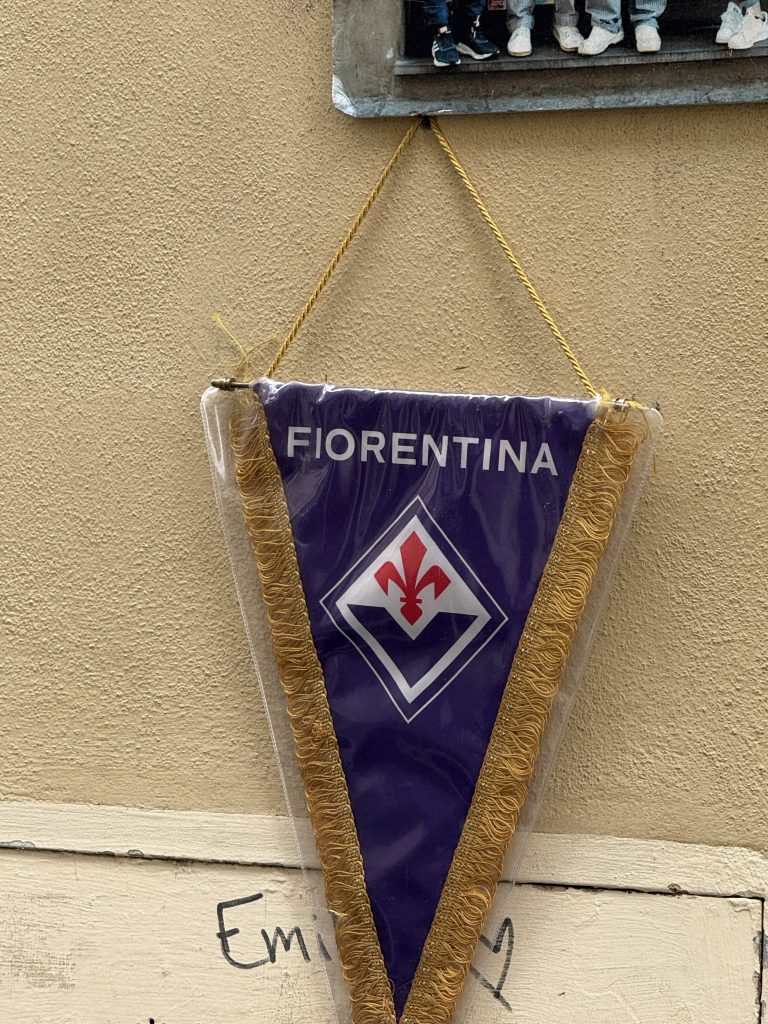
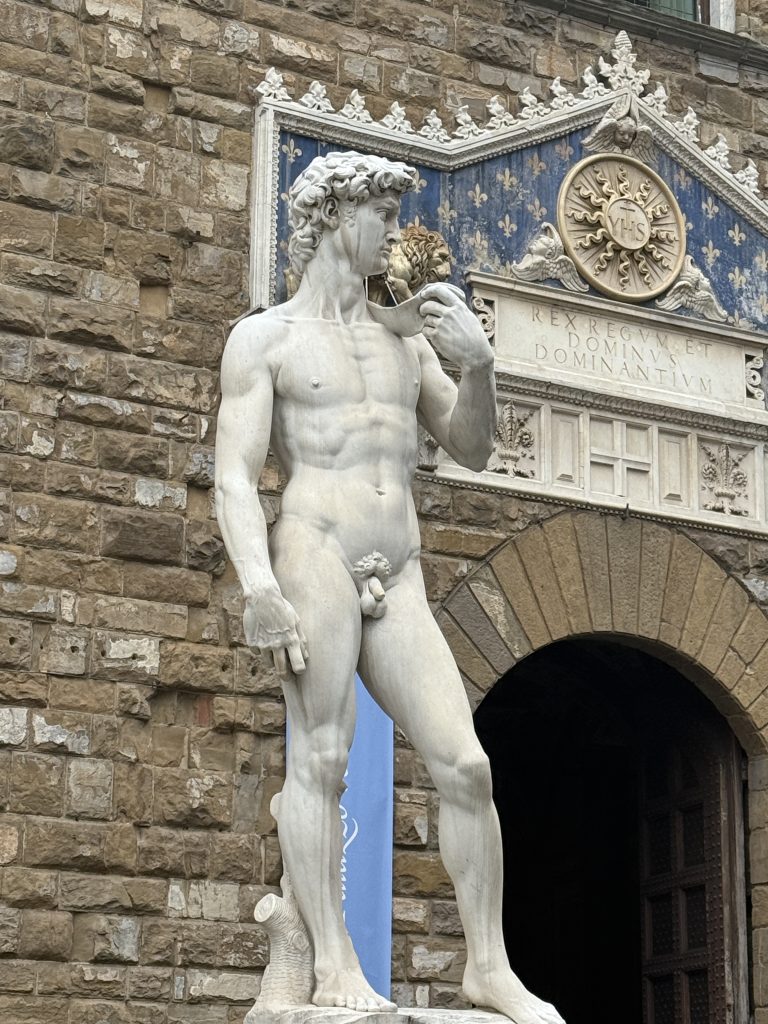
We’re in Tuscany, central Italy, in the legendary city of Florence, cradle of the Renaissance, a city of art and history that welcomes millions of visitors from all over the world each year.
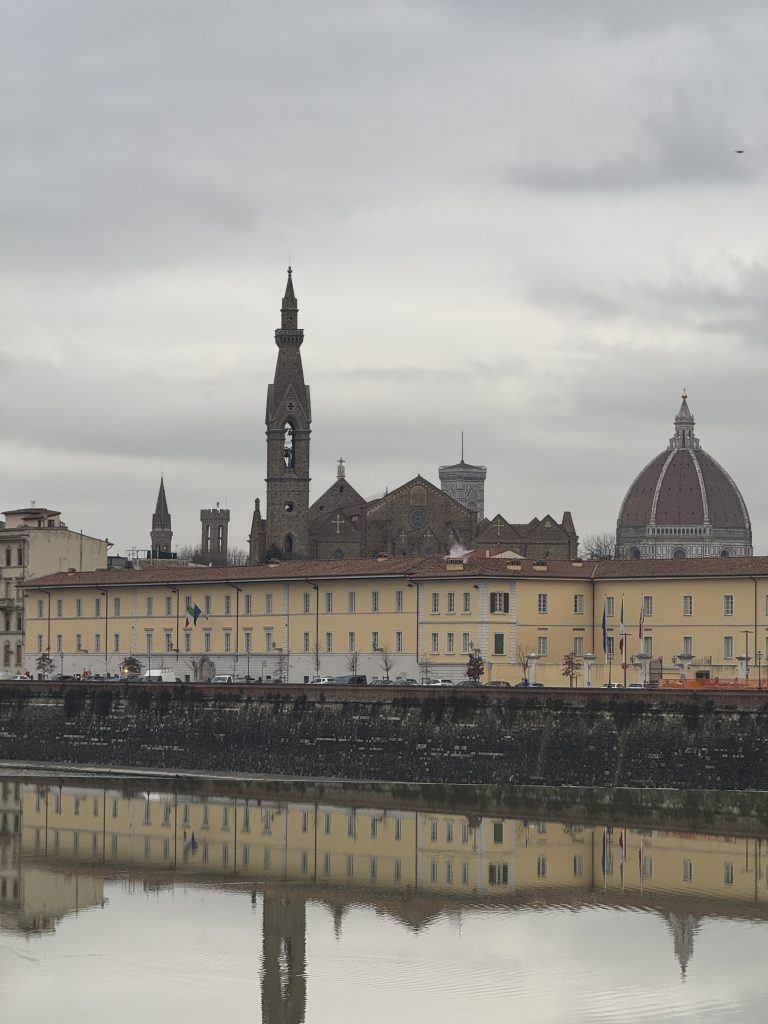
The Ponte Vecchio stretches across the Arno like a symbol of permanence. The Cathedral of Santa Maria del Fiore dominates the skyline. The Uffizi Gallery holds centuries of artistic genius. These are just some of the treasures you find here.
From Piazzale Michelangelo, in the upper part of the city, Florence opens up completely. You can admire it in full — rooftops, domes, towers, and the Arno River dividing the city into two. It’s a view that reminds you how much history lives within these streets.
But Florence is not only art and architecture.
It’s also food.

At the Table
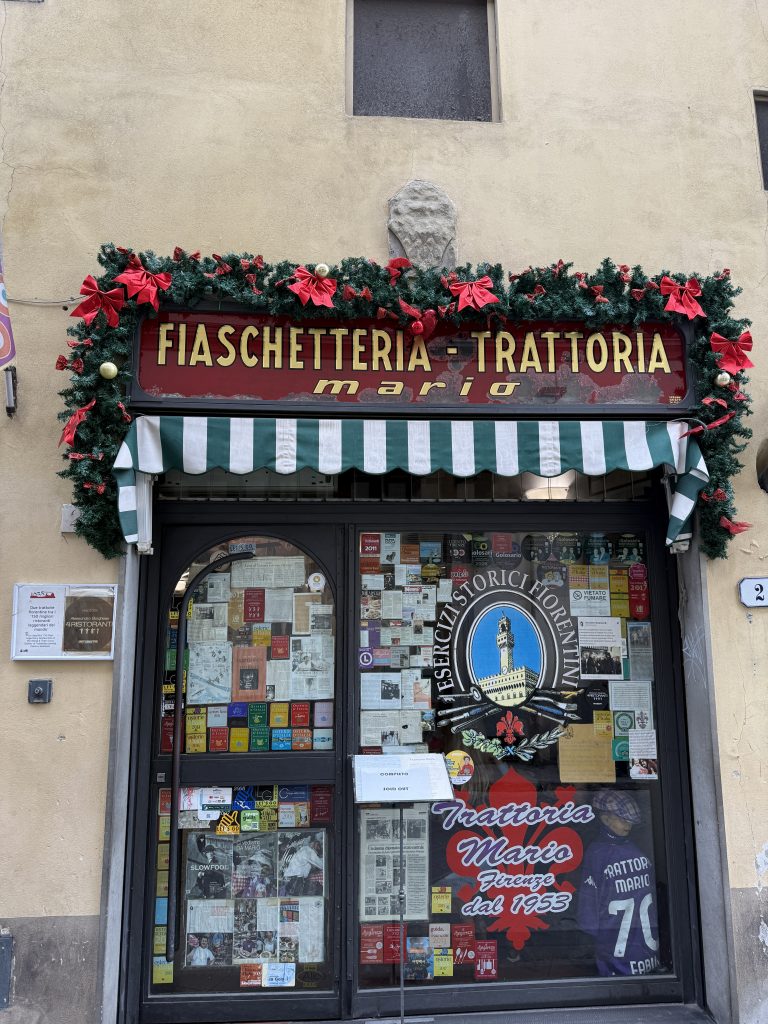
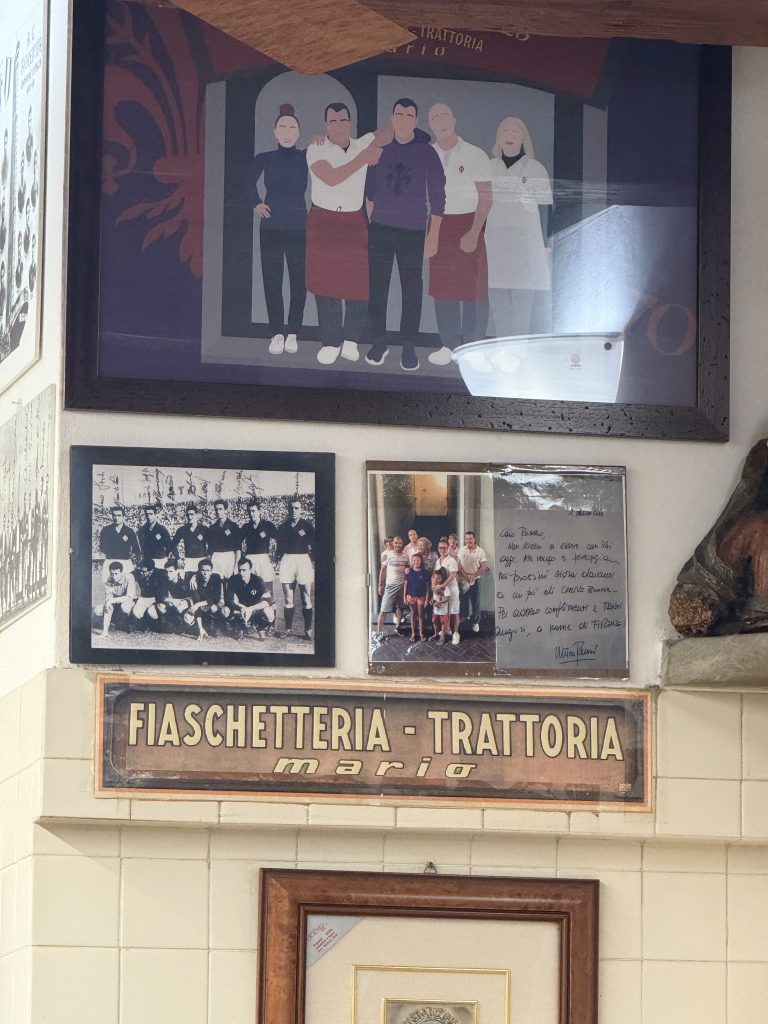
I visited Trattoria Da Mario, a traditional Florentine restaurant where the atmosphere feels unchanged by time.
I started with ribollita.
Florentine ribollita is a rustic dish of peasant origin — a “lean soup” made with vegetables, legumes, and stale bread. It comes from a tradition of wasting nothing, especially bread. Originally, peasant women prepared large quantities of vegetable and bean soup, often on Fridays, the traditional day of fasting. The following day, the leftovers were “reboiled” in a pot with a drizzle of olive oil — hence the name ribollita.
Even the bread tells a story. Stale bread, known as pane sciocco, became popular in Florence when Pisa held a monopoly on salt. In response, Florentines began making unsalted bread — still called “sciocco” or “raffermo” today.
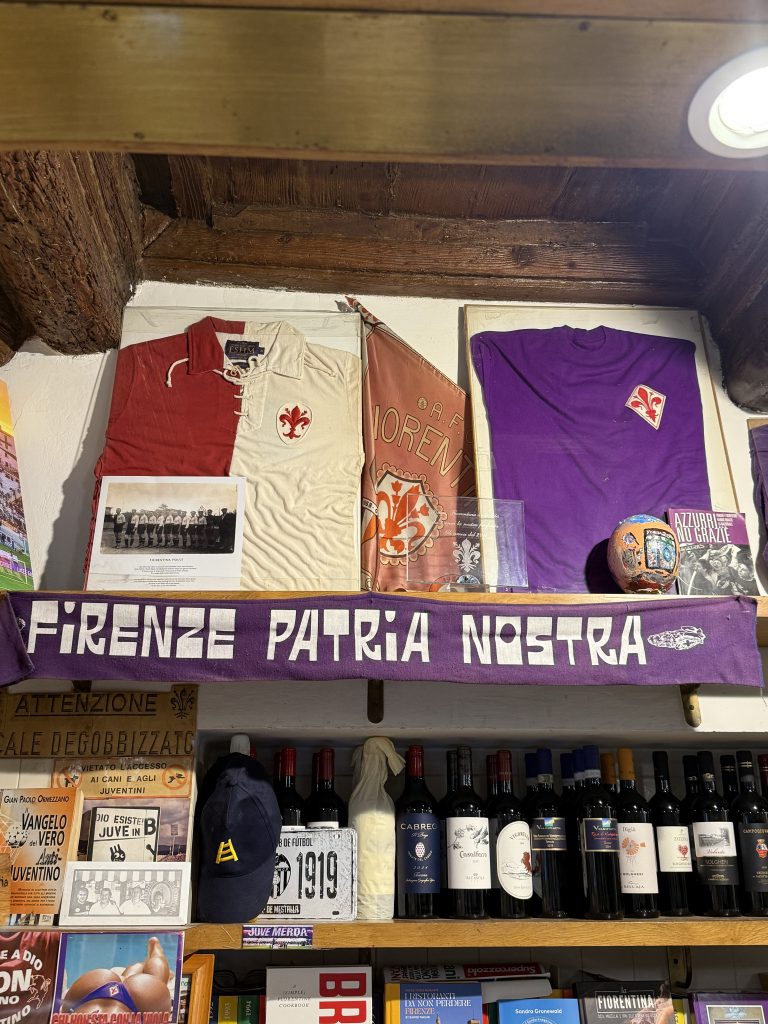
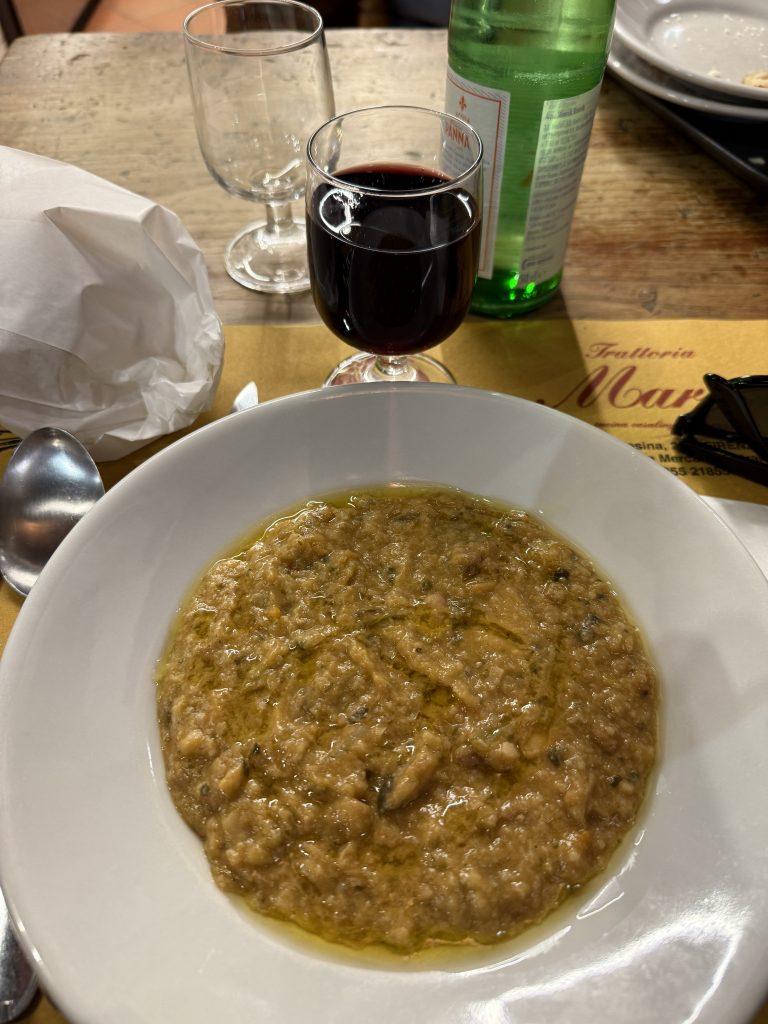
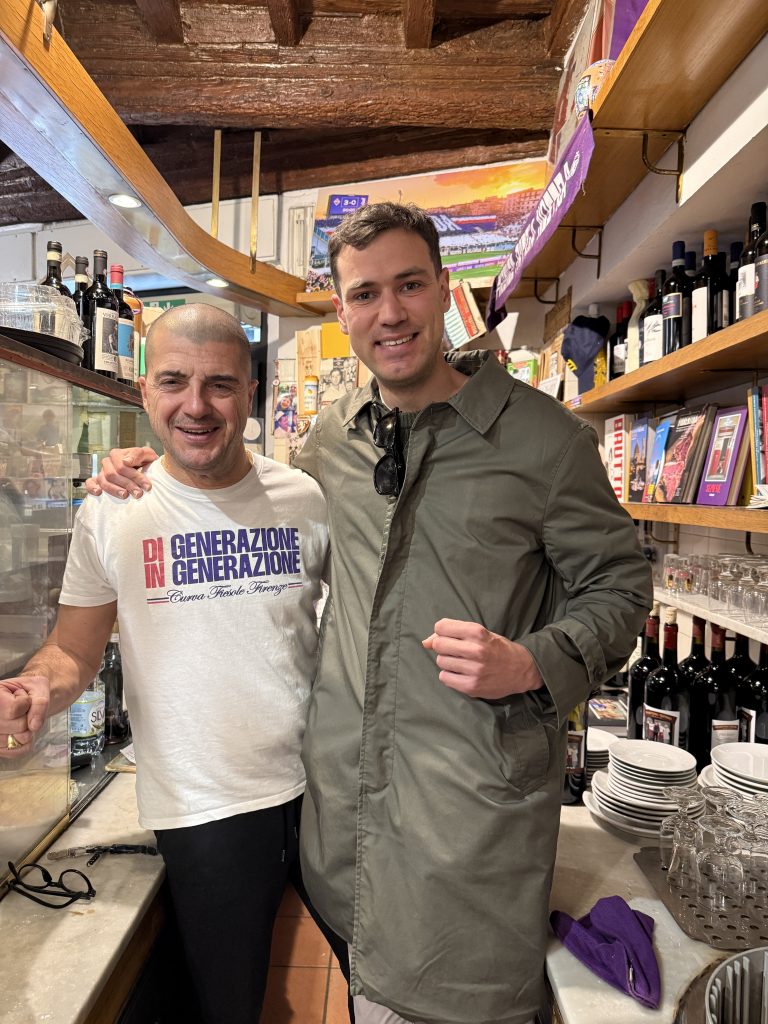
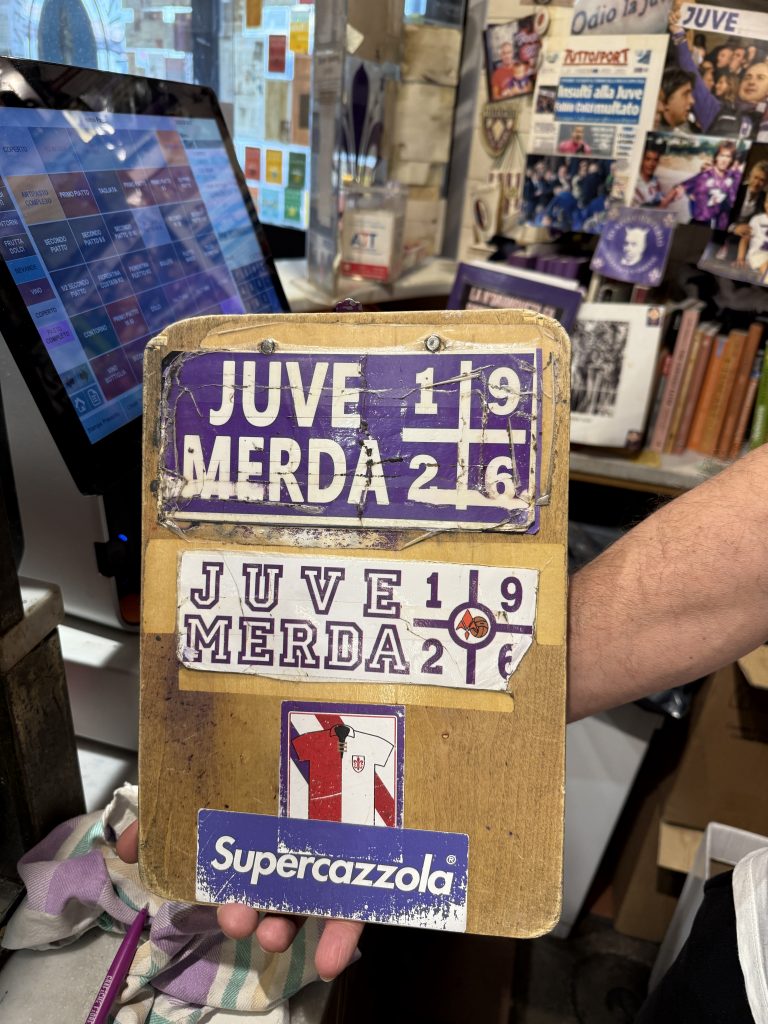
Even in cuisine, the Florence–Pisa rivalry runs deep.
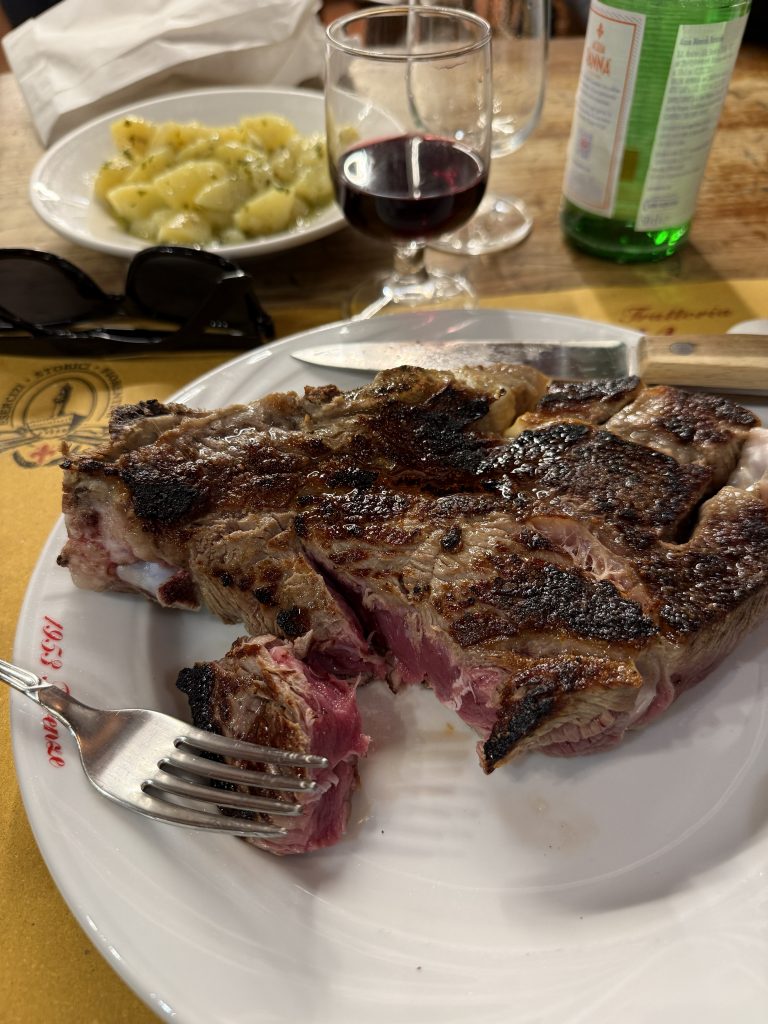
Next came the rib-eye steak — locally called ciccia. Rare and delicious, just as it’s prepared in Florence. Paired with baked potatoes and a glass of red wine, it was simple, direct, and deeply satisfying.
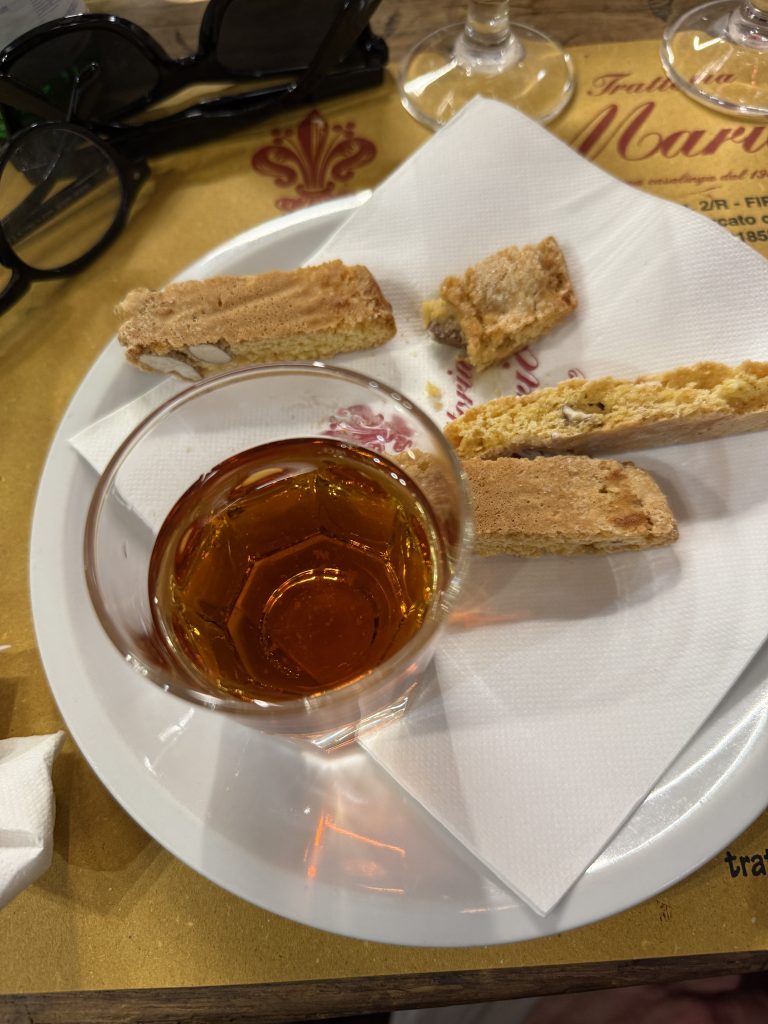
To finish, I had a typical Florentine dessert: cantucci col Vin Santo, dry almond biscuits dipped into Vin Santo, the Tuscan dessert wine made from carefully selected grapes. It’s not just dessert; it’s ritual.
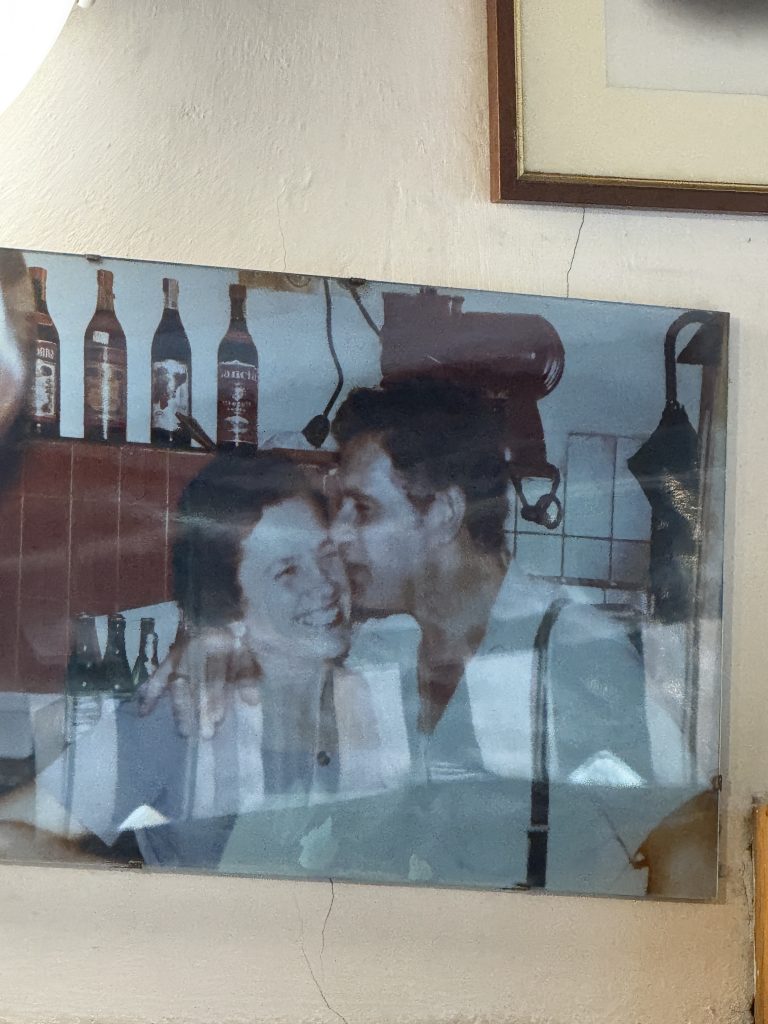
Before leaving, I stepped into the kitchen to watch the chefs at work. A memorable moment in a traditional restaurant where the air carries the scent of history and regional identity.
If you’re passing through Florence, this is a place worth seeking out.
The Derby
And then, football.
Not just any match — Fiorentina–Pisa. A true Tuscan derby between two historic cities.
This season, Fiorentina has struggled and sits in the relegation zone, as does Pisa, who returned to the top flight after 34 years away. The stakes felt heavy before kickoff.
I was seated in the Maratona stand, opposite the press box. Due to maintenance work, the Curva Fiesole has temporarily relocated to the Curva Ferrovia, but the intensity has not diminished.
For this match, maximum support was required — and the fans delivered, pushing the team forward without pause.
Fiorentina won 1–0.
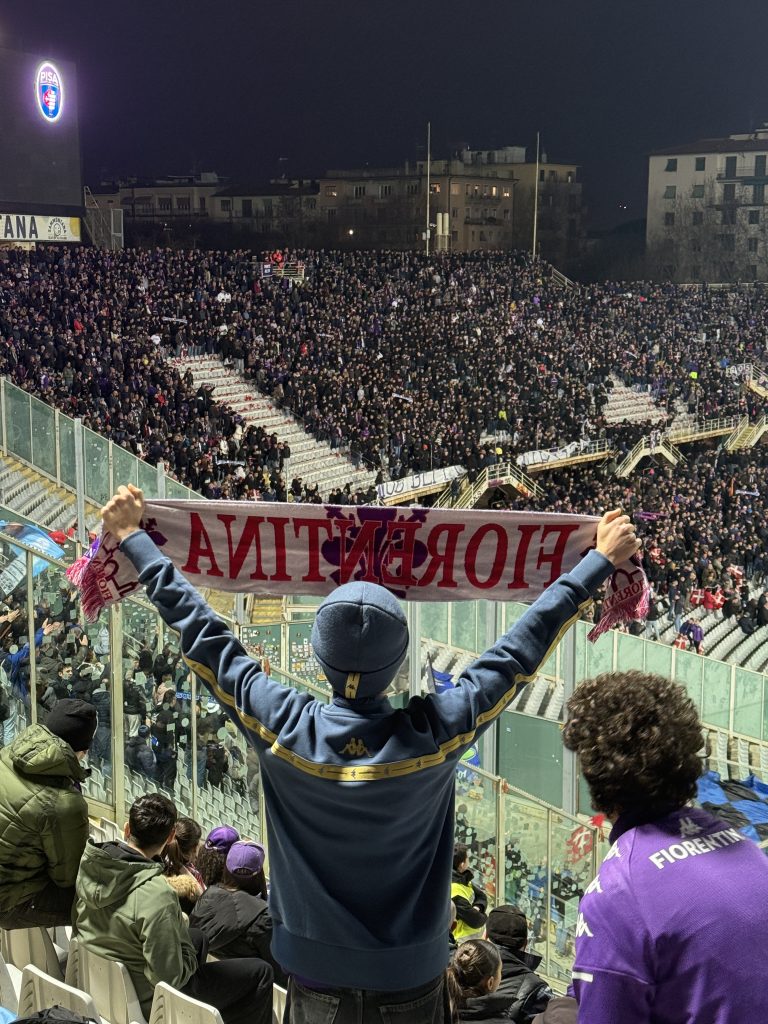
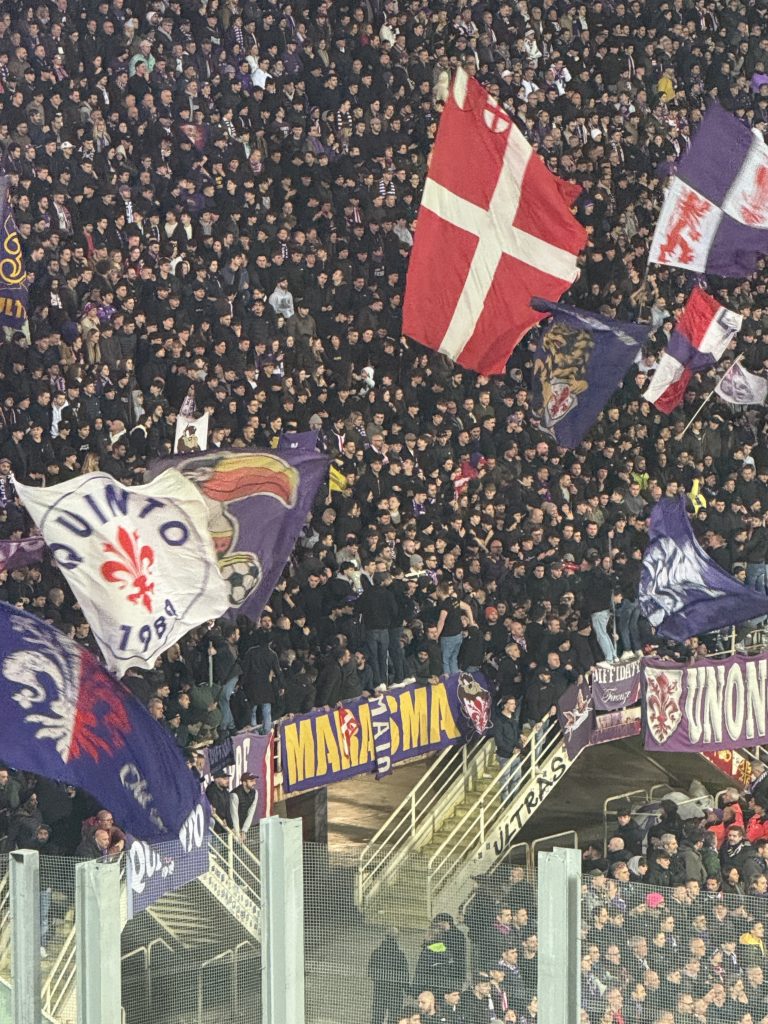
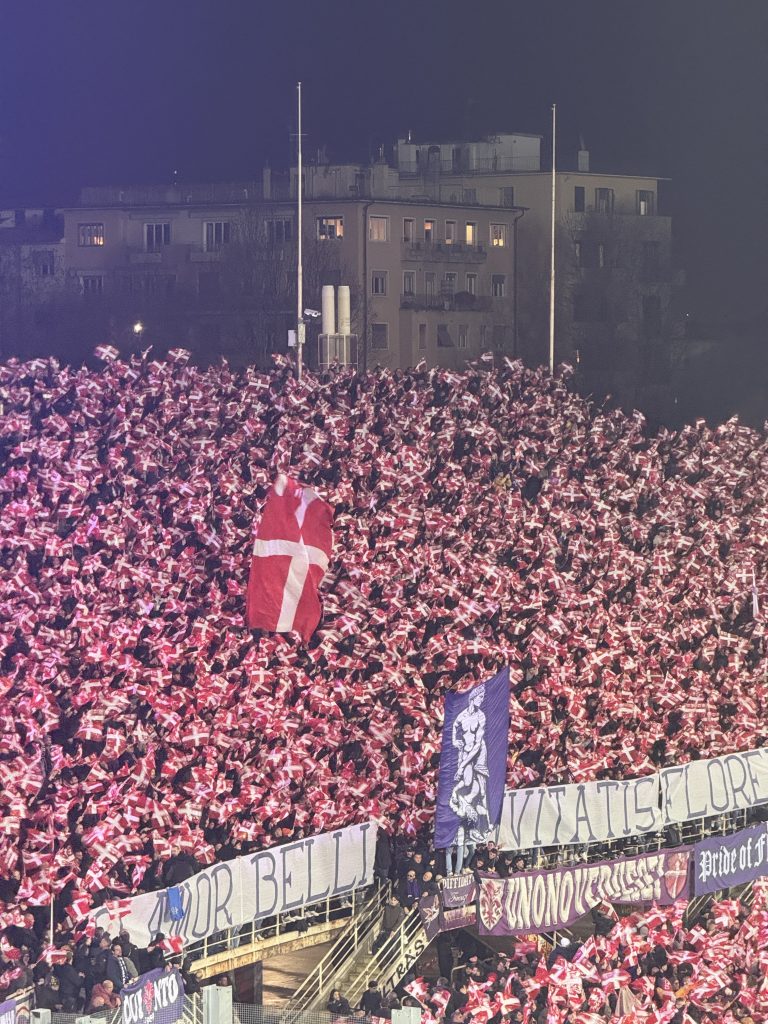
It wasn’t just three points. It was a derby victory. A step toward survival. In Florence, the idea of relegation to Serie B is not something anyone wants to contemplate.
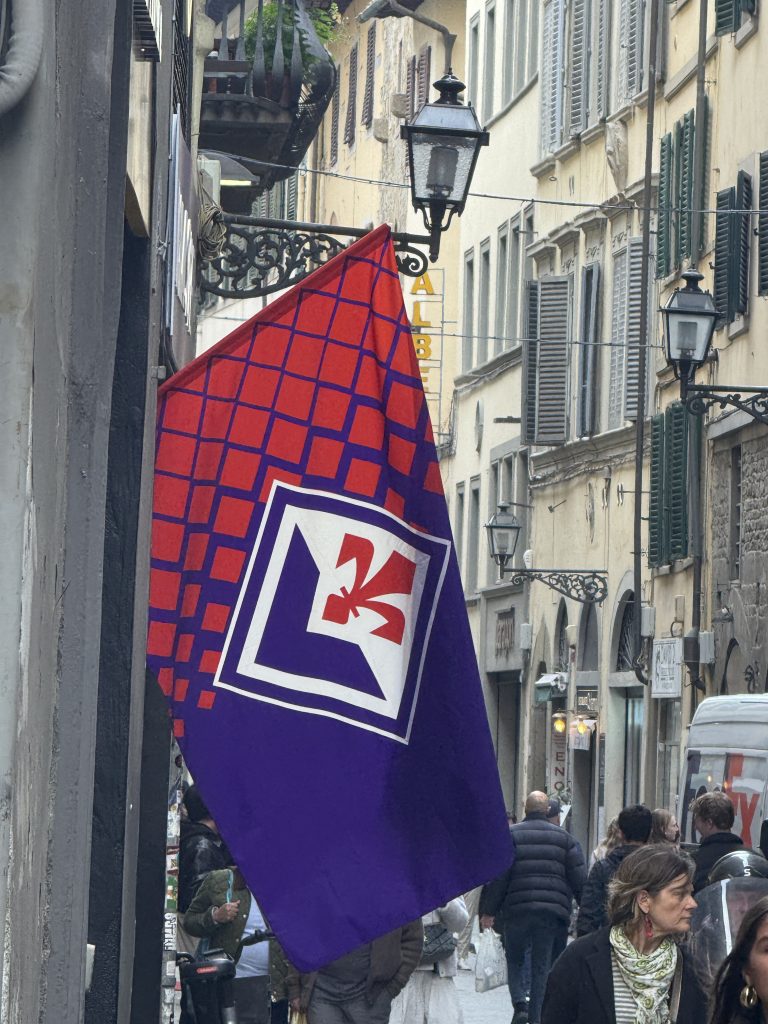
The opening choreography, with red and white flags — the historic colours of Florence — was striking. Simple, powerful, popular. Working-class in spirit.
The visiting ultras were absent due to the limited away allocation of 300 tickets and the requirement of a fan card — a system the Pisa ultras have consistently opposed.
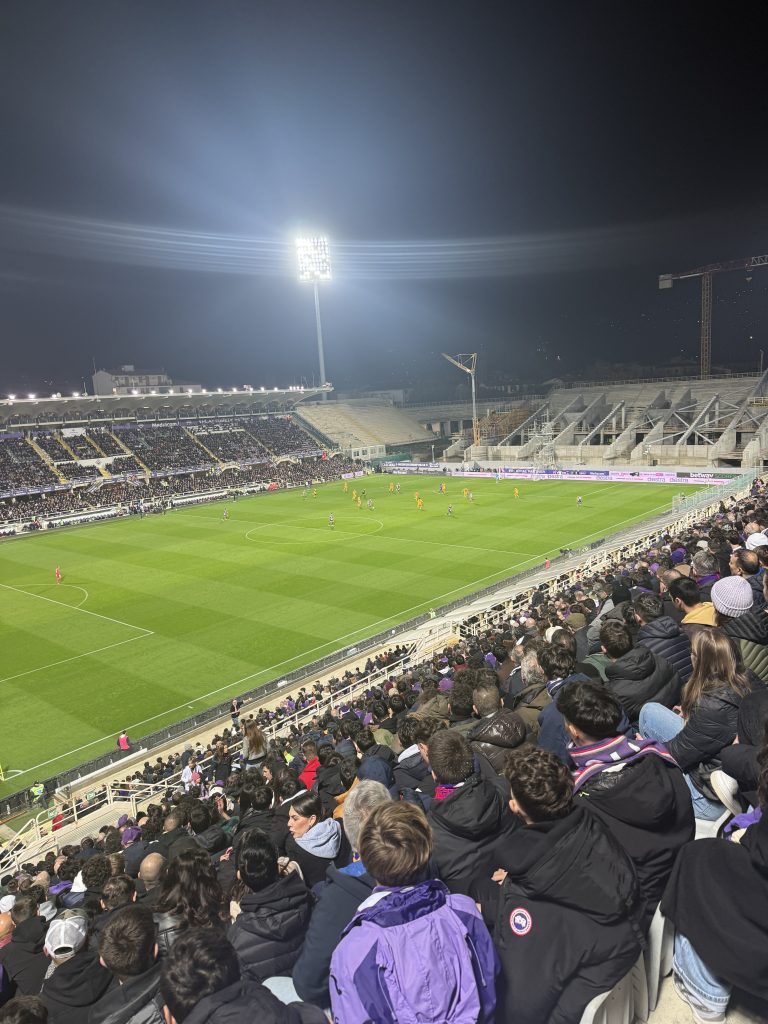
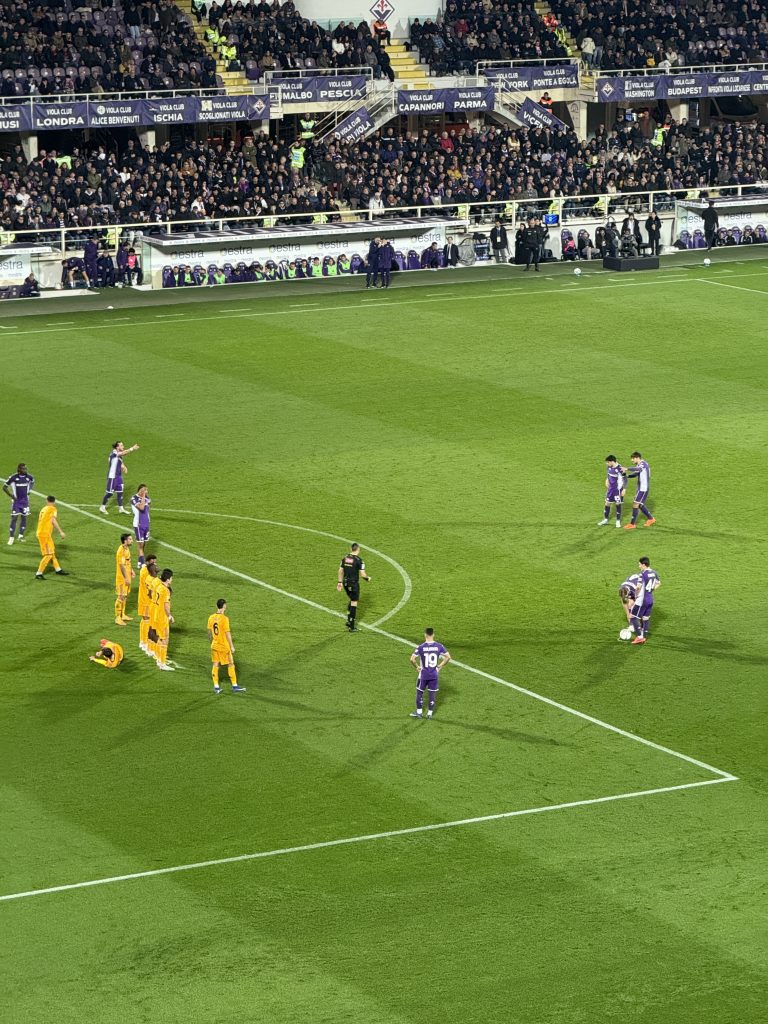
Florence offers beauty, history, and culinary tradition in abundance. The city is well connected by train to other destinations such as Bologna, making it easy to explore the wider region.
But if you want to understand Florence beyond the postcards, combine the art and the food with a match at the Artemio Franchi.
In Tuscany, culture and football are never separate. They live side by side — in the streets, at the table, and in the stands.
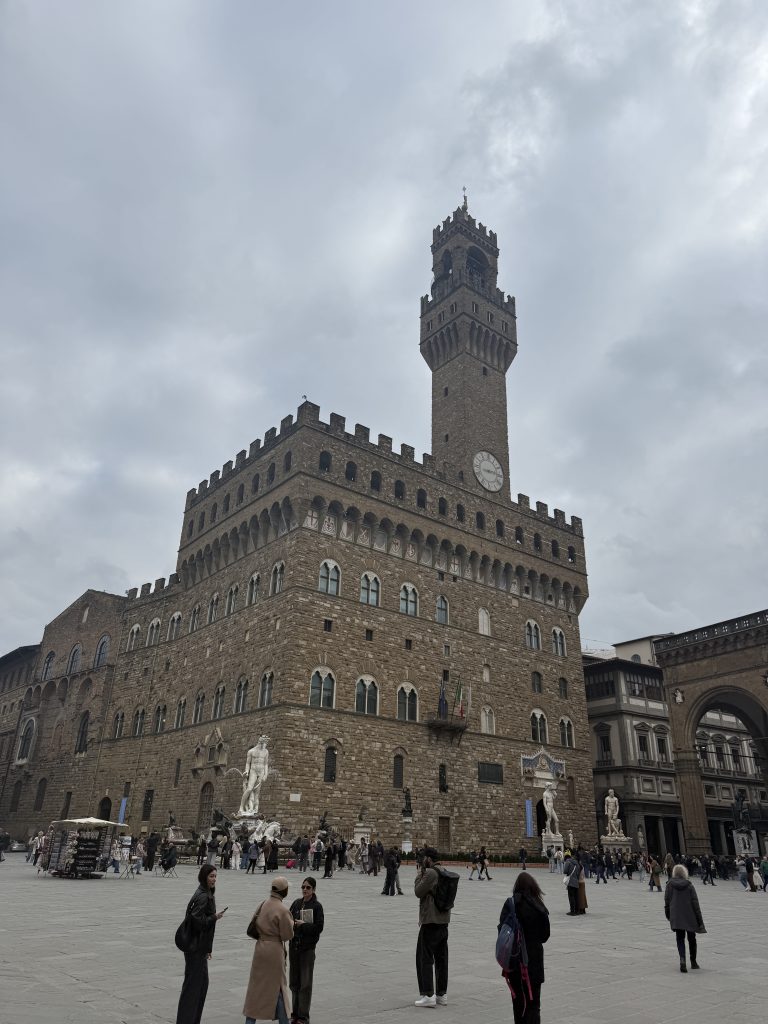
All words and images: Luca Miscioscia

Words and Images: Joey Corlett
From Middle of the Road to Champions
Watching on from Europe in May 2025, as Club Atlético Platense finished sixth in Group B of the Apertura season, it wouldn’t have been shocking to miss the news in Argentina — let alone anywhere else in the world.
They ended the group stage with a record of six wins, five draws and five losses — about as middle of the road as you can get — yet into the knockout rounds they went all the same. By finishing lower in the table, they were burdened with the pressure of playing away from home, without the support of their fans in the stands.
Despite that disadvantage, they produced a remarkable run, defeating three of Los Cinco Grandes — Racing Club, River Plate and San Lorenzo — all in their own backyards, to set up a historic opportunity: their first-ever Primera División title.
They headed north to the province of Santiago del Estero for the showpiece final against Huracán. In a nail-biting contest, they snatched a 1–0 victory to become Apertura champions.

A Decade of Transformation
Just ten years earlier, Platense had been battling in the metropolitan third tier of Argentine football and only returned to the top division in 2021.
Seeing them put together such a grand run and celebrate with an open-top bus parade through their barrio felt incredibly heartwarming in this era of predictable winners and expectation-driven modern football.
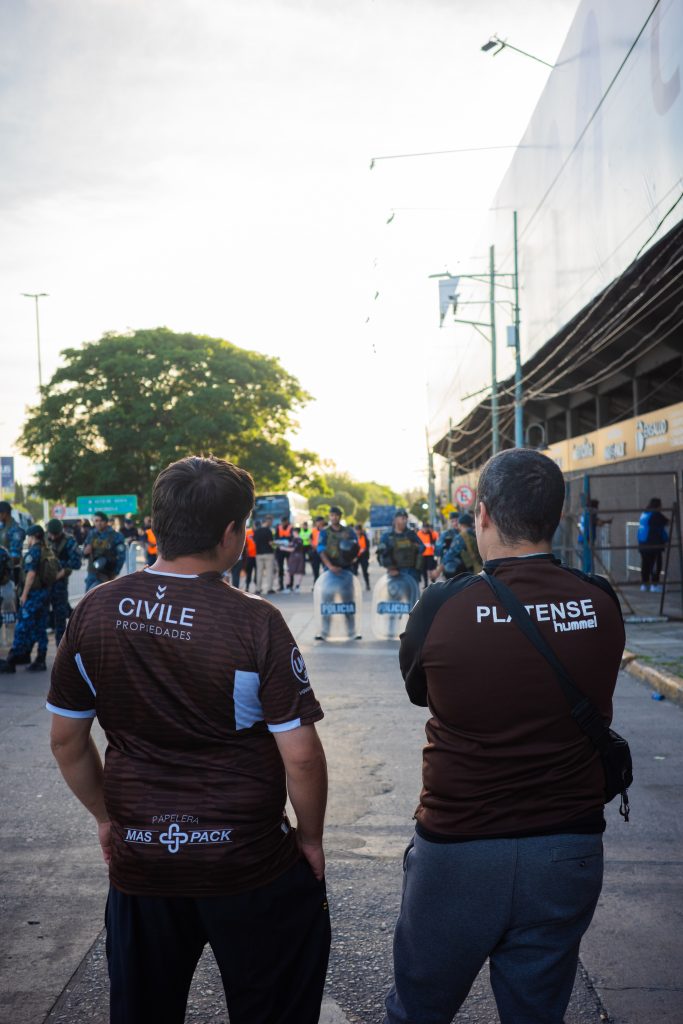
However, fast forward a few months, and I arrived in Buenos Aires. Their title-winning managerial duo had left the club, and they sat bottom of Group B in the Clausura campaign with just two wins in fifteen games.
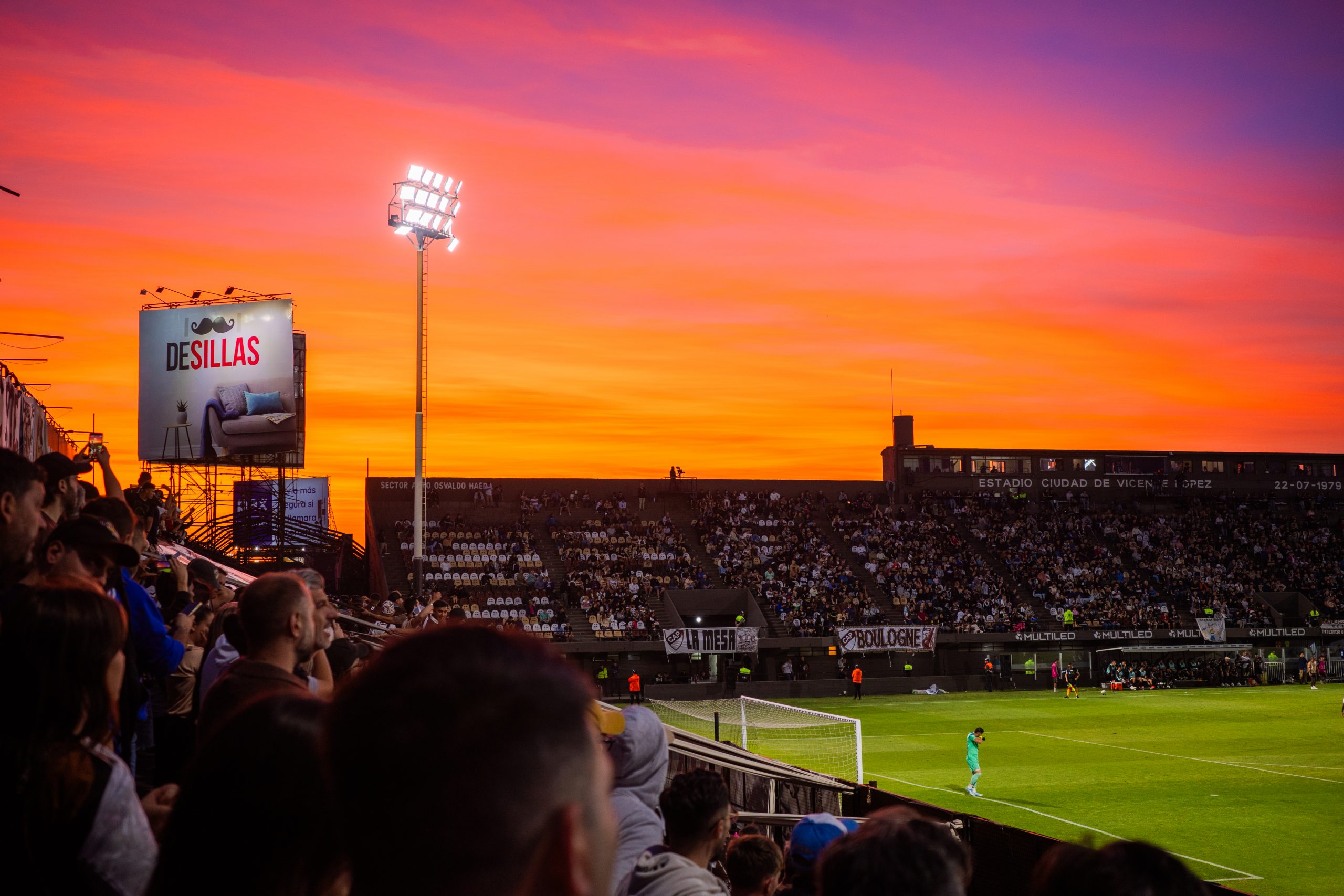
With the league phase of the Clausura coming to an end — and hopes of reaching the knockouts long gone — I made it a priority to visit the Estadio Ciudad de Vicente López.
One Last Chance
The fixture list offered one final opportunity: the closing match of their dismal run, with Gimnasia de La Plata visiting. Gimnasia themselves weren’t certain of a knockout place, with five teams separated by just three points.
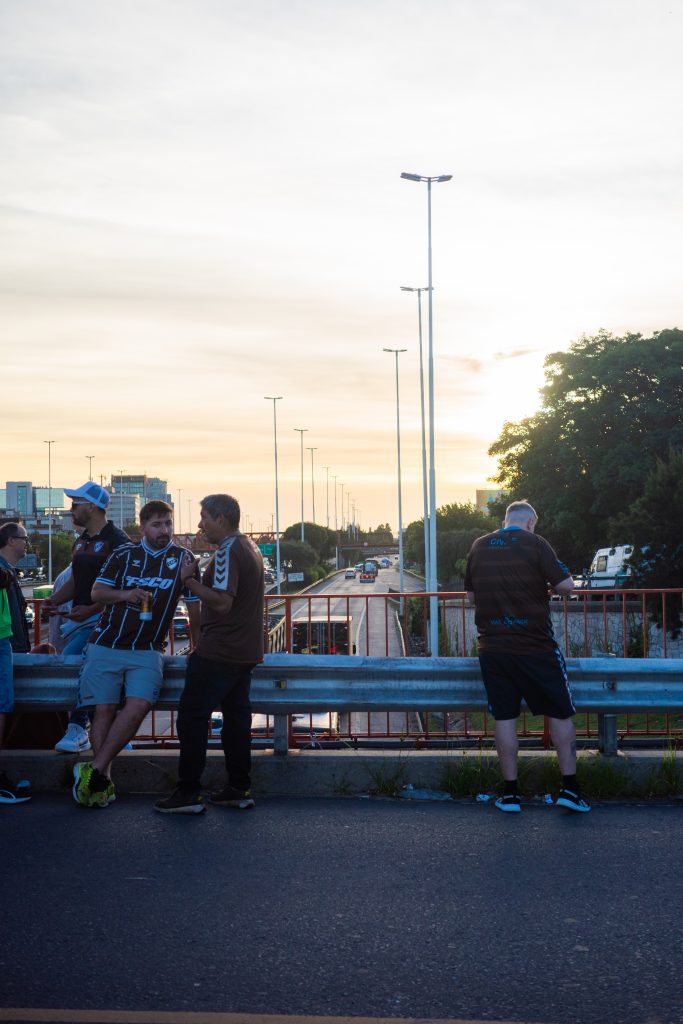
Linking up with Amos Murphy, we hopped into a taxi and headed north. Platense’s home ground is located in the neighbourhood of Florida, right on the northern border where the capital ends and the greater Buenos Aires province begins. Situated alongside one of the main motorways out of the city, we arrived quickly.
A Quieter Corner of Buenos Aires
It was immediately noticeable that this was a quieter, more residential part of town.
Wandering towards the ground, there was a calm atmosphere as we searched for refreshments. We stumbled upon a large group of fans preparing for the evening — trumpets in hand, drums resting at their feet. They were curious about where we were from, made sure we were okay getting tickets and warmly welcomed us. A brief but lovely encounter.
We grabbed refreshments from a corner shop called The Martini’s, draped in brown and white flags. With a busy grill out front and fans snacking on choripán, it did the job perfectly for us. Two cans of Schneider before kick-off.

Welcome to the Home of the Champions
Following the waves of fans over the bridge, we could hear the barra brava already in position. The beautiful musical noise spilled back out of the stadium — the perfect appetiser.
We collected our tickets from a classic little window in the wall, handing over pesos for two paper stubs slid back to us. A small ritual you don’t experience much anymore.
Passing through police and ID checks, the man tearing tickets smiled:
“Where are you guys from?”
When we answered, he ripped the tops of our tickets and simply said:
“Welcome.”
Two gringos were welcome in Platense.
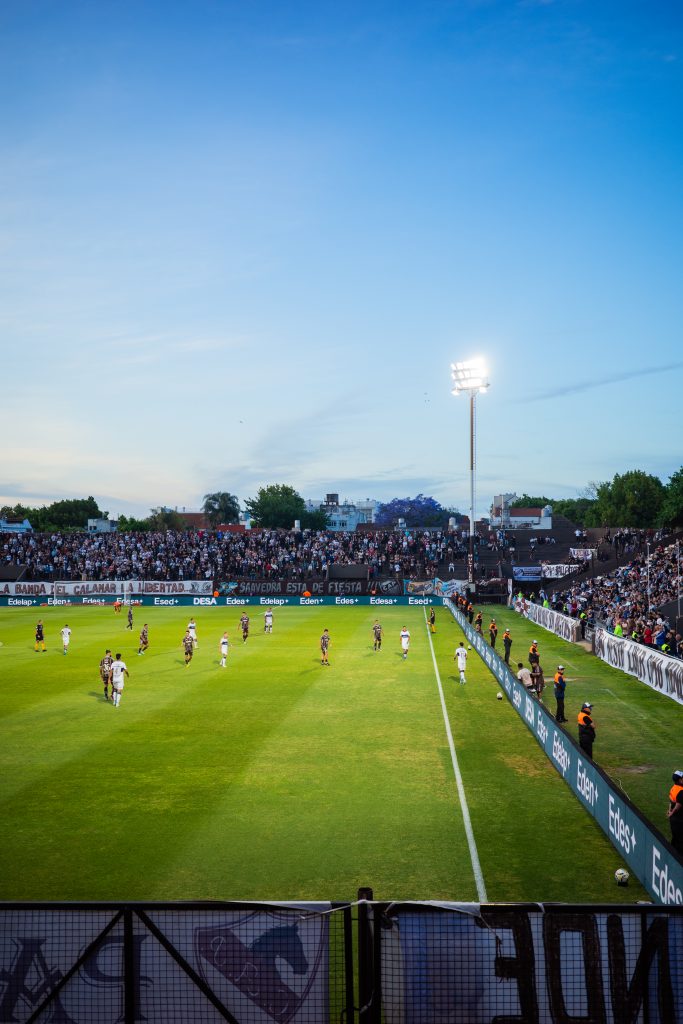
Underneath the popular terrace, we looked out over the green turf. The advertising boards and scoreboard both displayed the message:
“Bienvenidos a la Casa del Campeón.”
(Welcome to the Home of the Champions.)
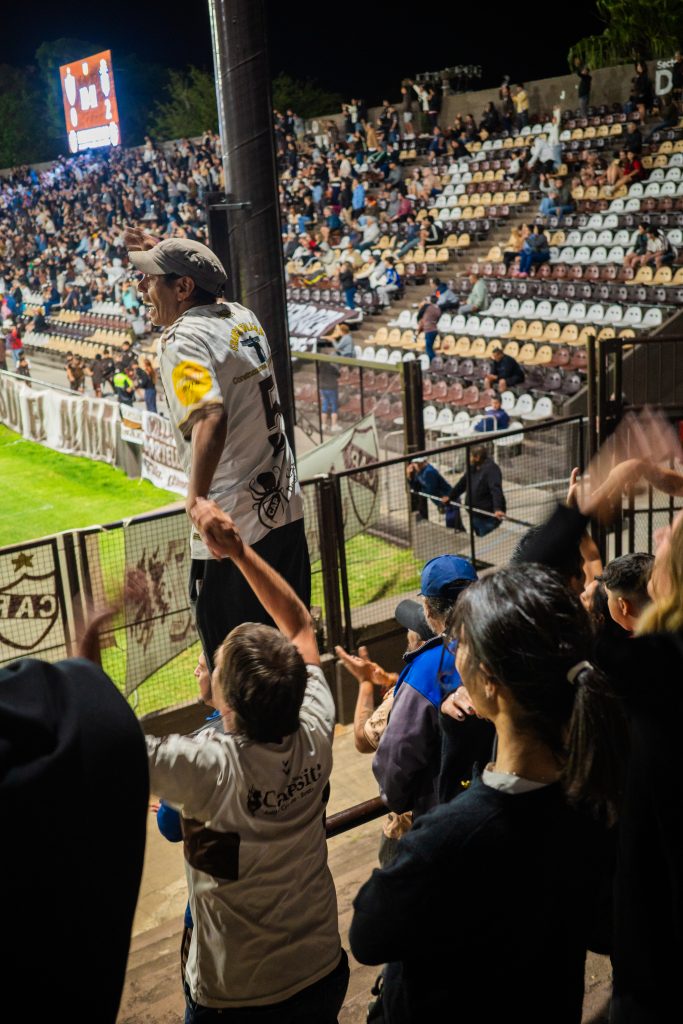
After a few rounds of chants, we tuned in more closely to the barra brava.
“Are they singing about calamari?”
Yes. Yes, they were.
El Calamar
Platense picked up their nickname back in 1908. Their pitch at the time was close to a river and prone to flooding. Uruguayan journalist Antonio Palacio Zino wrote that the team played its best matches on muddy fields:
“Are they going to play against Platense? In the rain and mud? Then we already know who will win! Platense, in the mud, are like squid in their ink!”
And so, they became El Calamar.
Sunset and Defeat
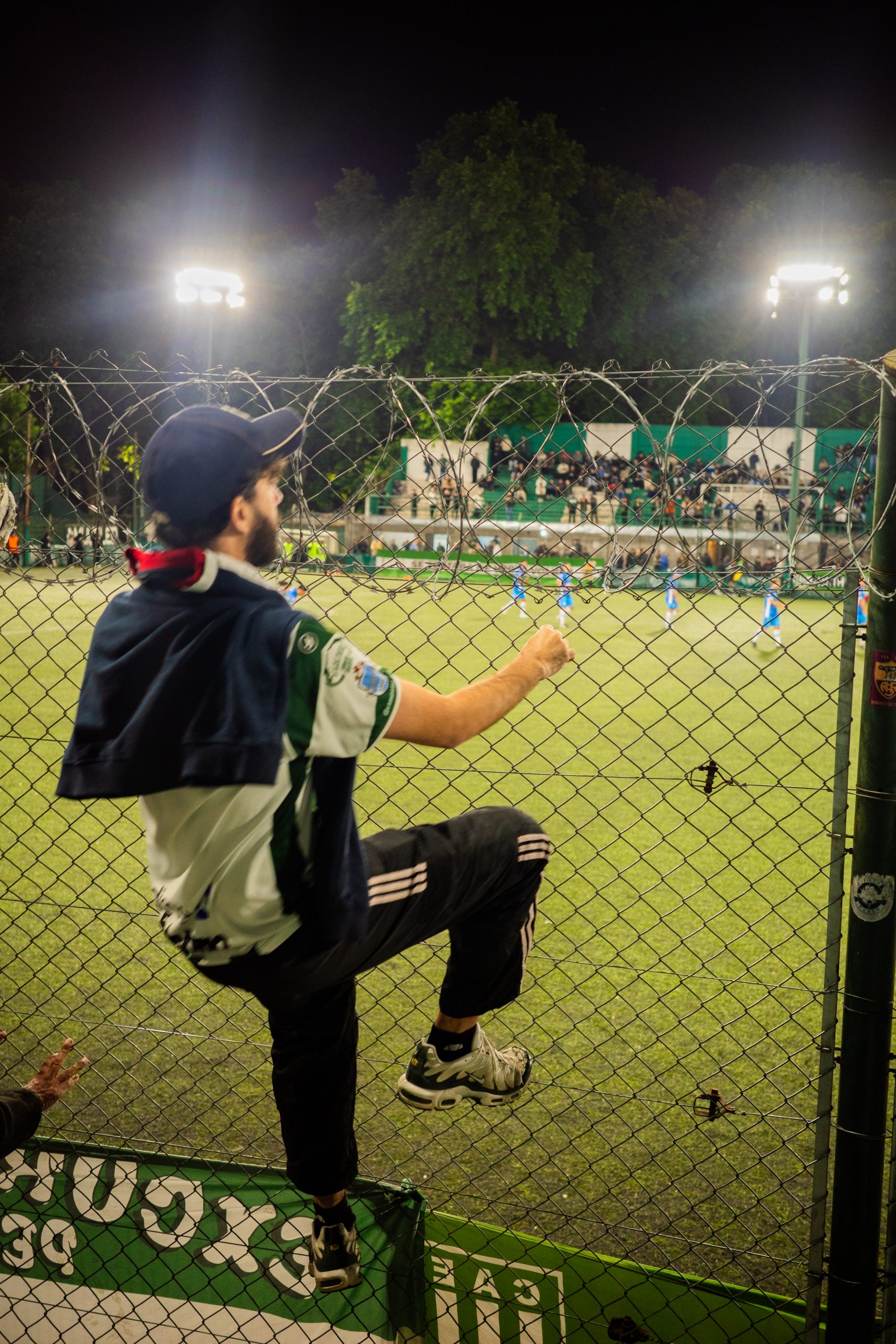
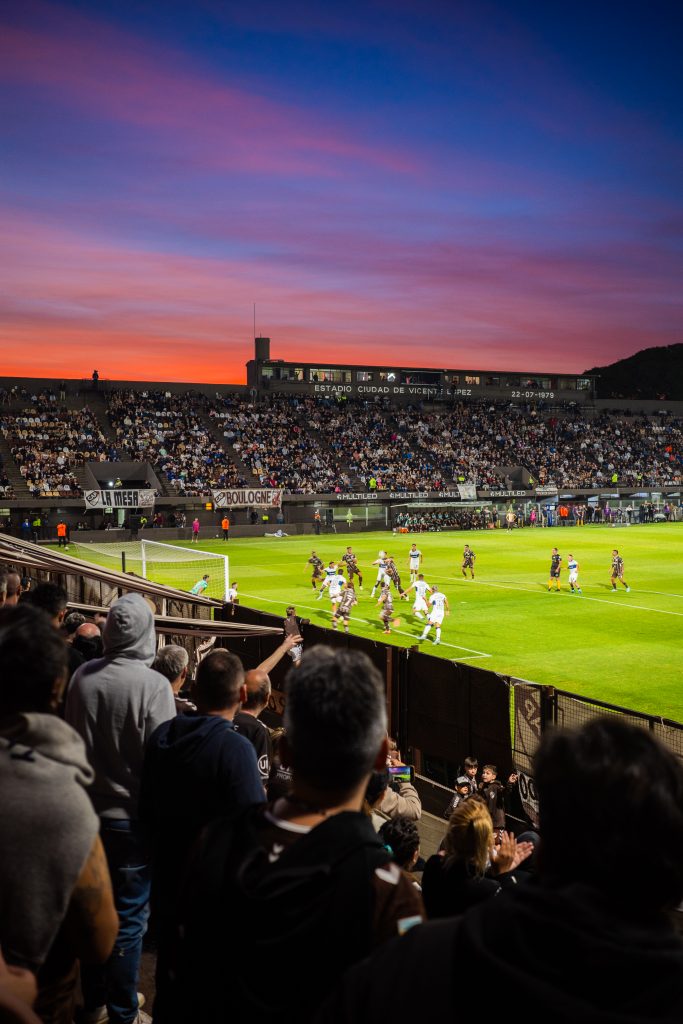
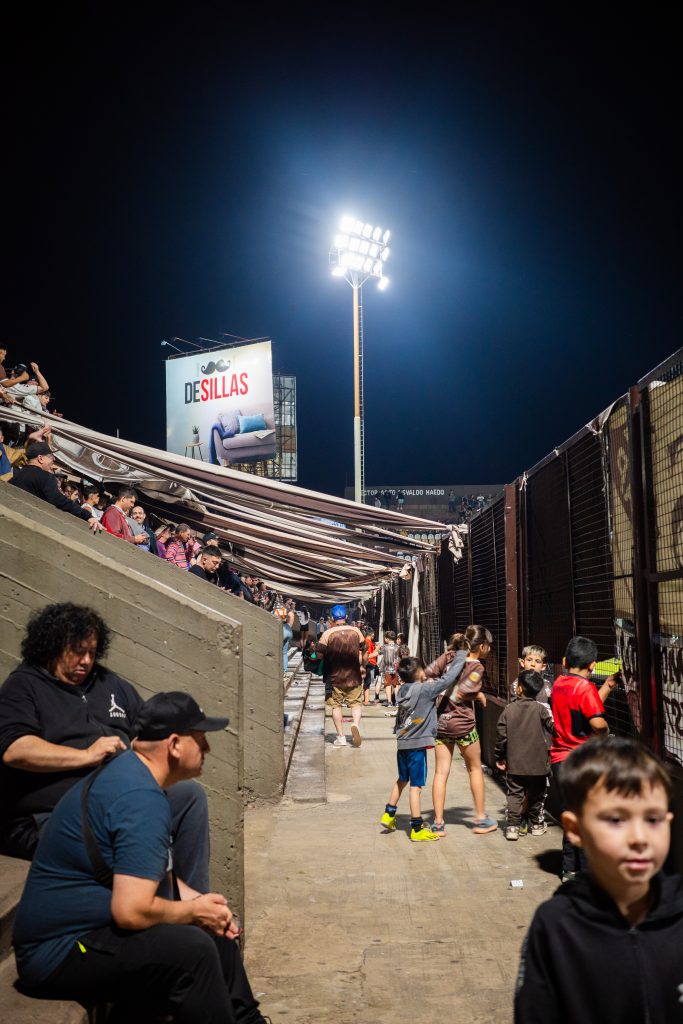
Despite relentless effort on the terraces — one fan in front of us spent the entire match perched atop the crush barrier, seemingly with calf muscles of steel — the match itself didn’t live up to its side of the bargain.
Both sides struggled for control, but Gimnasia capitalised on Platense’s mistakes. The home goalkeeper failed to claim a simple cross, and Manuel Panaro nodded home after just 20 minutes, setting the tone.
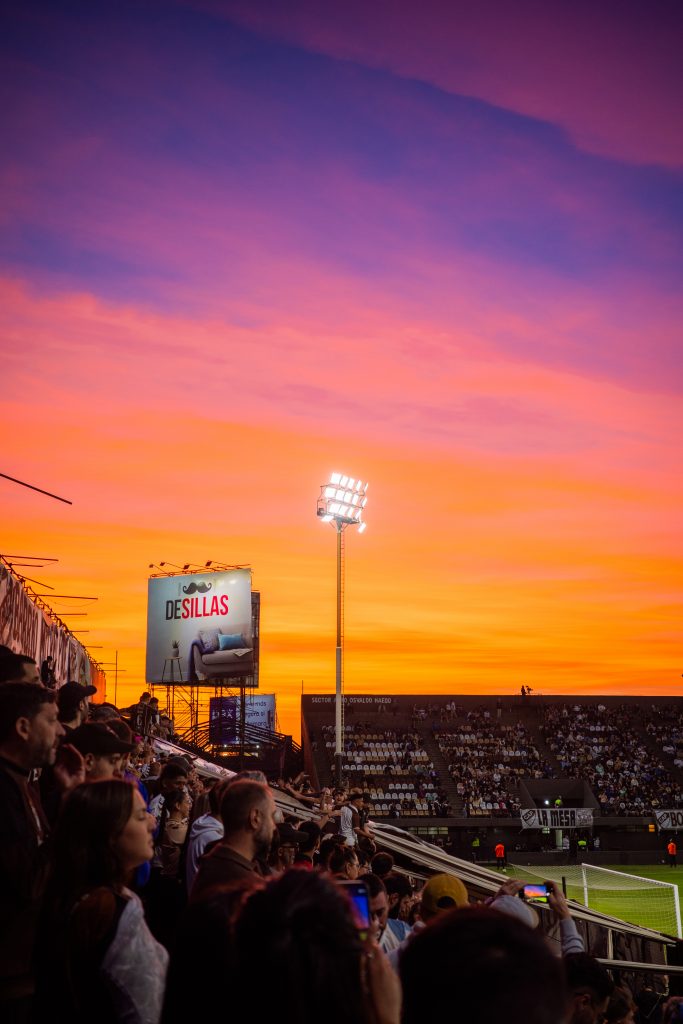
We were treated to one of the best sunsets of my month in the Argentine capital — a stunning backdrop in stark contrast to the lack of quality on the pitch.
The visitors added two more without reply.
As the third went in, right in front of us, one Platense fan turned, wincing, head in his hands:
“This team is horrible.”
Yet when the final whistle blew, contradictions defined the night. That same fan was singing his team off as:
“¡Campeón!”
From the Neighbourhood to the Continent
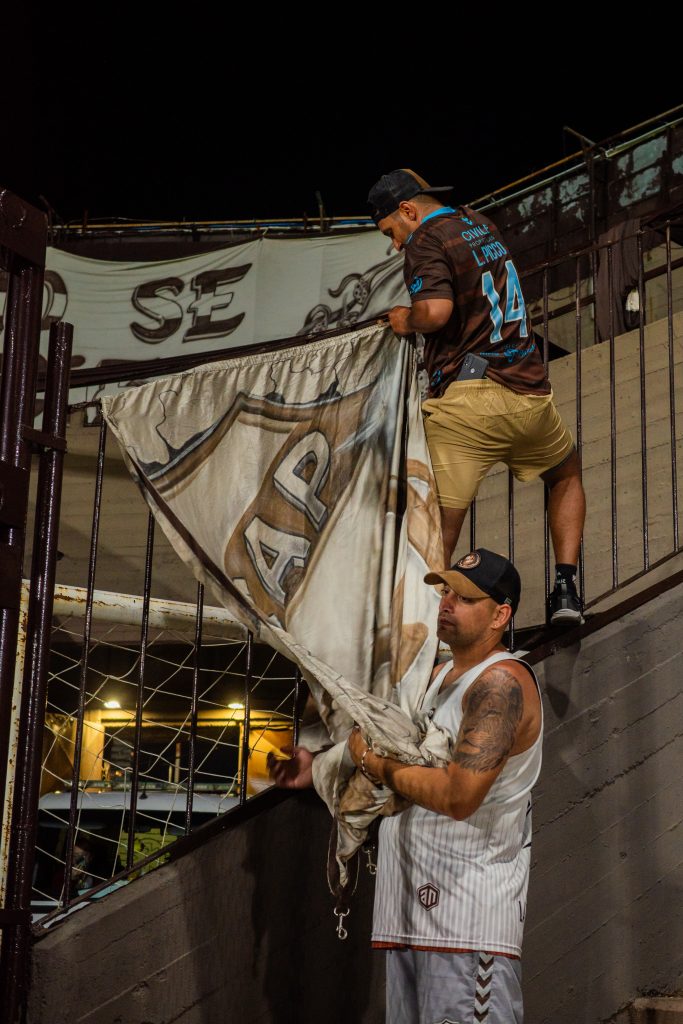
We watched as banners were taken down — perhaps for the last time as reigning champions — before heading out to finish the night with cervezas and milanesas in a local spot. The perfect way to round off a Monday night in Buenos Aires.
Thanks to their Apertura heroics, El Calamar will play Copa Libertadores football, with “Del Barrio al Continente” (From the Neighbourhood to the Continent) currently emblazoned across the stadium.
After a disastrous Clausura campaign, a fascinating South American adventure awaits.
For one final match, Platense were champions — and they took every second of that last opportunity to celebrate it.
If you get the chance, head north and experience this authentic slice of Buenos Aires football.

Words and Images: Joey Corlett