Words and Images: Joey Corlett
From Middle of the Road to Champions
Watching on from Europe in May 2025, as Club Atlético Platense finished sixth in Group B of the Apertura season, it wouldn’t have been shocking to miss the news in Argentina — let alone anywhere else in the world.
They ended the group stage with a record of six wins, five draws and five losses — about as middle of the road as you can get — yet into the knockout rounds they went all the same. By finishing lower in the table, they were burdened with the pressure of playing away from home, without the support of their fans in the stands.
Despite that disadvantage, they produced a remarkable run, defeating three of Los Cinco Grandes — Racing Club, River Plate and San Lorenzo — all in their own backyards, to set up a historic opportunity: their first-ever Primera División title.
They headed north to the province of Santiago del Estero for the showpiece final against Huracán. In a nail-biting contest, they snatched a 1–0 victory to become Apertura champions.
A Decade of Transformation
Just ten years earlier, Platense had been battling in the metropolitan third tier of Argentine football and only returned to the top division in 2021.
Seeing them put together such a grand run and celebrate with an open-top bus parade through their barrio felt incredibly heartwarming in this era of predictable winners and expectation-driven modern football.
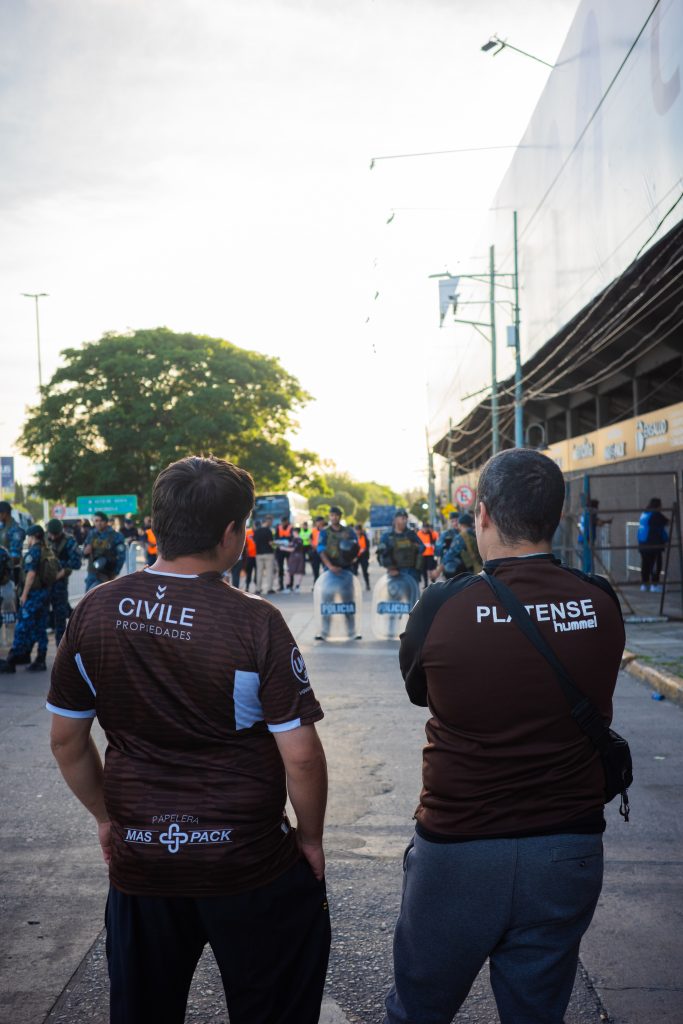
However, fast forward a few months, and I arrived in Buenos Aires. Their title-winning managerial duo had left the club, and they sat bottom of Group B in the Clausura campaign with just two wins in fifteen games.
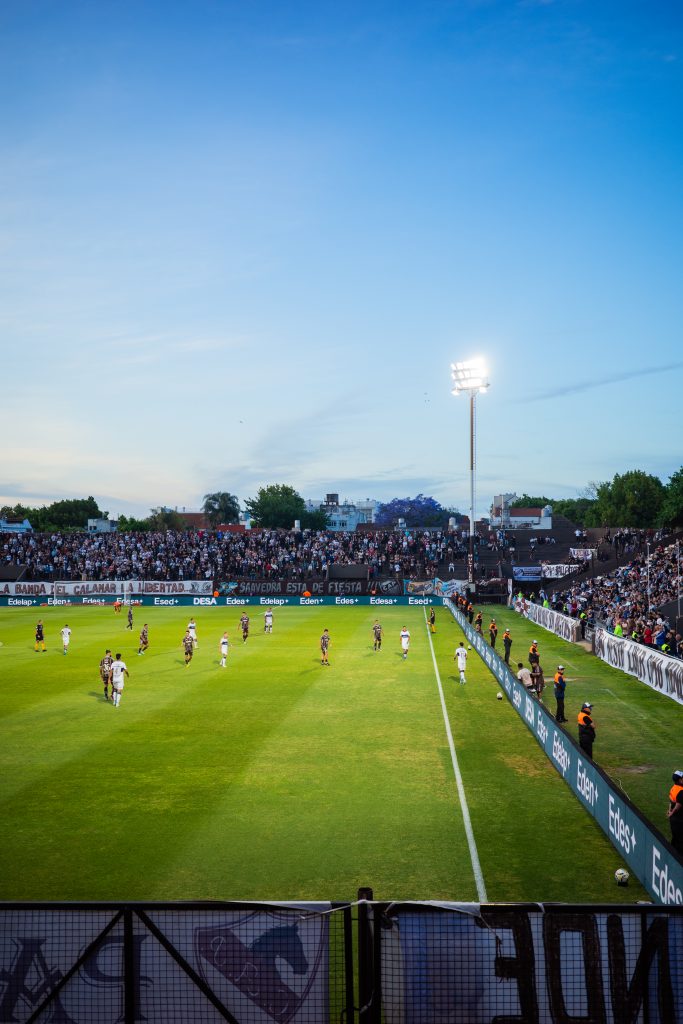
With the league phase of the Clausura coming to an end — and hopes of reaching the knockouts long gone — I made it a priority to visit the Estadio Ciudad de Vicente López.
One Last Chance
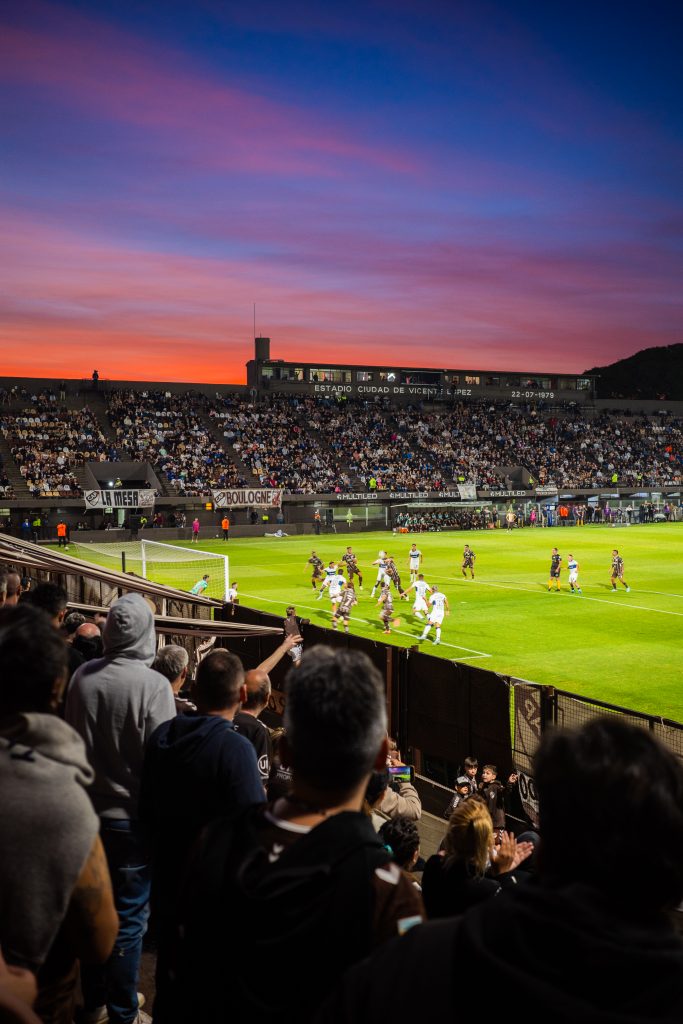
The fixture list offered one final opportunity: the closing match of their dismal run, with Gimnasia de La Plata visiting. Gimnasia themselves weren’t certain of a knockout place, with five teams separated by just three points.
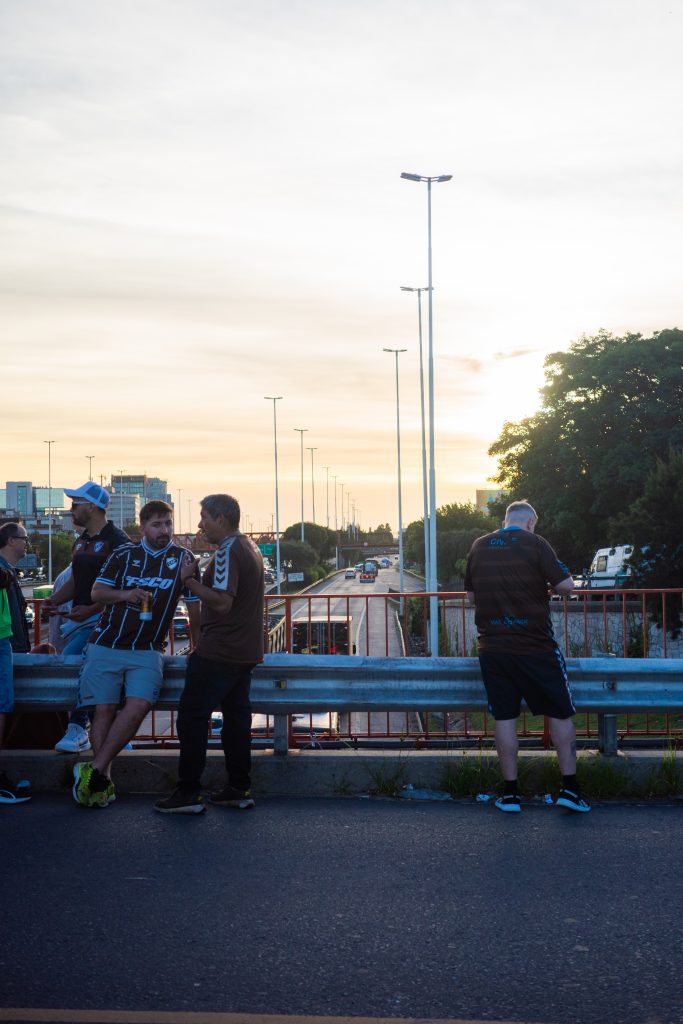
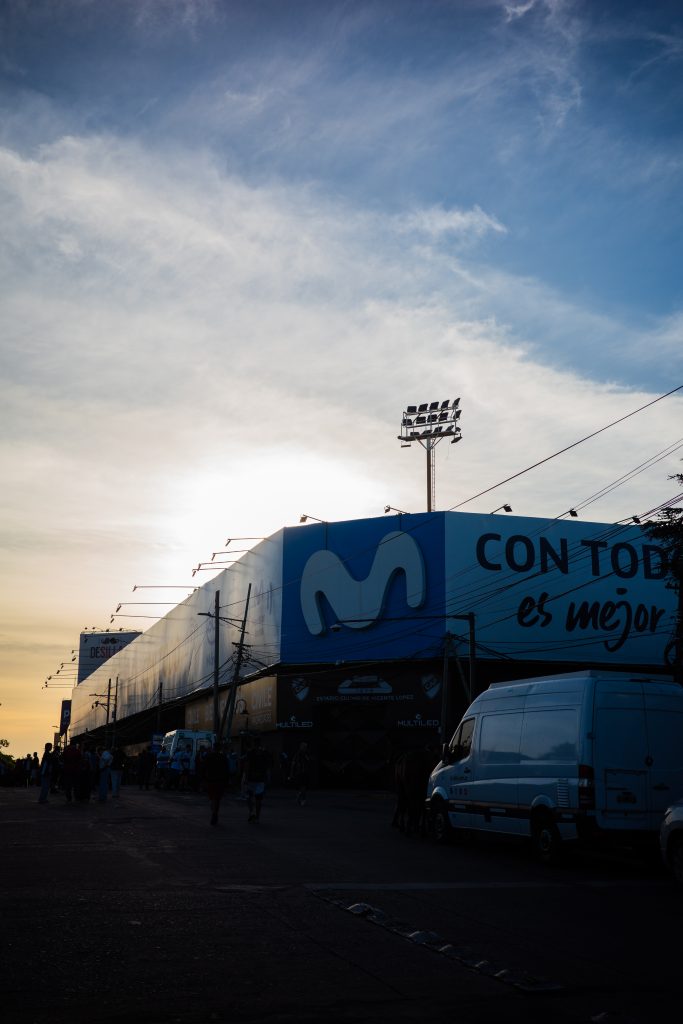
Linking up with Amos Murphy, we hopped into a taxi and headed north. Platense’s home ground is located in the neighbourhood of Florida, right on the northern border where the capital ends and the greater Buenos Aires province begins. Situated alongside one of the main motorways out of the city, we arrived quickly.
A Quieter Corner of Buenos Aires
It was immediately noticeable that this was a quieter, more residential part of town.
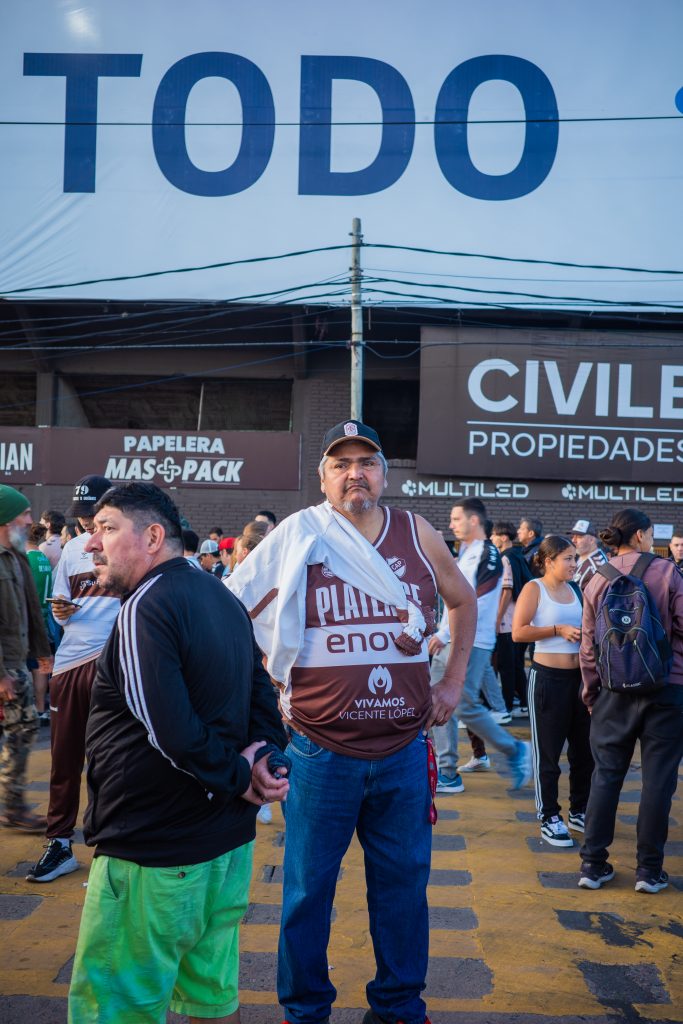
Wandering towards the ground, there was a calm atmosphere as we searched for refreshments. We stumbled upon a large group of fans preparing for the evening — trumpets in hand, drums resting at their feet. They were curious about where we were from, made sure we were okay getting tickets and warmly welcomed us. A brief but lovely encounter.
We grabbed refreshments from a corner shop called The Martini’s, draped in brown and white flags. With a busy grill out front and fans snacking on choripán, it did the job perfectly for us. Two cans of Schneider before kick-off.
Welcome to the Home of the Champions
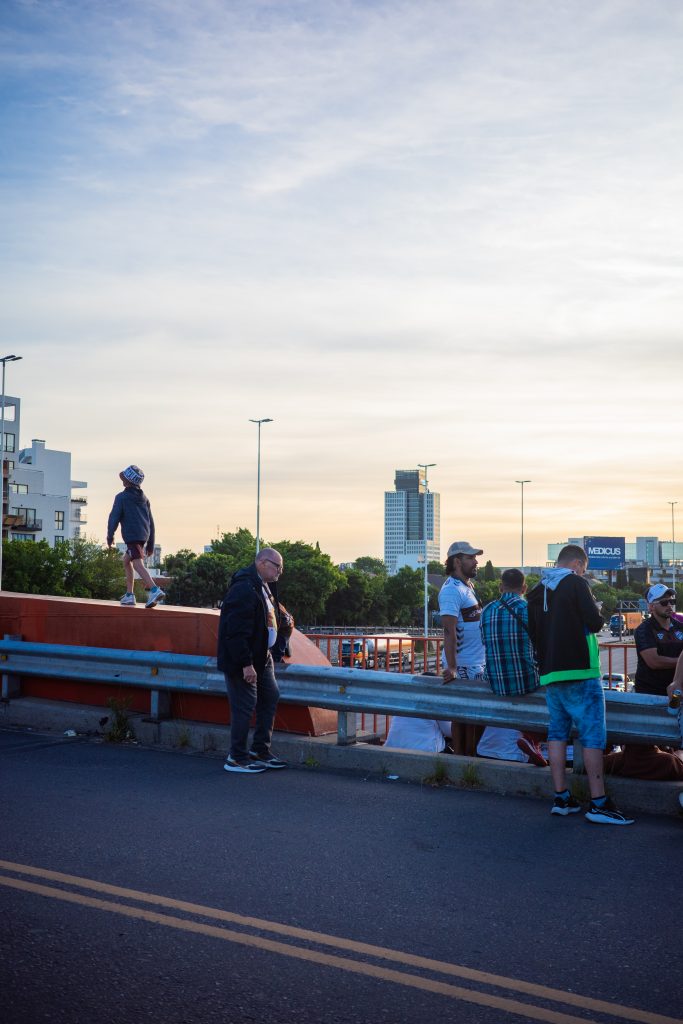
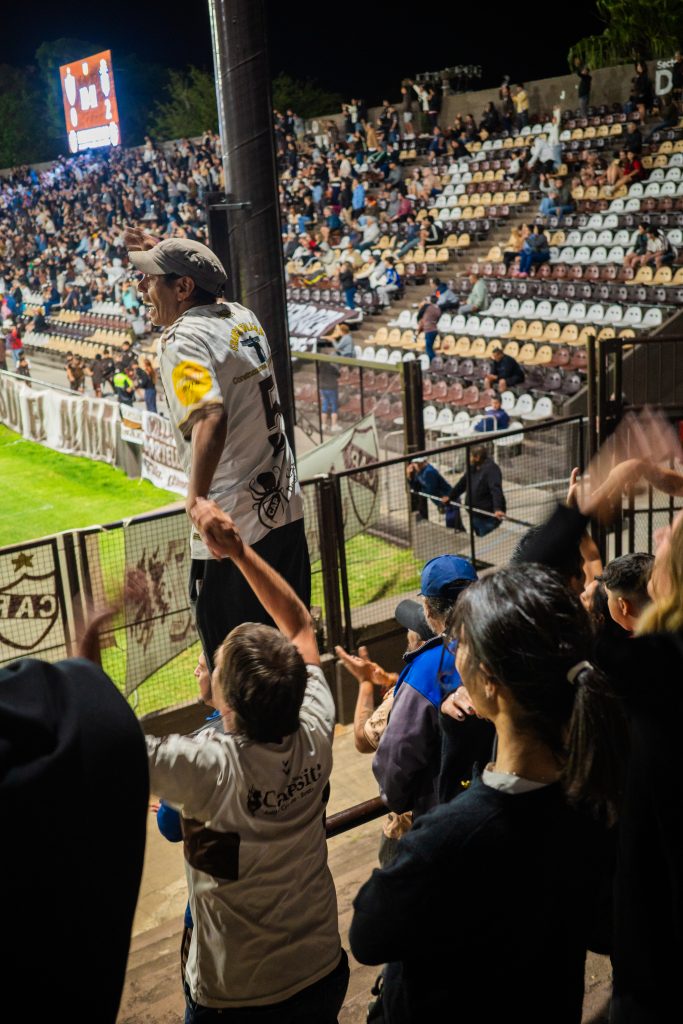
Following the waves of fans over the bridge, we could hear the barra brava already in position. The beautiful musical noise spilled back out of the stadium — the perfect appetiser.
We collected our tickets from a classic little window in the wall, handing over pesos for two paper stubs slid back to us. A small ritual you don’t experience much anymore.
Passing through police and ID checks, the man tearing tickets smiled:
“Where are you guys from?”
When we answered, he ripped the tops of our tickets and simply said:
“Welcome.”
Two gringos were welcome in Platense.
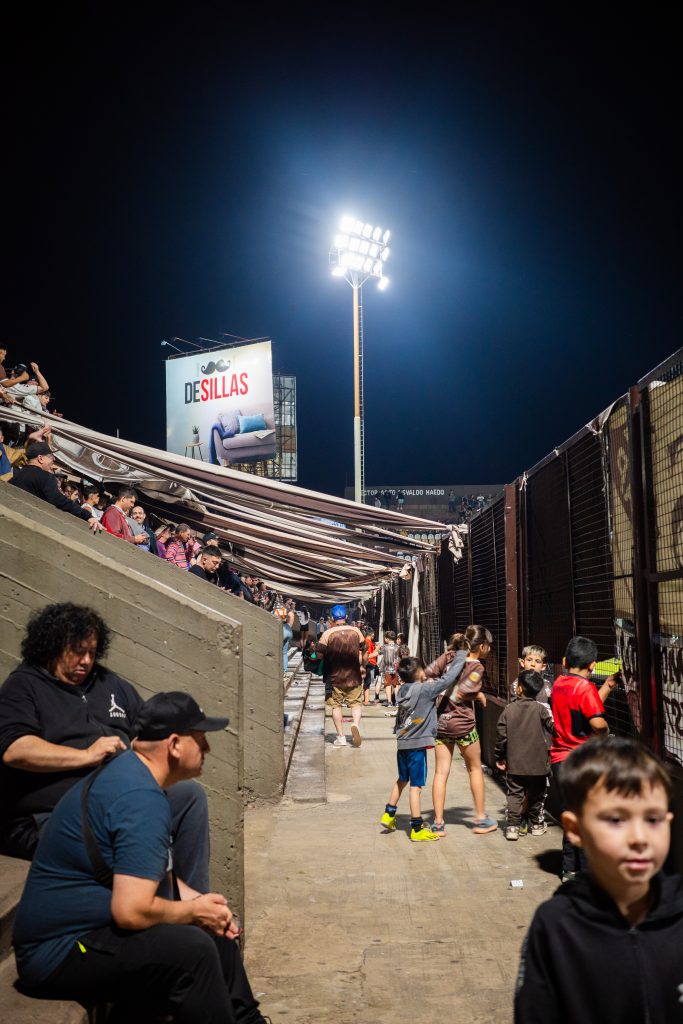
Underneath the popular terrace, we looked out over the green turf. The advertising boards and scoreboard both displayed the message:
“Bienvenidos a la Casa del Campeón.”
(Welcome to the Home of the Champions.)
After a few rounds of chants, we tuned in more closely to the barra brava.
“Are they singing about calamari?”
Yes. Yes, they were.
El Calamar
Platense picked up their nickname back in 1908. Their pitch at the time was close to a river and prone to flooding. Uruguayan journalist Antonio Palacio Zino wrote that the team played its best matches on muddy fields:
“Are they going to play against Platense? In the rain and mud? Then we already know who will win! Platense, in the mud, are like squid in their ink!”
And so, they became El Calamar.
Sunset and Defeat
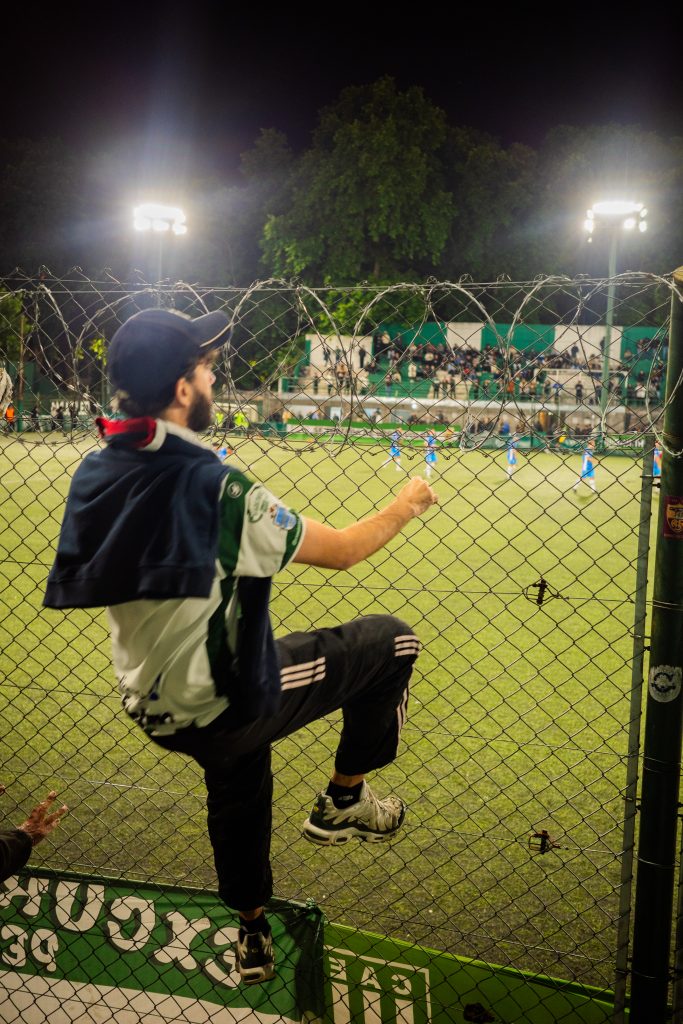
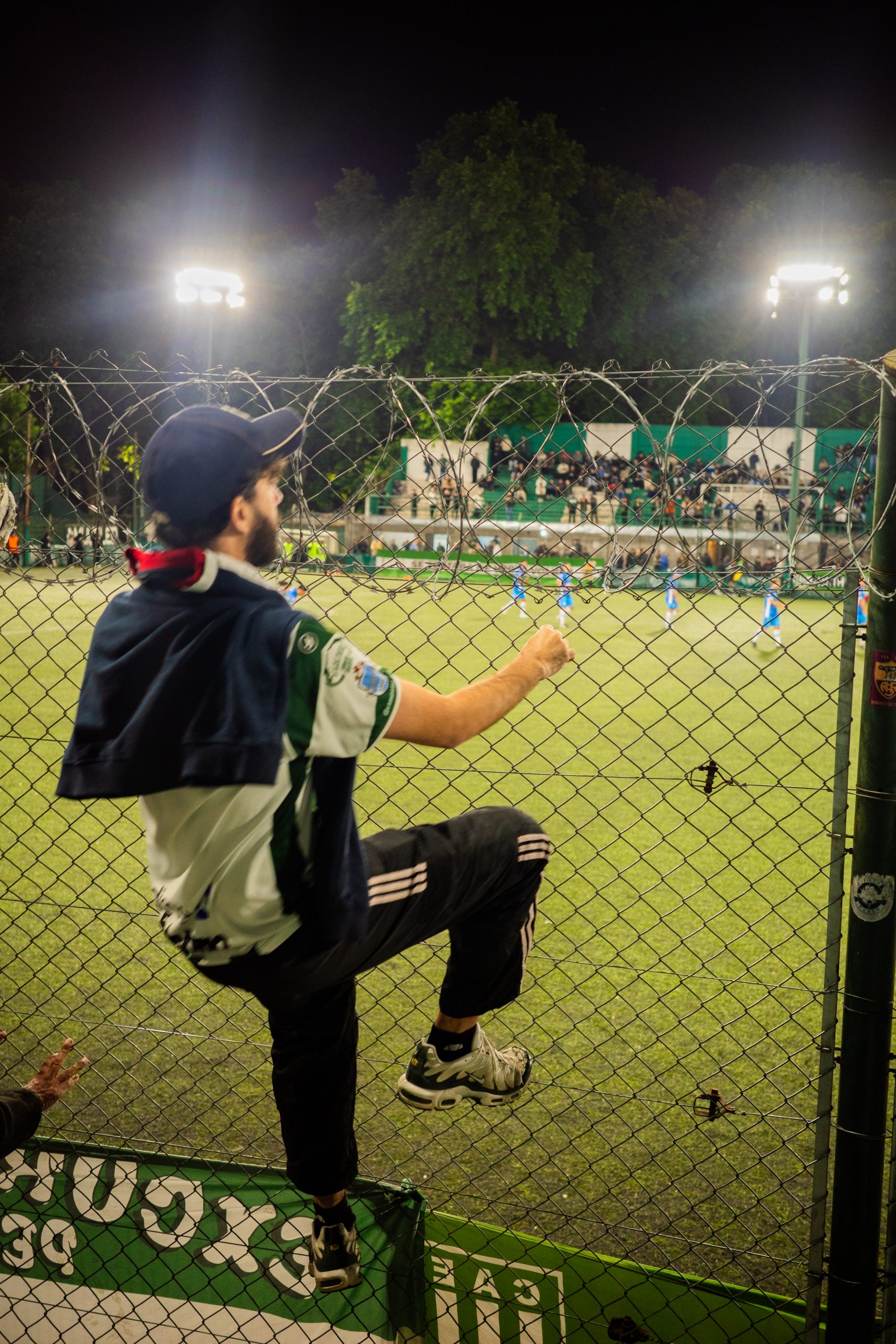
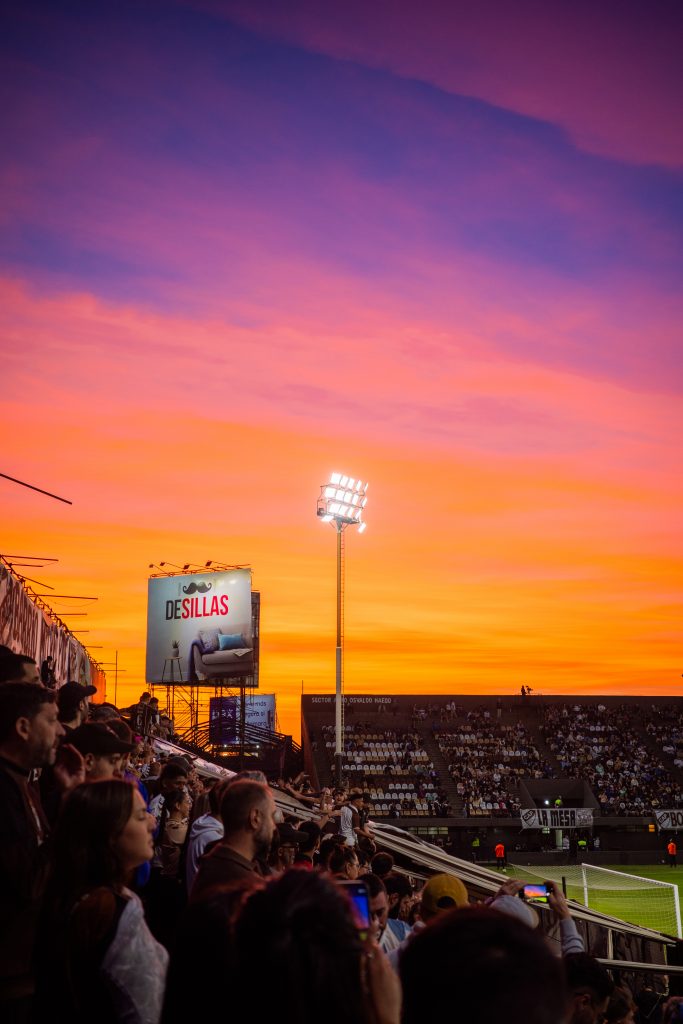
Despite relentless effort on the terraces — one fan in front of us spent the entire match perched atop the crush barrier, seemingly with calf muscles of steel — the match itself didn’t live up to its side of the bargain.
Both sides struggled for control, but Gimnasia capitalised on Platense’s mistakes. The home goalkeeper failed to claim a simple cross, and Manuel Panaro nodded home after just 20 minutes, setting the tone.
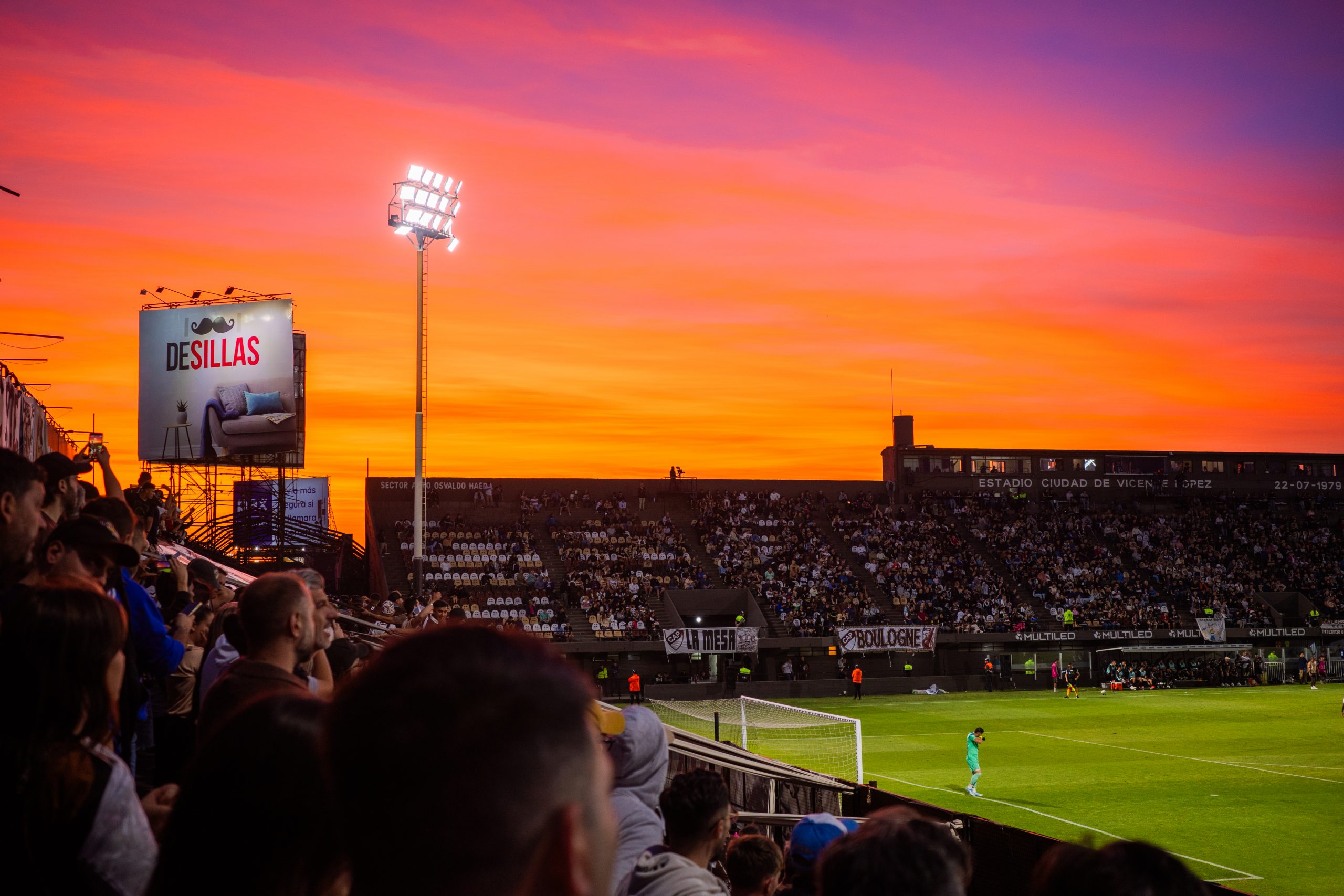
We were treated to one of the best sunsets of my month in the Argentine capital — a stunning backdrop in stark contrast to the lack of quality on the pitch.
The visitors added two more without reply.
As the third went in, right in front of us, one Platense fan turned, wincing, head in his hands:
“This team is horrible.”
Yet when the final whistle blew, contradictions defined the night. That same fan was singing his team off as:
“¡Campeón!”
From the Neighbourhood to the Continent
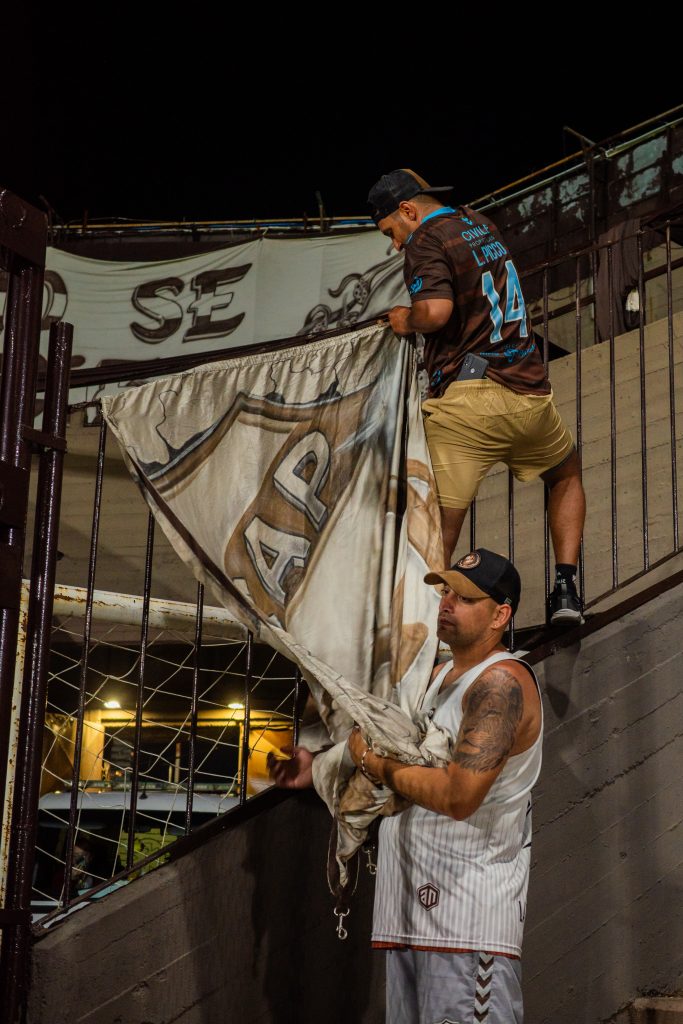
We watched as banners were taken down — perhaps for the last time as reigning champions — before heading out to finish the night with cervezas and milanesas in a local spot. The perfect way to round off a Monday night in Buenos Aires.
Thanks to their Apertura heroics, El Calamar will play Copa Libertadores football, with “Del Barrio al Continente” (From the Neighbourhood to the Continent) currently emblazoned across the stadium.
After a disastrous Clausura campaign, a fascinating South American adventure awaits.
For one final match, Platense were champions — and they took every second of that last opportunity to celebrate it.
If you get the chance, head north and experience this authentic slice of Buenos Aires football.
Words and Images: Joey Corlett