Words: Jasmine Mooney
Half His Age often undercuts its own exploration of sexual power dynamics, prioritising provocation and shock value over genuine emotional depth.
Rating: ★★☆☆☆
Coming-of-age
In her darkly comic coming-of-age novel Half His Age, published earlier this year, Jennette McCurdy explores female rage, sexual power dynamics, and emotional detachment through the eyes of a Gen Z girl on the cusp of adulthood.
The novel is narrated by Waldo, a self-described “white-trash” seventeen-year-old high school student isolated from her peers and raised by a neglectful, love-addicted mother in the small city of Anchorage, Alaska. Waldo is introduced as deeply self-destructive, engaging in unhealthy coping mechanisms that include splurging on consumer goods she cannot afford, pursuing dysfunctional sexual relationships, and developing an infatuation with her creative writing teacher, Mr Korgy, a married man twice her age. The novel follows Waldo’s turbulent coming-of-age as her increasingly toxic relationship with Korgy pushes her towards ever more desperate attempts at validation.
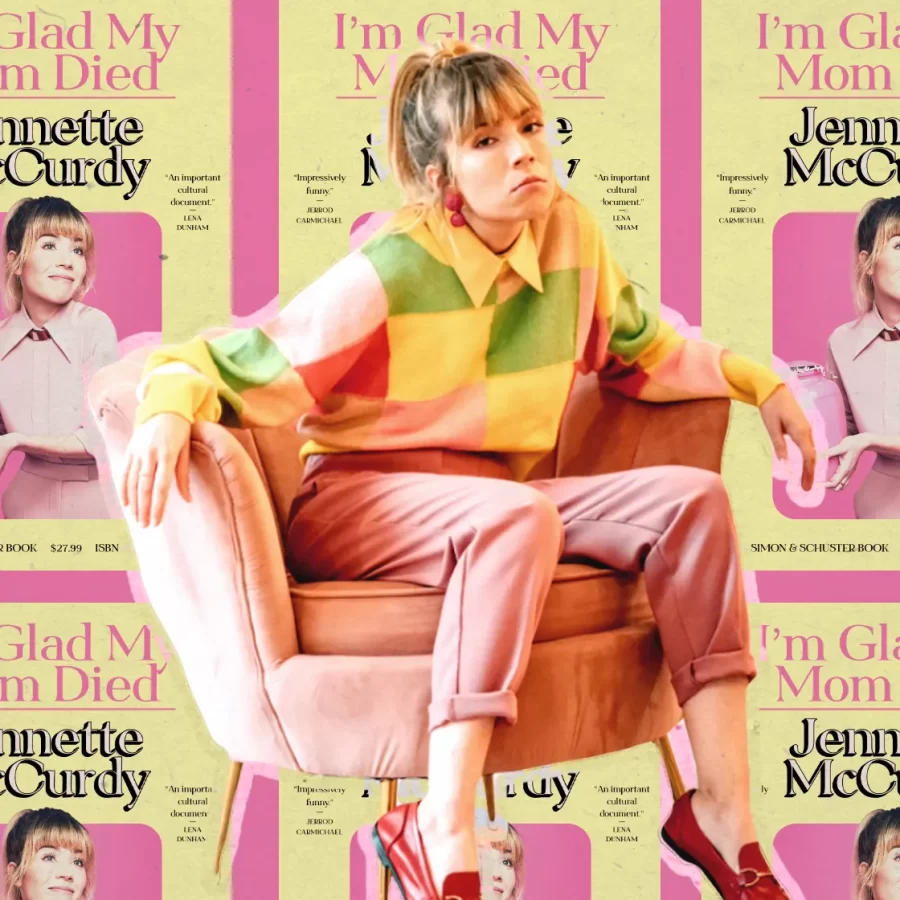
Best known for her roles in the Nickelodeon sitcoms iCarly and Sam & Cat, McCurdy left acting in 2018 to pursue writing and behind-the-scenes filmmaking. She released her debut book, I’m Glad My Mom Died, in 2022. This incisive and brutally honest memoir recounts her childhood and rise to stardom while navigating an abusive and controlling relationship with her mother.
The book became a major success, spending more than 80 weeks on The New York Times Best Seller list and selling over four million copies worldwide. An adaptation is also in development for Apple TV+, with Jennifer Aniston attached to star. Its success was partly driven by its audacious title and premise, which, while divisive, resonated with readers through its emotional honesty and authenticity.

Restrained by comparison
Given the popularity of I’m Glad My Mom Died, expectations were understandably high for McCurdy’s first venture into fiction. Like its predecessor, Half His Age has attracted controversy for its dark humour and willingness to engage with uncomfortable subject matter. The novel shares several qualities with McCurdy’s memoir, including her viscerally direct prose, an interest in power dynamics and their abuse, and a coming-of-age narrative at its core.
Where the two works differ, however, is in the explicit and adult nature of Half His Age, which makes I’m Glad My Mom Died appear relatively restrained by comparison.
Half His Age opens with a graphic sexual encounter that immediately establishes Waldo’s deadpan perspective, narrated with striking detachment and disgust. This tone persists throughout the novel as Waldo’s relationship with Korgy develops and her experiences become increasingly unsettling. McCurdy deliberately avoids romanticised language, opting instead for direct and often crude descriptions.
At times, however, this approach veers into the grotesque, leaving it unclear whether certain moments are intended sincerely, satirically, or somewhere in between. The result can be alienating, creating distance between the reader and Waldo, whose bitterness and lack of self-awareness make her a challenging protagonist to invest in emotionally.
Parasitically feed on her youth
McCurdy populates the novel with flawed and psychologically complex characters, particularly in her portrayal of Mr Korgy. From the outset, he is not presented as a stereotypical predator. Instead, he appears as a middle-aged man dissatisfied with his career and constrained by his role as a husband and father. Initially, he rebuffs Waldo’s advances, recognising both her age and the inappropriateness of their teacher-student relationship.
As the novel progresses, however, it becomes clear that Korgy is manipulating Waldo in a childish attempt to shape her into his muse. Through his recommendations of films and literature, he seeks to vicariously relive his lost youth through her.
Korgy’s characterisation is reminiscent of Mark Loring in the 2007 film Juno, another dissatisfied older man who attempts to escape the realities of suburban adulthood through a relationship with a much younger woman. In both cases, the power imbalance is never romanticised because the audience experiences events primarily through the younger protagonist’s perspective. While Waldo romanticises her relationship with Korgy, McCurdy does not. Instead, she reveals that Korgy does not love Waldo at all, but is parasitically feeding on her youth, admiration and potential.
Provocation and shock
One of the novel’s greatest strengths is its pace. With 88 chapters spread across fewer than 300 pages, Half His Age moves quickly and rarely lingers. The conversational narration, coupled with increasingly outrageous developments, makes it remarkably easy to consume in a single sitting.
Although McCurdy successfully captures the chaos and self-destructive impulses of adolescence, the novel’s relentless cynicism makes it difficult to fully connect with Waldo or invest emotionally in her journey. As a result, Half His Age often undercuts its own exploration of sexual power dynamics, prioritising provocation and shock value over genuine emotional depth.
All words by Jasmine Mooney